What Is a CMMS? Meaning, Features, Benefits and How It Works illustration What Is a CMMS? Meaning, Features, Benefits and How It Works illustration
BACK TO Blog
Asset Rental Management

Asset Maintenance

What Is a CMMS? Meaning, Features, Benefits and How It Works

  • November 06, 2026
  • DreamzCMMS Team
  • 8 minutes read
What is a CMMS? Computerized maintenance management system guide by DreamzCMMS
  • November 06, 2026
  • DreamzCMMS Team
  • 8 minutes read

A CMMS (computerized maintenance management system) is software that helps maintenance teams plan, track and manage maintenance work on equipment, buildings and other assets. It keeps asset records, work orders, preventive maintenance schedules, spare parts and maintenance history in one place instead of in spreadsheets, paper files and inboxes.

This guide explains what CMMS stands for, how a CMMS works, the features that matter, the benefits, who uses one and how to choose the right system for your team.

What does CMMS stand for?

CMMS stands for computerized maintenance management system. You will also see it called a CMMS system, CMMS software or maintenance management software. The meaning is the same in every case: a digital system that organizes maintenance so work is planned, assigned and recorded instead of handled ad hoc.
What is a CMMS used for?

Maintenance teams use a CMMS to keep assets running and to prove the work was done. The most common uses are:

  • Asset records: a searchable register of equipment with location, specifications, warranty and full service history.
  • Work orders: creating, assigning, tracking and closing maintenance tasks, as described in our guide to work order software.
  • Preventive maintenance: recurring tasks triggered by dates or meter readings, so inspections happen before failures. See preventive maintenance software.
  • Spare parts and inventory: stock levels, reorder alerts and parts used on each job.
  • Cost and downtime tracking: labor, parts and downtime recorded against each asset.
  • Reports and audits: maintenance history and compliance records ready when an auditor or manager asks.

How does a CMMS work?

A CMMS works as a loop that turns every maintenance event into data you can use:

  1. Add your assets. Import or create a record for each machine, vehicle, building system or other asset, grouped by site and location.
  2. Trigger work. A work order starts from a schedule, a meter reading, an inspection or a request from staff.
  3. Assign and complete the job. The technician receives the task, follows the checklist, adds notes, photos, parts and time, often from a mobile CMMS app that works offline.
  4. Close and record. The finished work order becomes part of the asset history.
  5. Review and improve. Reports show downtime, backlog, cost and repeat failures, so you can adjust schedules and budgets.

Core features of CMMS software

Features vary by product, but a strong CMMS includes the following. For a deeper checklist, read our guide to the CMMS software features to look for.

  • Asset management with hierarchy, documents, QR code or barcode labels and lifecycle history.
  • Work order management with priorities, checklists, approvals and status tracking.
  • Preventive maintenance scheduling by calendar, usage or meter reading.
  • Mobile access so technicians can update work orders in the field, including offline.
  • Inventory and purchasing for spare parts, min and max levels and vendors.
  • Request portal where staff can report a problem without calling or emailing.
  • Dashboards and reports for downtime, backlog, cost and PM compliance.
  • Integrations and user roles to connect other business systems and control access.

Benefits of a CMMS

  • Less unplanned downtime. Scheduled inspections catch problems before they stop production or service.
  • Longer asset life. Regular maintenance and a complete history help you repair, refurbish or replace at the right time.
  • Lower maintenance cost. Planned work is usually cheaper than emergency repairs, and costs are visible per asset.
  • More productive technicians. Clear assignments, checklists and mobile access cut paperwork and walking back to a desk.
  • Audit-ready records. Every inspection and repair is time-stamped and stored.
  • Better decisions. Data replaces guesswork when you plan budgets, staffing and replacements.

Who uses a CMMS?

Any organization that depends on equipment or facilities can use a CMMS. Common users include manufacturers, hospitals and clinics, hotels and resorts, property and facility management teams, schools, construction firms, utilities and power plants, and data centers. Healthcare teams, for example, use it to keep hospital equipment inspected and documented, while manufacturers use it to protect production lines, as shown in our manufacturing CMMS page. Hotels and resorts use it to keep guest rooms, kitchens and plant rooms running, as covered in our hotel maintenance software page.

CMMS vs EAM vs ERP

A CMMS is often confused with related systems. The short version: a CMMS runs day-to-day maintenance, EAM manages the asset across its whole life, and ERP runs finance and operations across the business.

CMMSEAMERP
Main focusMaintenance work and schedulesAsset lifecycle, cost and replacement planningFinance, procurement and operations
Main usersTechnicians and maintenance managersAsset managers, operations and financeFinance, supply chain and management
Typical dataWork orders, PM schedules, parts, downtimeLifecycle cost, depreciation, condition, capital plansAccounts, orders, payroll, inventory
Best forKeeping equipment runningManaging assets across sites and yearsRunning the business

Many modern platforms combine CMMS and EAM in one product. Read EAM vs CMMS for a full comparison, or see how enterprise asset management software builds on a CMMS.

Types of CMMS

  • Cloud-based CMMS: hosted online, accessed from a browser or phone, with updates handled for you. This is now the most common choice.
  • On-premise CMMS: installed on your own servers, which gives you control but needs your own IT support.
  • Mobile-first CMMS: built around a phone app for technicians, with offline mode for sites with poor signal.

How to choose a CMMS

  1. Define your goals. Fewer breakdowns, faster work orders, audit records or lower cost? Goals decide which features matter.
  2. List your assets and sites. Know how many assets, locations and users the system must support.
  3. Involve technicians. If the app is hard to use in the field, the data will not be entered.
  4. Check the essentials. Work orders, preventive maintenance, inventory, mobile with offline mode and reporting.
  5. Ask about setup. Importing existing asset lists, training and support decide how fast you go live.
  6. Run a pilot. Test with real work orders before you roll out to every site.

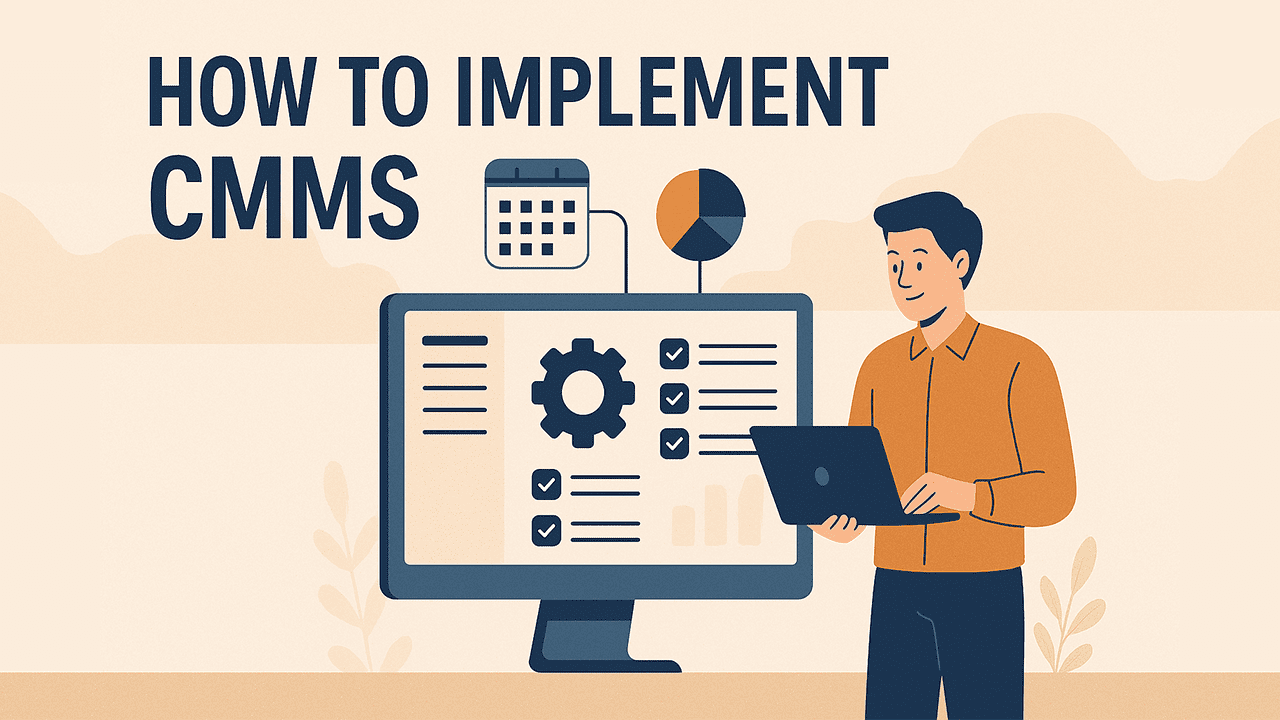
When you are ready to roll out, follow our step-by-step guide to CMMS implementation.

DreamzCMMS: a CMMS with built-in EAM

DreamzCMMS is a cloud CMMS with built-in enterprise asset management. It covers asset tracking, work orders, preventive maintenance, inventory and reporting, with iPhone and Android apps that work offline, so one platform handles both daily maintenance and asset lifecycle. Book a free demo to see it with your own assets and workflows. For budget planning, read our CMMS pricing guide.

CMMS FAQ

What does CMMS stand for?

CMMS stands for computerized maintenance management system. It is software used to plan, track and record maintenance on equipment and facilities.

What is a CMMS in simple terms?

A CMMS is a digital maintenance logbook and planner. It stores every asset, schedules inspections, assigns repair jobs and keeps the history of all the work done.

What is an example of a CMMS?

A CMMS is a category of software, so examples are products that manage assets, work orders and preventive maintenance in one system. DreamzCMMS is one example, with built-in enterprise asset management and mobile apps for technicians.

How does CMMS software work?

You add your assets, set up preventive maintenance schedules and create work orders. Technicians complete them, often on a mobile app, and the results are saved to the asset history and shown in reports.

What is the difference between CMMS and ERP?

A CMMS focuses on maintenance work, such as work orders, schedules and spare parts. An ERP focuses on finance, procurement and operations across the whole business. Many companies run both and connect them.

Is a CMMS the same as a CRM?

No. A CRM manages customer relationships and sales. A CMMS manages maintenance on assets and facilities. The names look similar, but they serve different teams.

What is the difference between CMMS and EAM?

A CMMS manages maintenance work. EAM manages the asset across its whole life, including cost, depreciation and replacement planning. See EAM vs CMMS for details.

Who needs a CMMS?

Any team that maintains equipment or buildings can benefit, especially when assets are critical, work is tracked on paper or spreadsheets, or audits require maintenance records. Small teams can use one as well as large enterprises.

What should a CMMS include?

At minimum: asset records, work orders, preventive maintenance scheduling, inventory, mobile access and reports. Larger teams also look for lifecycle tracking, integrations and user roles.

Related Posts You Can See

Maximizing ROI with Asset Maintenance Management Software

Maximizing ROI with Asset Maintenance

May 12, 2025
Why CMMS Integration Is Now a Strategic Imperative for Business Leaders

Why CMMS Integration Is Now

June 02, 2025
Tracking What Matters: Key Metrics for Rental Asset Performance

Tracking What Matters: Key Metrics

May 30, 2025
How a Mobile CMMS Platform Transforms Maintenance Efficiency in the Field

How a Mobile CMMS Platform

June 23, 2025
Preventive Maintenance Best Practices: Building Resilience Through Proactive Planning

Preventive Maintenance Best Practices: Building

May 09, 2025
Tailored Success: Customization for Enterprise Clients

Tailored Success: Customization for Enterprise

May 12, 2025
Achieve Preventive Maintenance Goals with CMMS

Achieve Preventive Maintenance Goals with

July 09, 2025
A Step-By-Step Guide To CMMS Implementation

A Step-By-Step Guide To CMMS

May 02, 2025
Shaping Tomorrow: Industry Trends in Facility Management

Shaping Tomorrow: Industry Trends in

May 13, 2025
Mobile-First Maintenance for Modern Field Teams

Mobile-First Maintenance for Modern Field

June 03, 2025
Revolutionizing Field Service: AR Maintenance Training for Modern Enterprises

Revolutionizing Field Service: AR Maintenance

June 30, 2025
Asset Lifecycle Management Best Practices: A Stage-by-Stage Guide

Asset Lifecycle Management Best Practices:

May 30, 2025
Optimize Uptime with Condition-Based Maintenance Using CMMS

Optimize Uptime with Condition-Based Maintenance

November 02, 2026
Mastering Acronyms for Services in Daily Operations

Mastering Acronyms for Services in

April 21, 2025
Mobile Maintenance App: Powering On-the-Go Efficiency for Modern Field Teams

Mobile Maintenance App: Powering On-the-Go

June 06, 2025
How CMMS Ends Reactive Maintenance

How CMMS Ends Reactive Maintenance

July 03, 2025
CMMS Pricing: Models, Cost Factors & What to Budget For

CMMS Pricing: Models, Cost Factors

November 06, 2026
Transform Maintenance Operations with Machine Learning

Transform Maintenance Operations with Machine

June 20, 2025
Asset Criticality Ranking: How to Prioritize Maintenance

Asset Criticality Ranking: How to

June 25, 2026
What Is Enterprise Asset Management? A CEO’s Guide to EAM

What Is Enterprise Asset Management?

July 14, 2026
What Is Preventive Maintenance & Why Does It Matter?

What Is Preventive Maintenance &

May 07, 2026
Optimizing Preventive Maintenance Schedules: From Chaos to Clarity

Optimizing Preventive Maintenance Schedules: From

May 21, 2025
Harnessing AI for Predictive Maintenance: The Future of Asset Performance

Harnessing AI for Predictive Maintenance:

June 02, 2025
What is Maintenance KPI

What is Maintenance KPI

April 23, 2025
IoT Predictive Maintenance: How Leaders Build a Smart Maintenance Ecosystem, Cut Downtime, and Scale Reliability in 2026

IoT Predictive Maintenance: How Leaders

March 13, 2026
What Is Predictive Maintenance? Benefits, Tools & Examples

What Is Predictive Maintenance? Benefits,

June 03, 2026
Maximize Asset Visibility and Efficiency with Lifecycle Tracking

Maximize Asset Visibility and Efficiency

June 04, 2025
Improve Uptime with Smart Condition Monitoring Tools

Improve Uptime with Smart Condition

June 12, 2025
Machine Learning for Asset Management: Predict Failures Early, Protect Uptime, and Control Cost

Machine Learning for Asset Management:

February 20, 2026
Complete Asset Maintenance Management Guide for Smarter Operations

Complete Asset Maintenance Management Guide

April 10, 2025
Turn Maintenance Performance Metrics Into Wins With CMMS

Turn Maintenance Performance Metrics Into

July 17, 2025
FFT analysis maintenance explained: how smarter teams detect bearing failures early, prevent downtime, and act before breakdowns

FFT analysis maintenance explained: how

March 30, 2026
Top Features to Look for in Asset Maintenance Software

Top Features to Look for

May 29, 2025
Unlocking the Benefits of Asset Management Strategy

Unlocking the Benefits of Asset

April 18, 2025
What is Equipment Downtime?

What is Equipment Downtime?

May 02, 2025
Preventive vs Predictive Maintenance: Picking the Best Fit for Your Assets

Preventive vs Predictive Maintenance: Picking

July 01, 2025
Reducing Downtime through Predictive Maintenance: A Smarter Way to Protect Operations

Reducing Downtime through Predictive Maintenance:

May 21, 2025
Cut Maintenance Costs with Smart CMMS Tools

Cut Maintenance Costs with Smart

July 16, 2025
Best Preventive Maintenance Options for Assets

Best Preventive Maintenance Options for

May 12, 2025
A Practical Guide to Different Types of Asset Maintenance

A Practical Guide to Different

April 15, 2025
Root Cause Analysis in Maintenance with CMMS

Root Cause Analysis in Maintenance

July 28, 2025
Key Differences of Preventive Maintenance vs Reactive Maintenance

Key Differences of Preventive Maintenance

May 08, 2025
How to Overcome Maintenance Backlogs with CMMS

How to Overcome Maintenance Backlogs

July 11, 2025
Secure CMMS Software for Safe Maintenance Operations

Secure CMMS Software for Safe

June 30, 2025
What Is Asset Lifecycle Management and Why Does It Matter?

What Is Asset Lifecycle Management

April 22, 2026
EAM vs CMMS: What Is the Difference and Which Do You Need?

EAM vs CMMS: What Is

October 25, 2026
Streamlining Work Orders: A Strategic Shift for Maintenance Leaders

Streamlining Work Orders: A Strategic

June 02, 2025

Subscribe to Our Newsletter

shield-1 100% SECURE
shield-2 We Respect Your Privacy

Related Posts You Can See

What Is Asset Lifecycle Management and Why Does It Matter?

What Is Asset Lifecycle Management and Why Does It Matter?

April 22, 2026
Tracking What Matters: Key Metrics for Rental Asset Performance

Tracking What Matters: Key Metrics for Rental Asset Performance

May 30, 2025
Root Cause Analysis in Maintenance with CMMS

Root Cause Analysis in Maintenance with CMMS

July 28, 2025
Secure CMMS Software for Safe Maintenance Operations

Secure CMMS Software for Safe Maintenance Operations

June 30, 2025
Unlocking the Benefits of Asset Management Strategy

Unlocking the Benefits of Asset Management Strategy

April 18, 2025
What is Equipment Downtime?

What is Equipment Downtime?

May 02, 2025
A Step-By-Step Guide To CMMS Implementation

A Step-By-Step Guide To CMMS Implementation

May 02, 2025
EAM vs CMMS: What Is the Difference and Which Do You Need?

EAM vs CMMS: What Is the Difference and Which Do You Need?

October 25, 2026
Key Differences of Preventive Maintenance vs Reactive Maintenance

Key Differences of Preventive Maintenance vs Reactive Maintenance

May 08, 2025
IoT Predictive Maintenance: How Leaders Build a Smart Maintenance Ecosystem, Cut Downtime, and Scale Reliability in 2026

IoT Predictive Maintenance: How Leaders Build a Smart Maintenance Ecosystem, Cut Downtime, and Scale Reliability in 2026

March 13, 2026
Mobile Maintenance App: Powering On-the-Go Efficiency for Modern Field Teams

Mobile Maintenance App: Powering On-the-Go Efficiency for Modern Field Teams

June 06, 2025
A Practical Guide to Different Types of Asset Maintenance

A Practical Guide to Different Types of Asset Maintenance

April 15, 2025
Best Preventive Maintenance Options for Assets

Best Preventive Maintenance Options for Assets

May 12, 2025
Shaping Tomorrow: Industry Trends in Facility Management

Shaping Tomorrow: Industry Trends in Facility Management

May 13, 2025
What Is Preventive Maintenance & Why Does It Matter?

What Is Preventive Maintenance & Why Does It Matter?

May 07, 2026
How to Overcome Maintenance Backlogs with CMMS

How to Overcome Maintenance Backlogs with CMMS

July 11, 2025
Revolutionizing Field Service: AR Maintenance Training for Modern Enterprises

Revolutionizing Field Service: AR Maintenance Training for Modern Enterprises

June 30, 2025
Reducing Downtime through Predictive Maintenance: A Smarter Way to Protect Operations

Reducing Downtime through Predictive Maintenance: A Smarter Way to Protect Operations

May 21, 2025
Cut Maintenance Costs with Smart CMMS Tools

Cut Maintenance Costs with Smart CMMS Tools

July 16, 2025
Machine Learning for Asset Management: Predict Failures Early, Protect Uptime, and Control Cost

Machine Learning for Asset Management: Predict Failures Early, Protect Uptime, and Control Cost

February 20, 2026
Achieve Preventive Maintenance Goals with CMMS

Achieve Preventive Maintenance Goals with CMMS

July 09, 2025
Why CMMS Integration Is Now a Strategic Imperative for Business Leaders

Why CMMS Integration Is Now a Strategic Imperative for Business Leaders

June 02, 2025
Preventive vs Predictive Maintenance: Picking the Best Fit for Your Assets

Preventive vs Predictive Maintenance: Picking the Best Fit for Your Assets

July 01, 2025
Mobile-First Maintenance for Modern Field Teams

Mobile-First Maintenance for Modern Field Teams

June 03, 2025
Complete Asset Maintenance Management Guide for Smarter Operations

Complete Asset Maintenance Management Guide for Smarter Operations

April 10, 2025
What Is Predictive Maintenance? Benefits, Tools & Examples

What Is Predictive Maintenance? Benefits, Tools & Examples

June 03, 2026
Preventive Maintenance Best Practices: Building Resilience Through Proactive Planning

Preventive Maintenance Best Practices: Building Resilience Through Proactive Planning

May 09, 2025
CMMS Pricing: Models, Cost Factors & What to Budget For

CMMS Pricing: Models, Cost Factors & What to Budget For

November 06, 2026
Maximizing ROI with Asset Maintenance Management Software

Maximizing ROI with Asset Maintenance Management Software

May 12, 2025
Tailored Success: Customization for Enterprise Clients

Tailored Success: Customization for Enterprise Clients

May 12, 2025
Optimizing Preventive Maintenance Schedules: From Chaos to Clarity

Optimizing Preventive Maintenance Schedules: From Chaos to Clarity

May 21, 2025
Transform Maintenance Operations with Machine Learning

Transform Maintenance Operations with Machine Learning

June 20, 2025
Streamlining Work Orders: A Strategic Shift for Maintenance Leaders

Streamlining Work Orders: A Strategic Shift for Maintenance Leaders

June 02, 2025
Maximize Asset Visibility and Efficiency with Lifecycle Tracking

Maximize Asset Visibility and Efficiency with Lifecycle Tracking

June 04, 2025
What Is Enterprise Asset Management? A CEO’s Guide to EAM

What Is Enterprise Asset Management? A CEO’s Guide to EAM

July 14, 2026
Asset Lifecycle Management Best Practices: A Stage-by-Stage Guide

Asset Lifecycle Management Best Practices: A Stage-by-Stage Guide

May 30, 2025
Mastering Acronyms for Services in Daily Operations

Mastering Acronyms for Services in Daily Operations

April 21, 2025
What is Maintenance KPI

What is Maintenance KPI

April 23, 2025
Top Features to Look for in Asset Maintenance Software

Top Features to Look for in Asset Maintenance Software

May 29, 2025
Turn Maintenance Performance Metrics Into Wins With CMMS

Turn Maintenance Performance Metrics Into Wins With CMMS

July 17, 2025
Improve Uptime with Smart Condition Monitoring Tools

Improve Uptime with Smart Condition Monitoring Tools

June 12, 2025
How a Mobile CMMS Platform Transforms Maintenance Efficiency in the Field

How a Mobile CMMS Platform Transforms Maintenance Efficiency in the Field

June 23, 2025
Asset Criticality Ranking: How to Prioritize Maintenance

Asset Criticality Ranking: How to Prioritize Maintenance

June 25, 2026
Optimize Uptime with Condition-Based Maintenance Using CMMS

Optimize Uptime with Condition-Based Maintenance Using CMMS

November 02, 2026
FFT analysis maintenance explained: how smarter teams detect bearing failures early, prevent downtime, and act before breakdowns

FFT analysis maintenance explained: how smarter teams detect bearing failures early, prevent downtime, and act before breakdowns

March 30, 2026
How CMMS Ends Reactive Maintenance

How CMMS Ends Reactive Maintenance

July 03, 2025
Harnessing AI for Predictive Maintenance: The Future of Asset Performance

Harnessing AI for Predictive Maintenance: The Future of Asset Performance

June 02, 2025