 BACK TO Blog
Asset Rental Management
Rental Asset
Seasonal Demand Planning for Equipment Rental: Complete Guide
- July 01, 2026
- DreamzCMMS Team
- 13 minutes read
- July 01, 2026
- DreamzCMMS Team
- 13 minutes read
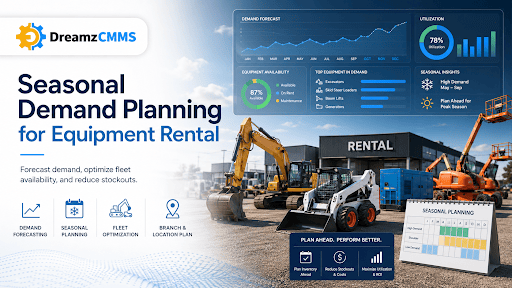
Most equipment rental companies follow a very cyclical business model – phone rings off the hook in the first warm week of spring, and a few months later, it’s reversed and equipment is stuck in a yard making no money for the company. A good seasonal demand plan can help to smooth out the highs and lows of the ‘up and down’ rental business.
Landscapers need aerators, construction companies need to hire out a fleet of the largest excavators on the market and event production companies need to rent out generators, tents and tables by the score. And all of this needs to happen at the beginning of spring – the first warm week in fact. And it happens every quarter – so why is it such a problem for you and your business?
Seasonal demand planning for equipment rental is the difference between maximizing your rental revenue, having happy staff and an ideal inventory of equipment to service your customers and a stressful chaotic and frantic run up to your busy season. A good seasonal demand planning process for equipment rental helps ensure that your business is operating at maximum potential during all parts of the year. And the opposite occurs with a lack of planning, where a large inventory of idle equipment is not generating enough rentals.
This guide to seasonal demand planning for equipment rental will explain what it’s like to put together a plan, why it’s so important, and how to set up a system to put your rental equipment demand planning ahead of the demand for rental equipment.
Why Seasonal Demand Planning Rental Equipment Strategy Actually Matters
The demand for rental equipment follows a number of predictable seasonal patterns, related to weather, the construction cycle, agricultural seasons, and to events. School and government calendars can also affect demand for rental equipment, particularly for specialized items used by these organizations. Yet, many rental companies do not follow a predictable seasonal demand planning rental equipment strategy, instead relying on past rental demand for similar pieces of equipment as the primary basis for their forecasting. This approach can work well in average years, but can fail completely in years when the usual patterns are disrupted by early weather, late monsoons, or other unanticipated events.
A good sense of the seasons for your rental company can help you work in a rhythmic fashion throughout the year and achieve many positive results. Not only will you have the right amount of the right type of rental equipment available to meet peak demand, you will have the required number of people on hand to serve your customers as well as to bill them at peak rates. If done correctly, you can also effectively market your various types of rental equipment to your customers during the time when they are most needed. All of this can be accomplished by developing a solid rental equipment strategy.
A solid seasonal demand planning strategy provides the foundation for purchasing, staffing, pricing and marketing throughout the seasons. Without such a plan, managers are usually blind to the normal in- and out- swings in demand and are likely to either miss out on renting out equipment at premium prices or hold inventory of very expensive items that are not bringing in any rental revenue while sitting idle in a yard.
Understanding Equipment Rental Demand Patterns
Before you can plan for seasonality, you need to actually see it. Most rental businesses have To develop a seasonal demand planning rental equipment strategy, first recognize and understand the typical patterns of demand for your rental products. This typically requires the use of historical rental demand data by month, by product, by location. Unfortunately, many companies have large amounts of historical transaction data in spreadsheets or even in their rental software; however, the data has not been pulled together to define typical demand patterns for a rental company.
When looking at historical rental data for individual types of equipment, by month, one will typically see a number of different demand patterns superimposed one on top of another. For example, weather-driven demand, construction cycles, event-driven demand, and agricultural cycles can all create their own demand patterns that are superimposed one on top of another.
Weather-driven demand. Lawn & garden equipment, generators and heating equipment follow the weather. A cold snap or unexpected storm could create huge demand for specific pieces of equipment within days.
Construction cycles. Construction follows a predictable cycle. In most parts of the country, commercial and residential construction peaks in the Spring and Summer months. Heavy equipment rentals such as skid-steer loaders, telehandlers, aerials, and backhoes are in high demand to support the construction site. Many rental companies have discovered that purchasing used equipment to support peak demand periods such as these can be a cost effective way to earn rental revenue during the company’s busiest time of the year.
Event-driven demand. While these demands have short periods of high demand for Tent, table, generators and staging equipment rental needs increase for short periods of time around wedding season, holidays, festivals and special events in local communities.
Agricultural cycles. Rural agricultural equipment, such as tractors and tillers for example, follow planting and harvesting seasons to drive peaks in demand.
When you plot out and understand the Patterns of Seasonal Demand for the types of Rental Equipment that your business offers to your customers, then what you have is a method of planning for and managing the needs of your customers throughout the seasons of the year. The best part is that this process can become second nature to you and your employees - we refer to it as a Seasonal Demand Planning rental business model.
Building a Real Demand Forecasting Rental Business Model
A simple demand forecasting rental business model does not have to be complicated. There are three main components to building a good demand forecasting rental business model. First, a historical trend for categories in certain regions during certain months. Second, current bookings for the near future. Third, leading indicators for future demand (e.g. weather forecasts, local project pipelines etc.).
Here's a practical way to build one:
- Collect 2-3 years of historical rental data organized by category, region and month. The more detailed your historical data the better you will be to see differences between a downtown location and a suburban location for example.
- In addition to historical patterns, you can use leading indicators. These are events that will happen before demand happens. For example: local building permits, weather forecasts, or an event calendar.
- Utilization rate in relation to booked equipment plus number of bookings: High number of bookings with low utilization means you have way too much of the same equipment in wrong locations as opposed to not having enough of other types of equipment for other jobs.
- Determine a review frequency to analyze your data. For the majority of rental product lines, a monthly review is sufficient. However, fast moving seasonal products like those for the marine or event markets may require a weekly review during peak season.
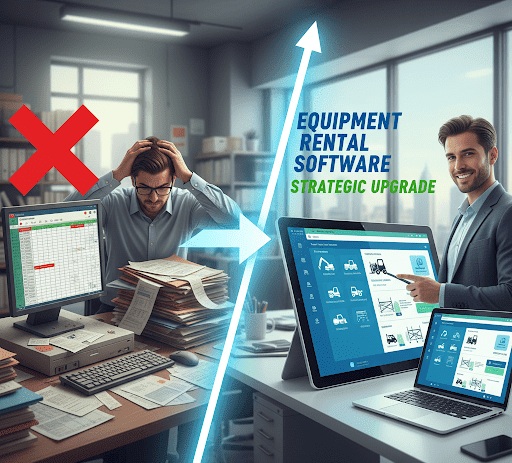
For most Rental Businesses, getting their demand forecasting into shape using a spreadsheet is a challenge too far. They have the data, but getting it to work for them is another matter. It takes so long to reconcile the bookings across all locations, to pull together all the demand trends, that by the time they have worked it all out, it is three weeks late. In most cases, that is far too late. Equipment Rental Management Software earns its keep. Instead of manually reconciling bookings across locations, you get a live view of demand trends as they're forming, not three weeks after the fact.
Rental Business Demand Planning: Getting the Timing Right
There is a timing to ordering equipment to fill a forecast. You don’t want to order equipment too early and have it sit in storage depreciating in value before you can even use it to generate revenue. On the other hand, you don’t want to order the equipment too late and have a customer go to your competitor to get the equipment they need.
Below are some purchase timing guidelines: 60-90 days prior to peak demand for orders to arrive and for any required maintenance or pre-delivery work to be completed.
- Buy 60-90 days prior to peak demand. Allow time for supplier lead time. Then allow for time for pre-delivery inspection (PDI) and to rental ready the unit.
- Spread out your purchases of new equipment throughout the rental season. This will help to even out the expense of new purchases for the inventory. You will also be able to see how early season demand stacks up to your forecast and make changes as necessary before it is too late.
- Ensure your business has built in a little extra reserve capacity for your top rental products by season for those items which generally cannot be forecasted as accurately. Then, for those categories that are anticipated to perform well (hopes), do not overstock as you would for the products that typically out perform.
The process of rental business demand planning is one that needs to be carefully managed on an on-going basis and supported by the correct software. By sticking to a well-thought out plan and avoiding last minute ad-hoc ordering for peak season, rental businesses can ensure that they are meeting the demands of their customers and making sufficient returns from their rental equipment.
Equipment Rental Capacity Planning Across Locations
Seasonal location demand planning can also affect the capacity planning for rental equipment, particularly if a business operates from multiple locations. The demand for various types of rental equipment at different times of the year does not necessarily occur simultaneously at all locations, nor to the same extent. A business located near a coast for example could potentially start the spring landscaping rental season a month or more before similar inland businesses.
There are Rental Businesses that manage to effectively plan their equipment rental capacity. These companies treat their fleet of rental equipment as one pool of rental equipment. So they can plan the use of their rental equipment on a fleet basis. In stark contrast to companies that plan on a location by location basis treating their rental inventory and assets as if they were stored in separate rental locations.
- Track the rental equipment utilization by each individual rental location in real time and not just on a monthly basis.
- Establish transfer routes between branches close to each other, to transfer underutilized equipment in time to locations where it is needed.
- Determine minimum amount of stock that must be held at each location for each category of equipment.
Rental Inventory & Asset Management tools also provide Rental fleet capacity planning tools. In this way the planning of the rental equipment rental fleet on a seasonal basis is turned into a routine activity. The Rental equipment moves automatically towards demand.
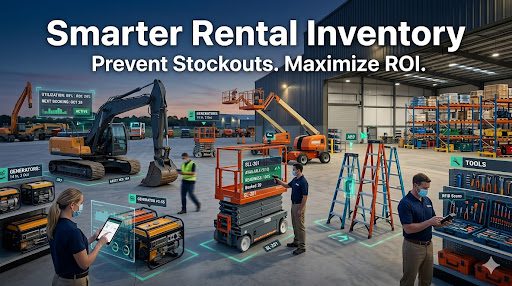
Seasonal Rental Inventory Planning That Prevents Stockouts
To prevent losing rental income due to not having the right equipment for hire at the right time, rental companies go to great lengths to increase their stock of rental equipment for seasonal periods with high demand. Seasonal Rental Inventory Planning refers to the processes and actions to increase a company’s rental inventory for seasonal periods with high demand.
The following are several practices for Seasonal Rental Inventory Planning to avoid Stockouts:
Categorize your fleet by seasonality. Categorize equipment based on the season in which they are used the most (i.e., highest seasonality). These items will have peaks and valleys in demand throughout the year (e.g., aerators, snow blowers, and generators all are high-seasonality items) whereas other categories will remain relatively constant throughout the year (i.e., steady-every-day earners – chain saws, hedge trimmers, rope Saws, etc.).
Set the Re-Order points for stock based on supplier lead time. For example if your supplier takes 3 weeks to deliver, then you would set the Re-Order point for stock for that item 3 weeks prior to that plus Safety Stock. Please do not rely on a guess as to when you need to Re-Order stock for your Rental Business.
Also important to monitor is the average rental period for each category of rental equipment. Items that are used for only a short period of time could potentially support many more rentals than equipment that is used for long periods of time, even if the latter have more bookings.
It is also a good practice to review your inventory on a weekly basis during peak periods as circumstances can change quickly. While a monthly review of trends is good for planning for the season, it is too late to make adjustments for current circumstances.
It is also important to realize that demand variability exists for every product category. Even the best of planners cannot eliminate all variability and so it must be managed in order to prevent lost revenue. This is why Inventory Management for Rental Business tools are so important because they provide a framework in which variability can exist yet still be managed in a manner that provides the highest degree of protection for a company’s revenue.
Bringing It All Together With the Right Tools
Many elements of a rental operation need to be coordinated to prepare for the demand of seasons such as purchasing, staff, pricing and location. The more you can manage these related elements as one single unit of work as your rental operation grows, the better your rental operation will perform.
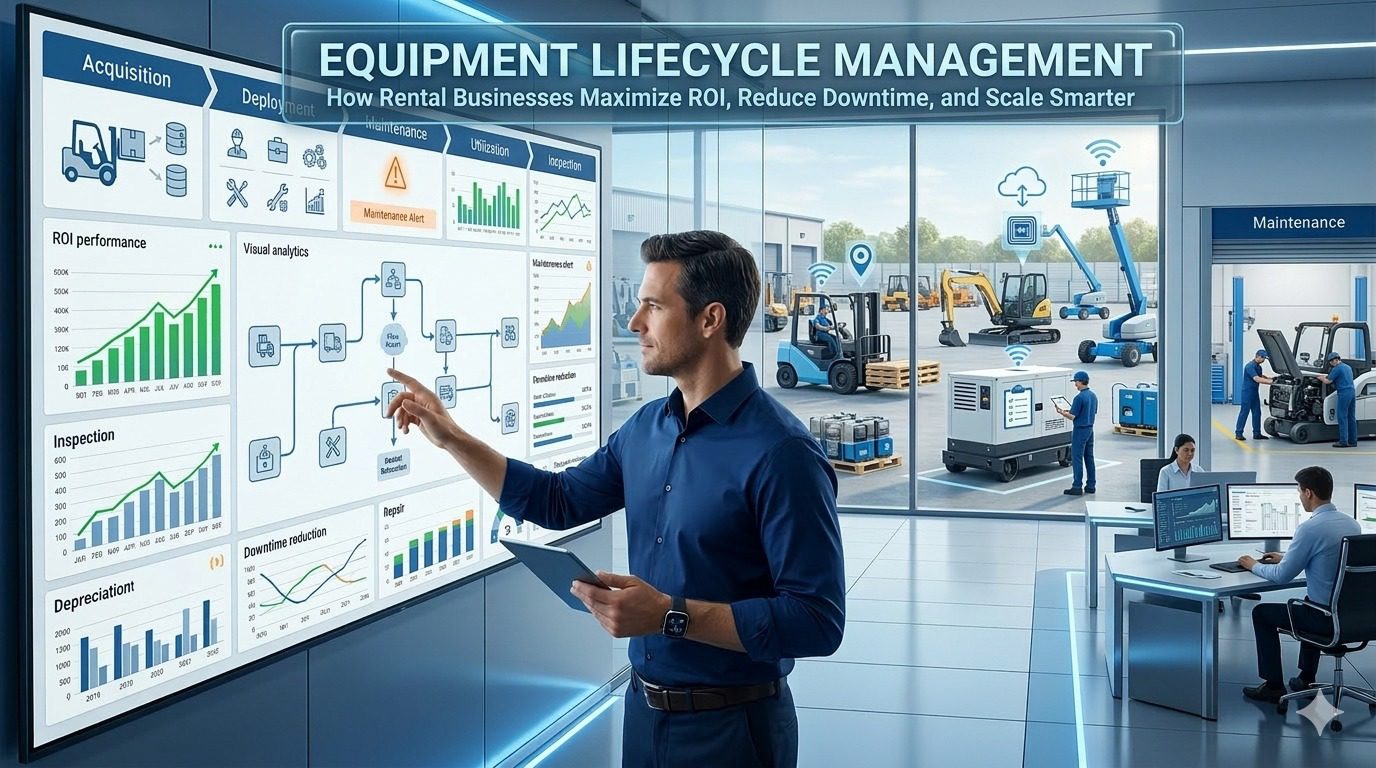
Rental Demand AI analyzes past performance and open bookings to generate actionable demand forecasts which can then be used in sync with a Rental Inventory Management System, to have the right inventory available at the right time. The same demand data can also be used to synchronize with an Asset Maintenance Management Software, to ensure all rental equipment is properly maintained and ready for rental as needed by customers.
These systems are often integrated together within a platform such as DreamzCMMS to allow for workflow of demand forecasting, inventory visibility and scheduling of work orders for maintenance within a single process.
The Bottom Line
Your Rental business will always experience seasonal demand fluctuations. The issue is how you manage that demand fluctuation to make the most of it. By using demand planning helps Rental businesses have less stockouts, get the best use of their assets, have better staffed days, and most importantly increase their profit margins during peak times.
If you are currently managing your rental business with last year’s spreadsheets then it is time to start shopping for a better tool to manage your fleet.
Would you like to see how we can help forecast, plan and meet demand for every season? Book a free demo to see how DreamzCMMS can support your Rental Business.

Subscribe to Our Newsletter
 100% SECURE
 We Respect Your Privacy
 Ready for More?
Talk to one of our CMMS experts and see how DreamzCMMS can simplify your maintenance operations.
Book a free consultation