 BACK TO Blog
Asset Rental Management
RFID Asset Tracking
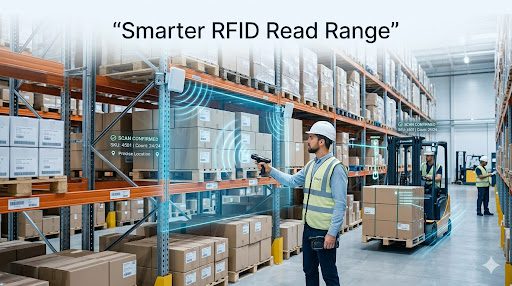
RFID read range explained: how smarter teams improve warehouse accuracy, reduce blind spots, and get more from every scan
- March 19, 2026
- DreamzCMMS Team
- 19 minutes read
- March 19, 2026
- DreamzCMMS Team
- 19 minutes read
Introduction
An RFID read is defined as the event where an RFID reader detects an RFID tag. The number of reads that are generated and captured is directly correlated to the accuracy of inventory reads and the overall quality of the data provided by your inventory management system. When there are many RFID reads, the system is able to perform a better job of tracking and counting your inventory.
Most companies view read range as a non-essential technical feature and treat it as a value listed on a product data sheet. A longer read range is often seen as a feature that is somehow linked to inventory management performance. The read range of an RFID tag is, however, more than just a feature, and it has very real consequences for the performance of inventory management processes.
RFID read range is important to more than just the hardware. A read range that is too short and tags will be missed. A read range that is too long and incorrect items will be read. If the RFID environment is not optimized for the specific use case, you may still end up collecting data, but the data is likely to be incorrect for your business needs.
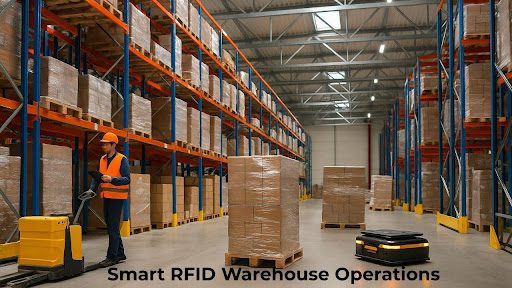
In an RFID read range warehouse environment, this is very important. A warehouse can be described as a fast-paced, dynamic environment with considerable changes. Inventory turns over rapidly, spaces change, and products flow rapidly through different zones. A poor read zone can create significant barriers to productivity. Creating a smart read zone is the key to enabling more productive, efficient, and accurate operations.
Why RFID read range has become an operations issue
Leaders do not look at the read range the same way an engineer does. They do not start with antennas, power settings, or tag design. They start with missed scans, stock errors, delayed updates, and time lost in checking what should already be visible.
RFID read range in a business context is a topic that is highly relevant to today’s inventory environment. A dock door occasionally missing pallets of inventory is more than just a technical issue. Inventory being read from the wrong storage zone on a shelf is more than just a technical issue. Today, the consequences of having a technical problem, such as inventory not being properly scanned at the dock door or read from the correct storage zone, can be very business-impacting. Inventory at the dock door may not be being scanned, which then affects our ability to know what inventory we have on hand. Inventory on a shelf may be read from a storage zone other than where it is currently stored, which affects the inventory we have on hand for inventory requests. The lack of accurate inventory can cause issues in terms of operational processes, labor, and customer service.
These days, visibility needs to be clear and unobstructed. Many of our customers are investing a lot more effort and resources to ensure that their RFID readers will have the necessary range to achieve the automation promised by RFID. The promise is that they will be able to read the right tag at the right time at the right place, thereby turning RFID from an inventory tracking tool to an operational tool.
The hidden cost of weak RFID read range
Typically, a slow read speed is a symptom that creeps up on you. Your Warehouse Management System seems to be running fine, so the business is happy and unaware of any issues. It is only when missed scans start to accumulate, and discrepancies between the stock record and what is on the shop floor are discovered, that the problems begin to manifest. Inventory lookups need to be redone, and management loses confidence in the integrity of the data in your warehouse.
Having a longer read range isn’t always the answer. While longer read ranges can be beneficial, a tag reader that is seeing data from tags that are being read from outside the intended area can actually cause more problems than it solves. Tags that are read from outside the area can cause more noise and inaccuracy than a shorter range that is more accurate. An accurate system may require a shorter read range to ensure all data is coming from within the desired area.
Every time we talk about increasing read range, we’re talking about reducing friction. Reducing errors, reducing manual checks, and increasing visibility throughout the supply chain and operations.
Why basic RFID setups often fail
A lot of RFID projects begin with the wrong question. The company decides to use RFID, and they ask about the distance the reader will cover. Instead, they should be asking themselves where they need to have the tag read. The technology will work out the rest, but if you begin by thinking about RFID as a technical problem to be solved, it will be a much harder journey.
Increasing the power of an RFID reader does not necessarily create a good RFID system. The read zone of the RFID reader must be adapted to the operational processes. This calls for RFID Read Zone Optimization in Warehouse Planning. In a warehouse, you want to control the coverage of your RFID readers rather than just increasing the reading range.
Another reason for early involvement in RFID tag read range comparison is that different RFID tags on different objects behave in vastly different ways on different surfaces. Cartons, pallets, racks, tools, and different types of metal surfaces can behave very differently to the same tag. The same reader will perform well with one tag but not as well with a different tag on a different item. The read range of the system is a result of the interaction of the reader, the tags, and the environment.
What affects the RFID read range in real conditions
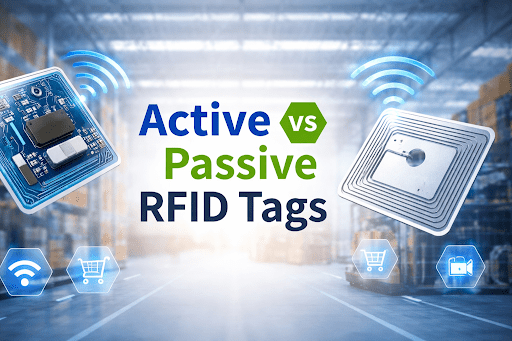
There are a multitude of RFID read range variables that can affect the performance of an RFID system. The tag type is one of the most important variables that can affect the RFID read range of a passive tag, which is the amount of energy that is received from the reader field. This can vary with position, and the type of active RFID tags will generally have a greater RFID read range than passive tags, as they have an on-board power source.
The physical environment also changes results. Some of the environmental factors that can affect RFID read range include: walls, liquids, storage density, reader position, and vehicle movement. There are many other environmental factors as well. Some of the more common are moisture, dust, dirt, salt air, extreme cold, extreme heat, metal interference, etc. Metal interference is a common problem in an industrial environment. Many metallic objects reflect and/or block the signal so that clean reads are not possible.
Reader setup is just as important as tag setup. Optimizing the read range of an RFID antenna and selecting the correct power output range for the RFID reader are closely linked. Low power output can lead to missed tag reads, while high power output can result in unnecessary reads from off-tag. The key to a good performance is finesse, not force.
Why tag choice matters more than many teams expect
Every company we’ve looked at has a “readers first” approach. And that’s fairly understandable, as readers are easily compared and are easily the most visible and expensive component of a barcode scanner. However, it’s actually wrong to focus on readers when thinking about the overall performance of a barcode scanner. The tag is not a reader, and the tag is not a barcode. The tag is a fully functional auto-identification system.
Deciding which tag to use in which application is a critical decision. Deciding which tag to use based on RFID tag read range comparison can be important. For example, you may be using tags for general use in your warehouse. You may be using other tags for metal assets or for extremely hostile surfaces, and then you may have longer read ranges for longer distance applications in the warehouse.
Tags can vary depending on the workflow. Choose a tag that is relevant to your workflow. Choosing the strongest tag available is not always the goal; choosing a tag that is relevant to your workflow is. A tag that is chosen for an environment that it is not suited for will require more maintenance for better data quality. A smart RFID read range strategy starts with the use case. Even if you have thousands of devices.
What modern RFID read range should deliver
You can turn a great reader into a test reader. That’s not really what we use them for in modern times. We want to use these systems in the field. We want to track production and track heavy materials as they move, roll, and fall. RF needs to be reliable; they can’t have wide read ranges and have a success rate of less than 50%, for example.
Data integrity requires consistent read zones and high accuracy in your scanning operation. No guesswork over whether a pallet was properly scanned or whether a mis-scanned reading was captured from the wrong aisle. Clean scans mean fewer readings need to be re-scanned and a higher confidence level in your data and your operational decisions.
Inventory management and warehouse operations require timely and accurate inventory data for effective Warehouse and Inventory Management and Supply Chain & Logistics Tracking. An accurate read zone on your inventory tracking system helps ensure that inventory data updates occur quickly and efficiently for every movement, handoff, or update.
This matters across the board because both depend on timely, reliable movement data. When the read zone is accurate, stock movement, handoffs, and inventory updates become easier to manage.
The RFID read range blueprint: how smarter teams get better results
High-performing teams don’t set out to be the best on the spec sheet. Instead, they identify their workflow pain points, consider where data is falling through the cracks, and determine where scans are being missed or where radiology readings are requiring significant explanation to other departments in order to facilitate care.
A warehouse is a far cry from a lab environment. There are pallet racks, products wrapped in plastic, forklifts, cluttered storage, fast moving products, and a whole lot more. Instead of relying on product data sheets, we need to validate the factors affecting RFID read range performance in the actual warehouse.
We previously explored steps to get RFID up and running, such as EMI mitigation, waveguide design, and selection of RF cable and RFID antenna. Having optimized the RFID antenna read range of an application, we now move on to the reader tuning phase.
During this phase, we need to determine the position of the readers to ensure maximum read range for the selected orientation of the antennas, and which RF reader power level should be applied to match the tuned reader configuration to the tag and reader characteristics at that point. In practice, even minor variations of a few degrees in the orientation of an antenna and a few feet of movement can have dramatic effects.
Also in practice, more than designing and equipping the RFID reader, it is the RFID read range that can be optimised through proper design and tuning of the configuration and parameters, rather than just through hardware changes.
How leaders know the setup is working
You can’t measure a leader’s success by the distance from the reader to the stock. Take a closer look at the operations inside your warehouse. Are you seeing improvements in your stock counts, reduction in missed reads, and quality data flowing through your receiving and shipping zones? This should boost team confidence in the accuracy of the data and confirm that the visual feedback from the system matches the on-floor inventory activity.
RFID reader range is at the heart of all your RFID operations. When you have the right range of RFID reader coverage, you will have better data, streamlined processes, and more time focusing on higher-value activities. If your signal is getting stronger, your RFID is not only on but also driving real business value.
Common use cases where read range matters most
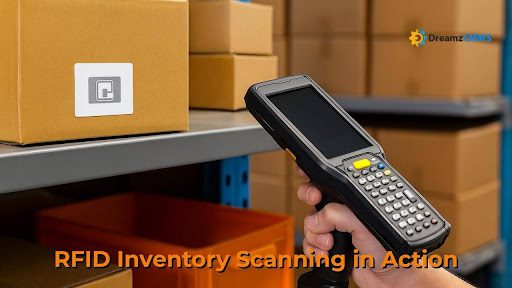
A good read range is important at the receiving station so that you are able to get all of the data you need from the barcode on the product without having to slow down the movement of inventory. A good read range is also important at the storage locations to ensure that you are reading the correct side of the bin rather than where it was scanned last. A good read range is also very important at the pack and ship location to ensure that the correct products are leaving your facility.
This is also important for internal moves. When goods are moved from one zone to another, a clean handoff occurs. A controlled read range can also help to bring items into better view and reduce scanner gun wars.
If you are looking for ideas for expanding your business’s RFID program, you may also be interested in learning more about RFID for warehouse inventory, the costs of a warehouse RFID warehouse management system cost or even warehouse RFID systems. Choosing the correct read range for an RFID warehouse inventory system can be an involved process and can require a major overhaul of the warehouse layout.
Why RFID read range matters at every stage of warehouse work
RFID read range is not limited to the point of a single scan in the warehouse. The read range of an RFID tag is relevant from the very first moment that the goods arrive in the warehouse until the goods leave the warehouse. In individual process steps, a poorly set up read range might only lead to a few problems. But these minor problems accumulate very quickly and can soon hinder the entire process.
There are many scenarios where the receiving team needs to read inventory as quickly and accurately as possible. If the inventory is not read quickly and accurately, it will be mislabeled from the very start and will continue through the inventory storage, pick/pack/ship process. The read range of the barcode needs to occur early in the supply chain process.
RFID read range in a storage area is determined by where you position the items within the warehouse. If the RFID tag is not being read, it may appear that an item has been incorrectly placed within the warehouse or that there has been no movement of the inventory. And although the item may be actually stored in the correct location, the inability to read the tag can cause huge issues when trying to locate the item. What starts out as a small issue can end up being hours of searching for what you thought was an incorrectly placed item.
This issue is also being seen in the pick zones. It’s important for the inventory pickers to have confidence that they have the right product and that the Scan Module is scanning accurately at the time they are picking. The insufficient scan coverage and uncontrolled scan environment are still causing a lot of issues for pickers and are a common cause of lost order accuracy, with the resulting exception handling that needs to occur to ensure the order is picked and released properly and promptly to avoid increased checker inspection points and longer overall fulfillment times.
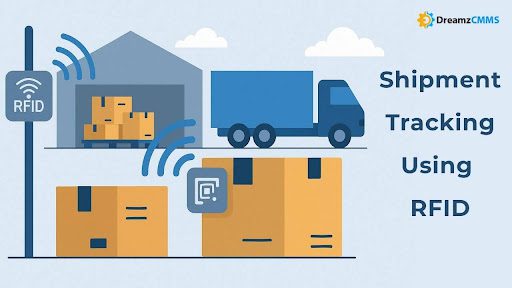
The packing and shipping areas are also dependent on good read performance. This is one of the last checkpoints for products before they leave the warehouse. Missing a read here greatly increases the potential for errors. Therefore, RFID read range warehouse planning should be done in the context of the entire supply chain process and not treated as a secondary system configuration.
Why longer range is not always better
A common misconception with our customers is that a longer range means a better product. While that may be true in many other applications, in the warehouse, it isn’t always the case.
In a couple of scenarios, we may need to cover more area. For example, if we have a dock door, we might want to cover an entire broader section of the door to make sure we catch all of the activity at the door. We may have open transit zones that we want to cover a larger area with the read field in order to have more of the area in view. On the other hand, in other cases, we may need to cover smaller areas more precisely.
For example, if we are tracking shelving zones, packing benches, or workstations, we may need to have very precise control of the area that our reader sees in order to read only the tag that is currently located in that zone. Large fields of view can pick up tags on adjacent shelves or on carts of items that are moving through.
RFID read zone optimization and warehouse planning are important parts of any inventory management system. We are not interested in scanning everything that falls into the read zone. Rather, we are only interested in scanning items that are supposed to be in that read zone. The quality of our inventory data will greatly depend on being able to selectively scan tags that are in the right location in the read zone.
The maximum RFID read range should not be used as an indicator of system quality. A better system does not read further. A better system is able to read accurately, reliably, and within the parameters required. Should you be looking to increase your RFID read range, think first about the control and workflow fit, and you will be richly rewarded with a far greater and longer-lasting benefit.
Common mistakes businesses make with RFID read range
One of the most common mistakes made by companies that are implementing RFID systems is that they focus on the reader and buy a lot of very powerful hardware in the belief that their problems will then be solved. The fact is that RFID system performance is a system-wide performance, and changing the reader to a more powerful device does not change the performance of the system, no matter what you are told by the salesperson. It does not matter how powerful the reader is if you have made a bad choice of tag, or if you have placed the antenna in a poor location, or if you have created a read zone that is poorly suited to the task at hand.
Another common error is using the environment tag, assuming that an RFID tag reads well in one material, it will read well in all materials. The reality is that there is far more variation between materials than most people assume. Common examples include: Metal Liquids, Curved surfaces, Dense packaging. Since most assumptions about tag performance are incorrect, the only reliable method of determining the performance of RFID tags in an application is to test them. Accurate performance of an RFID tag has a direct relationship to the accuracy of the system it is used in.
There are a variety of other things that can cause problems with bar code scanning devices, but that are not necessarily a direct result of how the scanner is constructed. In particular, the reality is that a lot of product rollouts do not involve any field testing of the product to evaluate how it might behave in a real-world environment. In its place, vendors’ statements and promises concerning a scanner’s capabilities are taken as gospel, and customers expect the product to perform as it did during a small demo in a vendor’s test lab to perform as well in a real-world application. Nothing could be further from the truth.
The real world of a warehouse is a very different place from a lab or a demo area. In the warehouse, forklifts are barreling down the aisles, products are stacked everywhere, heavy inventory is loaded onto shelves and bins, products are scattered on the floor, narrow aisles to navigate through, and the layout is never the same for more than a few days at a time. None of these things exist in a demo lab or test lab.
I believe antenna placement is also a commonly overlooked aspect. Having good equipment does not guarantee good read range performance if the antenna is not aligned or positioned correctly. Optimizing an RFID antenna read range requires some knowledge, as the system can be very sensitive to small changes in antenna positioning, and the wrong positioning can easily offset any advantages gained from a more efficient or better antenna.
Missed reads can occur for several reasons, including reader power. While increasing reader power can be an attempt to deal with missed reads, it is not always the correct answer. In fact, it can create new problems. Increasing reader power can capture tags from areas beyond what was intended and can severely degrade system performance.
RFID read range is not just a number
So when we refer to RFID read range, at first it may seem like a trivial technical specification. So what’s the big deal if you have 10 feet of read range versus 15 feet? Why does it even matter if we change out an antenna or upgrade the power of the reader? Yet when you begin to think through all how read range affects the overall efficiency of an RFID system, the impact becomes undeniable.
The integrity of your inventory, the efficiency of your first and last scans, and the quality of your movement data can all be impacted by the RFID read range of your assets. Improving inventory integrity, first and last scan efficiency, and making movement data meaningful versus noisy are all important for tracking centers. So, treating the RFID read range as a trivial configuration parameter is not a good practice.
Operational efficiency is about speed and control. Functionality is about visibility. When the read zone is in the right position, it enhances the overall efficiency of the operational workflow.
Build smarter visibility with DreamzCMMS
Still dealing with missing reads, weak scan zones, and spending a lot of time manually adjusting inventory levels? Well, it’s probably time for a change. With our RFID Asset Tracking Software, using RFID and linked to your warehouse, logistics, and operations management workflows via our enterprise-class DreamzCMMS system, we can provide you with real-time visibility of all your inventory and equipment. Request a Free Demo to learn more.
The combination of all functionalities in one sensor creates a more integrated system that gives more accurate positioning, better coverage, and can fully utilize the potential of RFID technology.









Subscribe to Our Newsletter
 100% SECURE
 We Respect Your Privacy
 Ready for More?
Talk to one of our CMMS experts and see how DreamzCMMS can simplify your maintenance operations.
Book a free consultation