 BACK TO Blog
Asset Rental Management
Field Service
Field Service Demand Forecasting: Why It Matters
- June 25, 2026
- DreamzCMMS Team
- 12 minutes read

- June 25, 2026
- DreamzCMMS Team
- 12 minutes read
Demand forecasting for field service organizations is a process used by the operations leader of a field service organization to forecast future demand so that he or she can staff properly. Field Service Demand Forecasting is just a fancy way of saying using the data in your business to forecast demand for the next day, then schedule people, parts, and service routes based on that forecast instead of just reacting to demand after it has already caused a backlog of work.
Those that plan ahead of demand for work as a service organization will have tighter margins than their counterparts that are fighting for growth. This is because they will have fewer overtime hours approved and more hours of billable work by their technicians as they wait between calls.
What Is Field Service Demand Forecasting?
Field service demand forecasting is a method to predict service calls, installations and maintenance work for a given time frame (e.g. weekly, monthly, quarterly) using historic job data as well as other relevant factors (e.g. seasonal patterns, contract expirations, market signals).
To build an effective model for Field Service demand forecasting, no one can guarantee the volume of demand for field service work required by a business. However, using historical data from past jobs together with real time information provided from field service staff as to the status of current jobs and customers, the process can be very valuable. Above all, the goal of demand forecasting is to reduce scheduling uncertainty and to have the right mix of resources, including people, vehicles, inventory of parts, and serviceable items of equipment, available to deal with scheduled and unscheduled work as required. A Field Service Management Software program is ideal for storing all past job records and utilizing customer information and past job data to provide an effective demand forecast for field service work for a business.
As with any other type of forecasting, it’s best to start with one area or service region and then roll out to the entire field service operation once you have it working well.
Why Demand Forecasting Matters for Field Service Teams
Forecasting is not a reporting function, i.e. the function of forecasting within an organization is to enable the person responsible for planning to make adequate and timely provision for future work.
- Reduced Overtime Costs: When planning for future work, knowing two or three weeks in advance what demand is going to look like allows managers to ensure that the required number of people are working at the right times to manage work without the need for costly overtime.
- Fewer Missed Service Windows: A technician will complete the number of field technicians required on any given day to meet expected demand. Therefore, there is less chance of a job having to be rescheduled to the following day due to a lack of field resources.
- Smarter Hiring and Contractor Decisions: Knowing which months typically will generate the highest demand for service allows you to have the right amount of seasonal hiring of part-time technicians or the right amount of use of independent contractors to meet peak demand.
- Improved Customer Retention: Accurate demand forecasting allows companies to schedule enough resources to meet Service Level Agreements (SLAs) and maintain high levels of customer service. If a demand forecast reveals that additional resources are needed to meet SLAs, then scheduling can be adjusted to meet these expectations.
- Better Inventory Alignment: This will assist in ensuring that your technicians only have to make one trip to a job, as opposed to having to return to complete the work that was delayed due to a lack of necessary parts.
Core Techniques for Forecasting Field Service Demand
The techniques for demand forecasting in field service companies are often combined to reach the best solution to a specific problem of a company. Most mature organizations use several techniques.
Historical Data Analysis
Historical data demand forecasting is an analysis of historical work order data. The work orders are grouped by job type, region and season. The historical analysis of the work orders for a field service organization highlights the predictable peaks and troughs in demand for field service work. A simple historical analysis such as grouping historical work orders by job type and region is sufficient to identify predictable patterns in demand for field service work by season. A simple rolling average of historical data can then be used to forecast demand for field service work as opposed to relying on a gut-feel scheduling approach that is typical of many field service organizations today.
Machine Learning Models
When a company uses a Machine Learning model to forecast demand, the model looks at a large number of variables when making a prediction for future demand. These variables, or inputs to the model, could include the age of different pieces of equipment, when different contracts are up for renewal, current weather, prior failures for different pieces of equipment and many more. As more historical job data is added to the model over time, the model becomes more accurate. This type of model is extremely powerful for large organizations with thousands of different pieces of equipment or assets. Even a slight increase in accuracy of the model can result in large cost savings by avoiding situations where overtime or emergency dispatches are required to complete a job.
Real-World Impact Across Industries
Each industry is able to make best use of a number of different techniques to create the best possible forecast for demand of service work, thus reducing the number of surprise jobs and enabling optimum use to be made of field service resources.
HVAC and Plumbing: For seasonal type of service like HVAC and plumbing, the peaks are very severe and by forecasting in advance being able to bring in seasonal-type technicians ahead of time to add enough appointments to meet increased demand allows for customers to be serviced within a week as opposed to waiting multiple weeks for service.
Healthcare Equipment Servicing: Similar to hospitals and surgery centers, health equipment servicing cannot be scheduled as other work may be. By forecasting demand for servicing based upon the age and usage of the equipment, health equipment servicing can conduct more preventative maintenance instead of waiting until an emergency develops causing critical down time.
Manufacturing and Industrial Service: When to Send Technicians in Manufacturing and Industrial Service- — Plant maintenance teams rely on production schedules and on the hours that individual machines are in operation to plan and schedule their work to minimize their travel time to and from jobs and to have the right number of people on hand to deal with unexpected breakdowns in order to keep their labor costs as low as and as predictable as possible.
Capacity planning for field service involves creating a staffing plan for the work force required to service work in various geographic locations. Typically the plan would outline the number of technicians (work force) required for service in a particular location, the skills that the work force required would possess, the time at which the required work force would be needed (e.g. by day of week or by month) and how the required work force would be staffed (e.g. employed by the field service organization or contracted from outside the organization).
As with all planning field service capacity planning should be a rolling activity that is reviewed on a regular basis ideally every 2-4 weeks using the latest job data to update any stale assumptions.
- Rolling Forecast Reviews: Regular rolling forecast updates, say every 2-4 weeks, of the amount of planned work based on the job data collected over the last weeks. This way the amount of work planned (the capacity needed) is updated based on reality instead of just based on stale assumptions from a few months ago.
- Skill-Based Coverage Maps: Plot your forecasted work against your technician’s skill sets to ensure that you have enough people with the right specialty to complete the work even if there is a large amount of work coming in.
- Cross-Training for Flex Capacity: Cross-train your field technicians to service related work such as plumbing, electrical, HVAC or industrial equipment to have flexible capacity on hand for when needed.
- Contractor Bench Strength: Review and pre-hire a list of potential contract technicians to fill in during peak periods to reduce the amount of time needed to scale up to meet increased demand.
The reverse applies as well and look at the process of a company that uses a Field Service Reporting Software to compare what they actually do versus what their plans were, in order to fine-tune their demand forecasting in order to make their process of planning and executing more accurate.
Resource Allocation and Scheduling Optimization
Turning the workgroup forecast into a calendar of value by distributing it to the right number of technicians, the right number of service vehicles, the right amount of inventory, etc. in the right work areas/territories to add value. A regional total is not sufficient for planning, it must be broken down by territory.
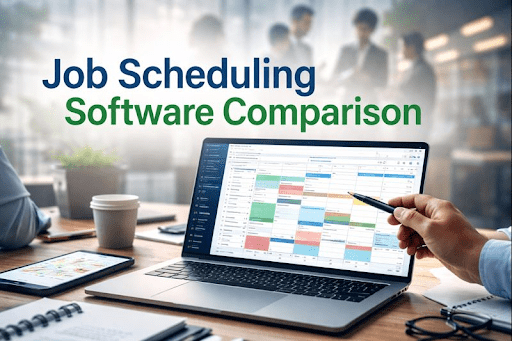
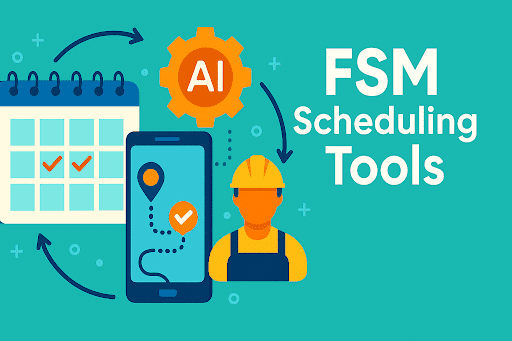
Forecast-informed schedules are a huge asset to FSM operations. When schedules for your field service technicians are planned out in a calendar format, such as seen below, work orders are then automatically assigned in order of closest location to most urgent job, the work order is then added to the technicians schedule for the day. This type of scheduling enables Field Service Managers to create the most efficient schedule for their service technicians. The manager is able to also leave a buffer in the schedule for any same-day work that may arise. This enables the technician to travel from one job to another in the shortest amount of time possible, thus increasing the amount of work that can be done in a day.
How FSM Scheduling Tools Transform Field Service Operations breaks down how calendar-based planning and automated work order assignment turn a demand forecast into a schedule technicians can actually follow.
Managing Demand Volatility With Predictive Analytics
The use of Predictive Analytics for a field service demand model can identify variances in demand, allowing the management team time to reallocate resources before a backlog of work occurs.
In addition to the demand planning for field service (service calls) there is also the inventory planning (parts) for field service. The problem that many companies face with field service is that they do not link these two together. In a recent article, FSM and Inventory, we explored how the scheduling data from your FSM system can be used to improve first-time fixes by linking that data to your inventory management system.
Improving Forecasting Accuracy Over Time
The best way to improve the accuracy of your demand forecast is to continuously review and compare your forecast against the actual results on a monthly basis. It is normally discovered that there are certain errors in the forecast. These errors are normally found to be isolated to certain areas such as regions, seasons or even job types. As you continue to review your historical data you can then go and address these errors on an ongoing basis and as you review your historical data on a continuous basis, you will continue to get better and better at your demand forecasting, normally increasing accuracy on a quarter-on-quarter basis.
Asset-level data plays a major role here too. Asset Maintenance Management Software feeds equipment age, failure history, and maintenance schedules back into the forecast, sharpening predictions for preventive and emergency service calls alike. Over time, this feedback loop turns a rough estimate into a dependable planning tool that leadership can actually budget against.
Connecting Sales and Service Forecasts
If you only make a demand forecast for your field service business then you will miss out on all of the future service contracts that you will execute as a result of the sales that you close today. So instead of scheduling service for yesterday’s customers, you will be scheduling service for tomorrow’s customers. Sales forecasting is crucial for any business that has a field service operation and it is used in conjunction with your service forecasts to figure out how to staff your business for growth. Read more about sales forecasting and CMMS in our blog post Sales Forecasting Tools for CMMS in Field Service Success.
How DreamzCMMS Brings It All Together
While having a good Demand Forecasting plan in place is important for planning, having the underlying data to support that plan stored in a database as opposed to spreadsheets is equally important. That underlying data is the job history, the schedules of technicians, the inventory and the assets of a field service organization. A connected data model in a database supports the processes of a field service organization. DreamzCMMS is a database built around a connected data model to support the processes of a field service organization. A field service Demand Forecasting product provides the data necessary to support planning. Using that product, the Operations Manager can build, test a forecast, and adjust the forecast as more data becomes available. The Operations Manager can then view the forecasted demand, current capacity and current inventory on one screen. The Operations Manager can then change any of the three on that one screen to view the results of the changes made.
Plan Ahead With Confidence
By incorporating Field Service Demand Forecasting into your business, you can plan ahead with confidence. Utilizing historical data and up-to-the-minute signals to produce staffing and scheduling plans that work for your business to protect your margins and deliver service to your customers as required. Businesses that invest in their development invest in Demand Forecasting, are best placed to deal with the issues of growth, seasonal fluctuations and the unknown that can affect field service – putting already stretched teams under pressure.
Experience for yourself how all the pieces fit together to accurately plan for demand in the Free Demo of our best-in-class field service software and what accurate demand planning can do for your business in their next busy season.





























Subscribe to Our Newsletter
 100% SECURE
 We Respect Your Privacy
 Ready for More?
Talk to one of our CMMS experts and see how DreamzCMMS can simplify your maintenance operations.
Book a free consultation