 BACK TO Blog
Asset Rental Management
RFID Asset Tracking
RFID in Pharmaceuticals: Compliance, Safety, and Serialization
- June 13, 2026
- DreamzCMMS Team
- 13 minutes read
- June 13, 2026
- DreamzCMMS Team
- 13 minutes read
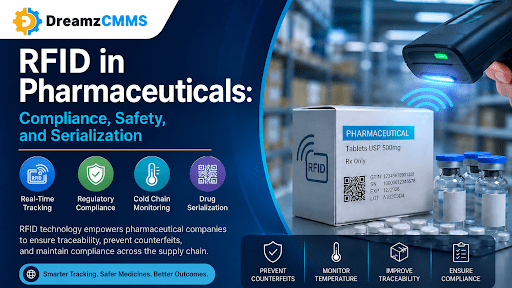
The pharmaceuticals sector is probably the most controlled of all the markets around the world. Distribution of prescription medicines and of over-the-counter medicines is strictly controlled in order to protect the health of individual patients as well as that of the general public. If medicines were to be distributed improperly, the consequences could be disastrous. Therefore, RFID in pharmaceuticals is becoming an important tool in the distribution of medicines by manufacturers, distributors and pharmacies. By using RFID pharmaceutical tracking at the item level, as well as for monitoring of medicines that require a cold chain and for drug serialization, companies can keep track of their goods throughout the entire supply chain.
RFID tracking of pharmaceuticals at the item level is quickly becoming the standard. Many of the companies we speak with are tracking their products through the entire pharmaceutical supply chain. In addition to pharmaceutical tracking, they are also using RFID to monitor the cold chain for temperature sensitive products. As we stated above, serialization of drugs is made possible by the use of RFID. We have written a guide that explains the uses of RFID for tracking of pharmaceuticals.
What Is RFID in Pharmaceuticals?
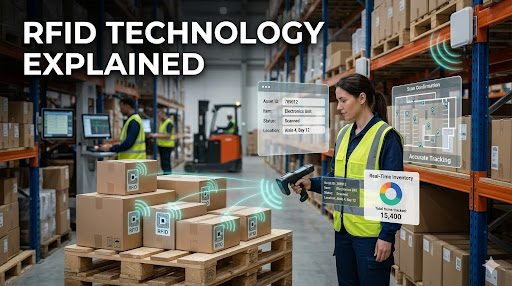
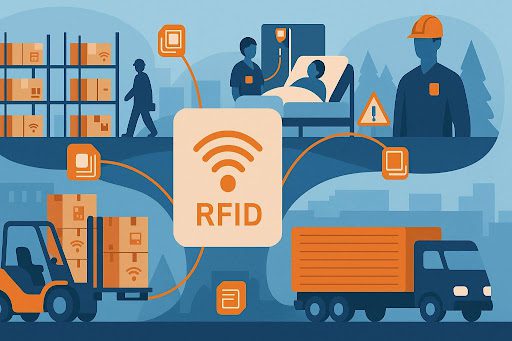
RFID enables automatic identification and logging of items that are equipped with RFID tags. Many applications in the pharmaceuticals industry track drugs and other health-related products along the entire supply chain in real time.
Pharmaceutical products are tracked from the manufacturing process through to the distribution center, pharmacy, hospital or even clinical environment. Large volumes of stock can be managed efficiently and accurately where such compliance, visibility and accurate inventory management are critical.
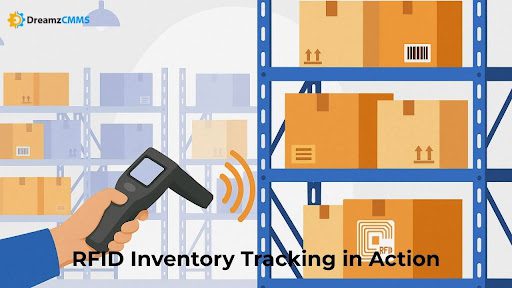
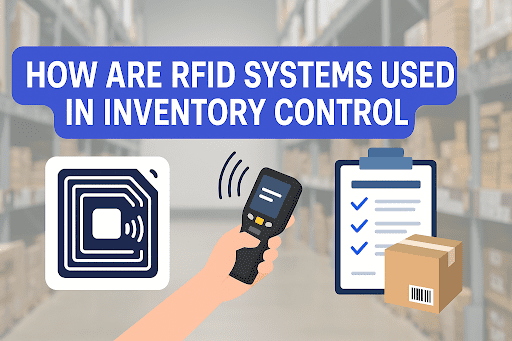
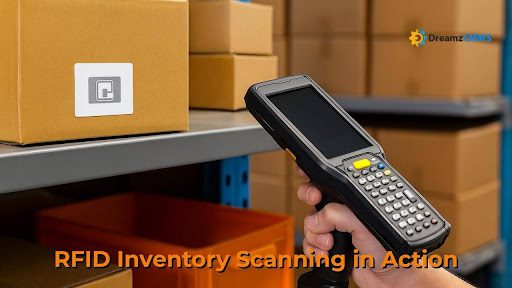
RFID tags do not have to be visible for them to be read by a scanner. In fact one reader can read dozens of tags at a time, whether the items bearing these tags are in sight of the reader or not. This makes for speedy, efficient management of huge volumes of stock, far better than the slow, error prone process of individually scanning each product with a conventional barcode scanner.
With fast and accurate reading of product information, RFID systems enable improved supply chain transparency, less errors, up-to-date stock holding and safe distribution of medicines and other healthcare products.
For information on RFID in other industries see our RFID Asset Tracking Software.
RFID Drug Serialization: The Foundation of Pharmaceutical Traceability
Drug serialization or product serialization or packaging serialization – assigning a unique ID to individual drug products. Each drug product is encoded with a unique ID on the RFID tag of the product’s packaging. The item can then be read by a scanner, verified against information in a database and monitored throughout the entire distribution chain. Also, the information on the RFID tag can be updated while the product is in transit.
Each tagged unit carries information such as:
- Product name and National Drug Code (NDC)
- Lot or batch number
- Expiration date
- Manufacturer details
- Serial number unique to that specific unit
The data that is embedded in each tag includes information such as: the name of the Product (and its National Drug Code or NDC), the Lot or Batch Number of the Product, its Expiration Date, information about the Product’s Manufacturer, and even each individual Product’s Serial Number (which is unique to that single Product). This data creates the very core and structure for what can be termed as RFID-based Pharmaceutical Serialization and Tracking within the pharmaceutical supply chain. Given the US-based Drug Supply Chain Security Act (DSCSA) as well as the EU’s Falsified Medicines Directive (FMD) are mandating Item-level Tracking and Verification within the next few years – tracking and verifying individual products with the aid of RFID tags will become a global standard.
Pharmaceutical RFID Compliance: Navigating the Regulatory Landscape
Pharmaceutical RFID Compliance: Navigating the Regulatory Landscape
In many countries of the world the use of RFID in the pharmaceutical sector is not optional but is required by law. In this guide we will outline the pharmaceutical RFID compliance requirements for companies of all sizes and explain how you can become compliant efficiently and cost effectively.
EU Falsified Medicines Directive (FMD)
The FMD, which came into force in 2011, requires all prescription only medicines to be assigned a unique identifier and also to feature one or more tamper evident features. The use of RFID in tracking and tracing medicines throughout the supply chain supports verification of a product against a database of authenticated products. While 2D barcodes could also be used for verification, the use of RFID tags support verification to occur very quickly – far quicker than would be the case with 2D barcodes.
WHO Guidelines and Global Harmonization
The World Health Organization (WHO) has published guidelines on the use of RFID in pharmaceuticals and other healthcare products for track and trace purposes. The guidelines published by the WHO, cover aspects that need to be considered when choosing a solution for track and trace of pharmaceuticals and other healthcare products. In addition, the guidelines also emphasize the importance of interoperability of systems across countries. Increasing numbers of global pharmaceutical companies are now using RFID solutions in order to comply with these guidelines.
Find more information on RFID in Healthcare and solutions for production in regulated environments in our working world.
RFID Counterfeit Drug Prevention: Protecting Patients at Every Step
Sometimes, even in very regulated markets, fake products occasionally enter the market and make their way through the supply chain to patients. However, using RFID in pharmaceutical distribution can prevent the distribution of counterfeit medicines at every stage of the supply chain by the following means.
1. Authentication at the Point of Dispensing
RFID pharmaceutical tracking helps in authenticating of drugs. The authenticating of a drug is very simple; the dispenser reads the tag of the product with an RFID reader and checks the product in the database of the manufacturer or of government of that country where product is distributed. If product is not found in database or product is found in database with “do not use” flag then the product is quarantined so that it is not used for patients.
2. Tamper Detection
Tags can also be designed to blow in the case of packaging being opened, or alternatively to record all tamper events. This means that individuals are unable to repack a product in an attempt to impersonate the authentic article, and such a product would remain detected for the remainder of its life.
3. Full Chain of Custody Visibility
With a Drug authentication RFID technology, an unbroken chain of records is generated by the pharmaceutical manufacturer through to the patient. Any gap in the distribution chain can be exposed i.e. an undocumented handoff or an unauthorized middleman distributor.
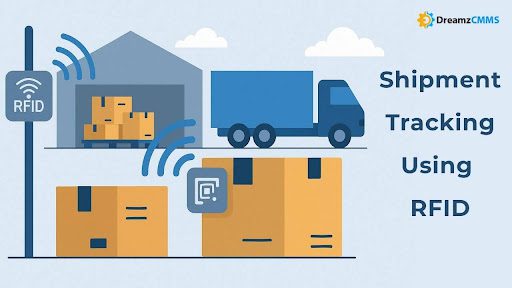
This is especially relevant when combined with broader compliance solutions for supply chain visibility in our article on Shipment Tracking Using RFID Tags.
RFID Pharmaceutical Cold Chain: Maintaining Integrity from Manufacturer to Patient
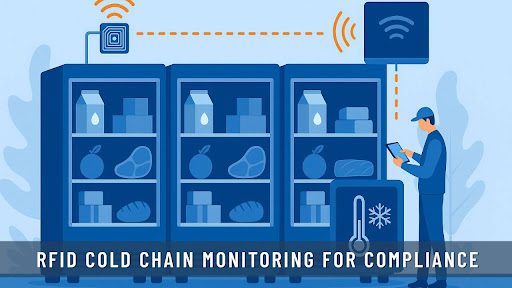
Vaccines, biologics and temperature sensitive products such as insulin must be kept within a specified temperature during the logistics process. If this product is exposed to temperatures outside the specified range it could cause a failure and the batch would be labeled as ineffective, not useable or possibly unsafe.
Key capabilities include:
- Temperature information of environment (air temperature and humidity) is recorded real-time at every point of RFID scan (stocking/shelf, transferring etc.).
- Automatic alerts when temperature thresholds are breached
- Tamper-evident records that satisfy regulatory audit requirements
- In addition, the data from the RFID tags is automatically synchronized with the data from the warehouse management system and from the enterprise resource planning system (ERP system).
Intellitrac also offers a Cold Storage Management System for organizations that store cold products in their own storage facilities. The system is designed to provide organizations with a scalable solution to manage their cold products and ensure that they are stored in compliance with the requirements at all times.
A detailed RFID for Cold Chain Guide exists that explains how to use temperature sensitive RFID solutions for all Temperature Sensitive Logistics applications.
Pharmacy RFID Inventory Management: Efficiency Meets Accuracy
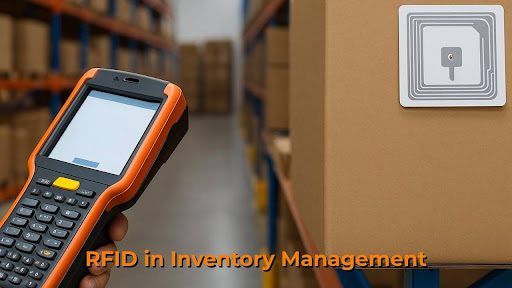
The Inventory Management of a pharmacy is an essential and critical task. Automated and accurate stock management can help save so much time for the pharmacy staff, reducing manual counts of inventory items, thus reducing errors, improving the picking of products required for patient’s prescription. This system would also enable pharmacy to have most updated information of all stock products.
RFID Medication Expiration Tracking
Another feature which can be crucial in pharmacy management is automated tracking of expiry dates of the stored medications. While most pharmaceutical companies list validity of their products, which can be used to calculate approximate time of expiration, such calculation can be difficult, time consuming and prone to errors, especially when dealing with large amounts of stock and many different types of products. Automatic tracking and reminder system can significantly reduce amounts of expired medications and, what is most importantly, can prevent dispensing of expired or spoiled medications to patients.
Pharmaceutical RFID Batch Tracking
Pharmaceutical RFID Batch Tracking: Improve Control Over the Pharmaceutical Life Cycle and Recalls
The benefits outlined for pharmacy RFID above also translate into quantifiable return on investment for the additional investment required by the pharmacy over and above that for meeting compliance and ensuring safe use of medicines.
Anti-Counterfeiting RFID Pharmaceuticals: Technology and Standards
Anti-counterfeiting RFID pharmaceuticals solutions have recently seen a large increase in new tag technologies as well as in encoding standards to combat more and more sophisticated counterfeiters.
Key innovations include:
- Cryptographically secured tags that cannot be cloned
- NFC-enabled consumer verification via smartphone scanning
- Invisible RFID ink or embedded micro-tags for covert authentication.
- Blockchain integration for immutable chain-of-custody records
In terms of pharmaceutical RFID encodings, the pharmaceutical industry is evolving rapidly towards the encoding of information on RFID tags in a format that is standardized. The GS1 EPC standards for RFID information encoding are already used by most companies, not only for storing information on RFID tags but also for enabling information exchange between companies, as well as between companies and government agencies, and even between different systems of different logistics service providers all over the world.
Similar challenges are faced by neighboring industries like the Aerospace Industry, with regards to issues of serialization and traceability. We have developed RFID Solutions for Aerospace Industry, in a corresponding guide.
Hospital Automation Systems and RFID: Closing the Loop
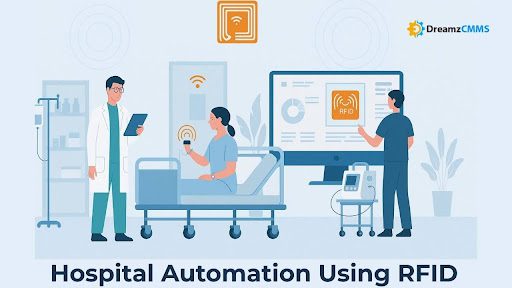
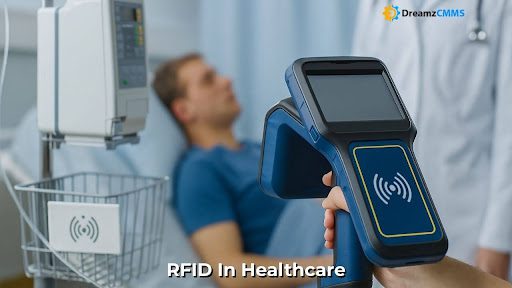
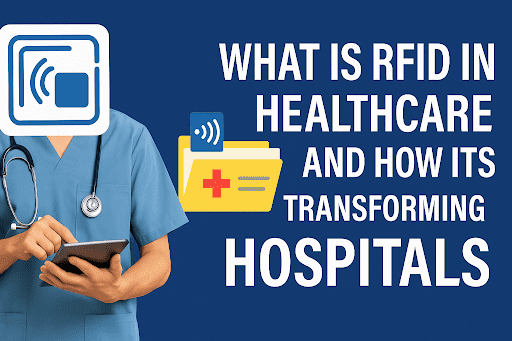
As was mentioned above, RFID safety of pharmaceuticals can be applied in the many areas of the hospital. Support of the hospital automation systems in the automatic dispensing cabinets, in the operating rooms as well as on the inpatient wards are some examples of applications. Thus, all kinds of pharmaceuticals are traced in the whole hospital and therefore are safe.
- Automated medication reconciliation at admission and discharge
- Real-time tracking of controlled substances to prevent diversion
- Integration with electronic health records (EHR) for closed-loop medication administration
- Reduction in medication administration errors — one of the leading causes of preventable hospital harm
By preventing medication errors which are one of the most common causes of preventable harm to patients within hospitals, that are also in many cases attributable to human error, the use of RFID greatly increases the safety of administration of medications to patients in hospital
Read more about Hospital Automation Systems Using RFID Technology.
Implementing RFID Pharmaceutical Traceability: Key Considerations
Pharmaceutical RFID supply chain solutions can be implemented by planning and preparing for the many facets of its infrastructure, software and other components.
Infrastructure Readiness
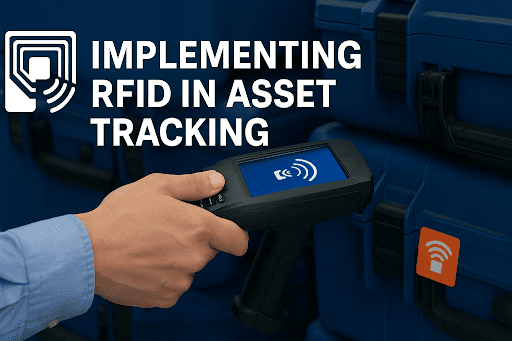
Readers: Examine the Reader Infrastructure installed throughout the entire process from manufacture through distribution to dispensing, including cost and best use of fixed portals, handhelds, smart shelves, etc.
Software Integration
RFID data collected by software has little value until it is integrated into existing systems, such as the Enterprise Resource Planning (ERP) system, the Warehouse Management System (WMS), and the Clinical Management / Hospital Information System (CMMS) to provide up-to-date information on all stocked pharmaceuticals, and to track any dispensed medications as required to comply with legislation, hospital policies and to ensure patient safety.
Tag Selection and Encoding
There are many Pharmaceutical environments that have special requirements e.g. metal packaging, liquid products and cleanroom areas. Tags must be validated with respective suppliers in the early stages of the project when selecting correct tag designs for the respective environments.
Change Management and Training
Training programs for new technology in a nd process validation for all levels of staff in the warehouse and in the pharmacy, from operators to pharmacists. They need to know how to integrate the new RFID tools into their daily work.
The Future of Track and Trace Pharmaceuticals RFID
The Future of Track and Trace Pharmaceuticals RFID - Be more connected, Be more automated, Be smarter.
- IoT integration: RFID tags, which are IoT objects, are integrated in the pharmaceutical products. These tags communicate in real time with the cloud platform managing the supply chain in real time.
- AI-powered analytics: Such a system can pick up on anomalies quickly and alert management and/or individual staff members to potential instances of diversion, counterfeiting, stock theft or even a cold chain failure before they become serious problems.
- Patient-facing verification: The end customer can check if the prescription drugs or other articles he has obtained are original by verification using his smart phone and an NFC reader.
- Regulatory convergence: As global serialization standards start to converge, compliance for the multinational pharmaceutical company will become less of a complex process and more of business as usual.
As requirements for the RFID pharmaceutical traceability change from differentiating from competition to business as usual in an increasingly regulated market and global distribution network, the technology will change as well.
Conclusion
RFID in the pharmaceutical industry adds a lot of value for healthcare and the industry as a whole. It is more than just a normal tracking and tracing system for medicines. With the use of RFID in the pharmaceutical industry a solid base for safe healthcare, for proper compliance and a sound supply chain is created. For all the different stages within the pharmaceutical life cycle of medicines extra values are created by the use of RFID, like RFID drug serialization to prevent counterfeit products and to track RFID enabled temperature sensitive drugs in the cold chain as well as an automatic stock management for for example pharmacies and hospitals.
By building an RFID pharmaceutical compliance infrastructure, you will be better equipped to face future regulatory requirements, improve business processes and protect patients from receiving faulty medicines. Find out how RFID can benefit your industry by exploring our solutions on DreamzCMMS . Request a Free Demo today.







Subscribe to Our Newsletter
 100% SECURE
 We Respect Your Privacy
 Ready for More?
Talk to one of our CMMS experts and see how DreamzCMMS can simplify your maintenance operations.
Book a free consultation