 BACK TO Blog
Asset Rental Management
Field Service
Reduce customer no-shows explained: how smarter teams prevent missed appointments, cut late arrivals, and protect daily revenue.
- March 31, 2026
- DreamzCMMS Team
- 16 minutes read
- March 31, 2026
- DreamzCMMS Team
- 16 minutes read
Introduction
We have found that sending reminders the day before does little to reduce no-shows. Running a successful recreational fishing business is not just about having a good product and location; all elements of the business must be properly managed, including the bookings system, rostering of staff, communication with clients, and recording of customer arrivals and departures. Each of these components does not operate in isolation from the other elements of the business, and without proper integration, you can expect to have some no-shows and scheduling failures, people will miss appointments, staff will be scheduled incorrectly, and your daily revenue stream will be put at risk.
Dealing with no-show attendance from customers is inevitably going to be a challenge faced by businesses of all sizes. Whether you’re a large team or a small one, it’s just one of the many issues that you’ll be dealing with on a day-to-day basis, along with other operational challenges for your home service business, such as wastage of time for your technicians, poor and inefficient routing, last-minute job cancellations, and low customer satisfaction. Interestingly, for many modern-day business leaders, customer no-shows are seen as an operational issue, not a customer issue that can be managed by the business. Managing no-shows from your home service workforce is a massive challenge businesses are dealing with today. Engaging customers and making appointments feel real, tangible, and easy to manage is something that businesses are trying to get better at in order to grow and develop their businesses.
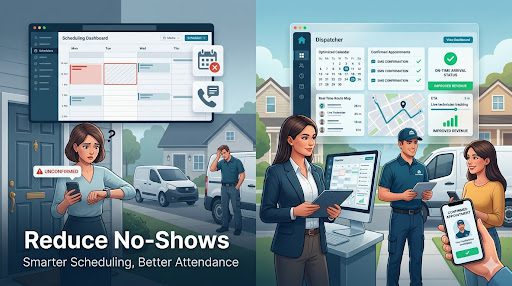
The most effective no-show prevention systems have three main features: 1) improved scheduling and online booking capabilities, 2) Faster confirmations and reminders, and 3) Real-time visibility to upcoming appointments and completed work for a customer. Providing these benefits to your customers and service providers through a well-designed no-show prevention system will help to reduce no-shows. Simplified scheduling and online booking for customers and a real-time view of upcoming appointments for technicians and staff will help ensure on-time arrivals and proper service for customers. Faster confirmations for customers and customized reminders for upcoming appointments will help to reduce no-shows.
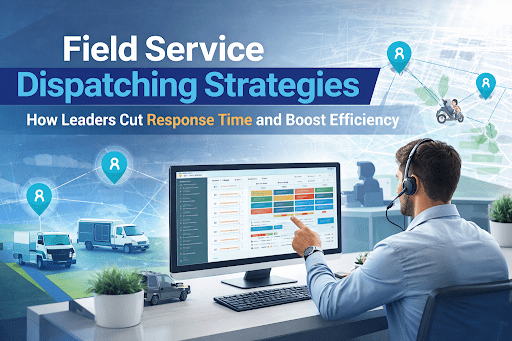
The common booking – dispatch – notification oriented way of working has breakpoints that easily cause errors. Errors caused by conflicting job instructions, missed appointments, and uneven working practices are hard to get right. Field Service Management Software makes it possible to keep the processes continuous.
This is an operations issue that costs practices money every day as missed appointments go unbilled. There are many ways of displaying an absent appointment.
Why reducing customer no-shows has become an operations issue
Most Leaders don’t view a missed appointment as an “inconvenience” with all the negative implications of the word. They view it as labour loss, lost time for their technician, lost time on a particular route, and, as a result, lost time on a particular day. This can mean that an entire late afternoon service window is lost. One missed appointment can ruin an entire day of work. Multiple missed appointments can ruin an entire week.
Reducing no-shows or appointment non-attendances as a lead issue for a field service organisation used to be a customer service issue. No longer.
Dispatchers spend more time reshuffling routes.
Lost time whilst technicians wait or for technicians to travel to your empty jobs.
We're aware of issues affecting our service windows and apologise as these are not operating as expected.
It's getting increasingly harder to meet targets. Yesterday's reminder that the value of one confirmed order is no guarantee that you'll actually receive the work was particularly chilling.
Managing the risk of late customers and other uncertainties occurring between a customer booking an appointment and their arrival at the salon. Customers are unlikely to have any concept of the risks involved, and it is down to the salon to prepare the customer as to what will happen during the appointment and to clearly advise the customer as to what is required of them in order to arrive on time for the appointment. This area of business deals with the details of an appointment that a customer is booking and the communication of these details to the customer. Other aspects of this business area would include the subsequent stages of the booking process, the management and optimisation of reminders, and updates to the customer.
Field Service is a key component of business growth for many organisations. Online Booking Software for Field Service helps to speed up the process, eliminating back-and-forth communications between the customer and organisation, allowing for a faster delivery of services to customers.
The hidden cost of weak appointment visibility
The operational staff who complain about poor visibility of key service parameters may be surprised at the extent to which inadequate provision of service information is impacting the service they deliver. The issue itself is often obscure, and its failure does not have manifest or dramatic consequences. Its effects are felt incrementally, perhaps in terms of a handful of late arrivals or missed appointments, some disgruntled customers, and a series of avoidable phone calls to track down scheduled engineers. It is only as these small effects accumulate that the full extent of the issue's impact on the operational performance of the organisation becomes apparent.
A single missed appointment is more than just an additional appointment to get back on schedule. The cost of a missed appointment is wasted fuel and labor, poorly scheduled routes, and damaged customer relationships. Scheduling staff will overbook in anticipation of no-shows. Office staff will spend all day trying to reschedule for the customer. The dispatcher will be in crisis mode, trying to manage the field staff on hand.
I consider no shows to be a type of patient no show, an appointment walk-in, and a type of patient that is late and does not get noted in the schedule. One key factor in all of these scenarios is communication. Simply sending a reminder to an appointment in an attempt to reduce no-shows does not prepare the patient for the commitment that the reminder implies. The patient may have hesitations about scheduling the appointment in the first place, and easily cancel if the patient has second thoughts about committing to the scheduled appointment. The patient needs to have an understanding of where we are in the schedule before sending a reminder for an upcoming appointment. It would be helpful if late arrivals were noted in the schedule so patients are aware of the expected delay.
The Customer Portal will also keep customers informed of schedule details at any time, reducing the need for them to contact your office with last-minute changes. This will help mitigate lost revenue due to last-minute cancellations, a significant issue with any no-show solution designed for home service industries.
Why basic appointment setups often fail
You remind your clients and customers, but sometimes they no-show. A basic reminder system is not going to solve your workflow problems resulting from no-shows.
Booking / Scheduling and Communication are just 2 separate processes within the workflow. This is designed to be efficient but often results in customers receiving out-of-date reminders, being offered unsuitable time slots, and not receiving sufficient information on the work to be carried out. Even the best of teams can get it wrong when processes are split in this way.
If a work is in status-complete, the customer should also receive timely updates. Automated appointment reminders are much more than just a simple reminder for an upcoming appointment. You can add educational content or copy to the Home page to get the customer ready for their upcoming appointment.
While providing hours, days, or even a week of advance notice of upcoming appointments, with traditional early one-way SMS reminders to patients can go a long way, it may not be enough in a busy practice with high patient volume. However, by pairing these early one-way reminders with a confirmation option, providers can significantly increase the chances of both reminding and engaging patients in their healthcare, resulting in fewer no-shows and improved practice efficiency. In terms of SMS workflows, these “Remind and Confirm” options are far more powerful than early one-way reminders.
Many companies that have started using customer service automation to confirm, follow up, or keep their customers updated regularly experience a positive evolution in their customer service. Automation of certain administrative tasks not only speeds up the service provided to customers but also makes it more efficient.
What affects customer attendance in real conditions
When most people think of an attendance mechanism in a service operation, they think of memory, i.e., correctly reporting the time of arrival and the duration of service. In reality, attendance is far more complex because many things can happen to a customer that preclude them from attending a scheduled appointment, e.g. customer forgets the time of the appointment, customer mis-understands the time of the appointment, customer has lost trust that they are a customer, customer leaves the premises because the service technician has been late and not informed the customer appropriately.
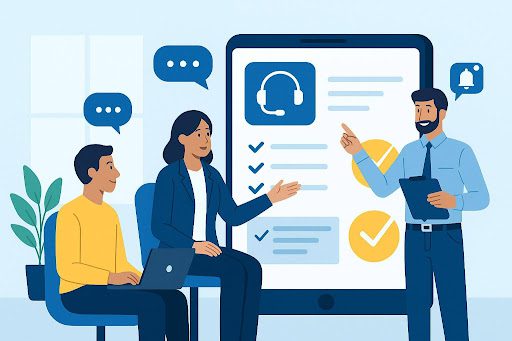
Customer confirmation of appointments scheduled with your field service teams is vital. An appointment that has been confirmed is more likely to be attended than an appointment that hasn’t. Adding functionality to your appointment booking process to support customer confirmation of appointments is key to releasing value.
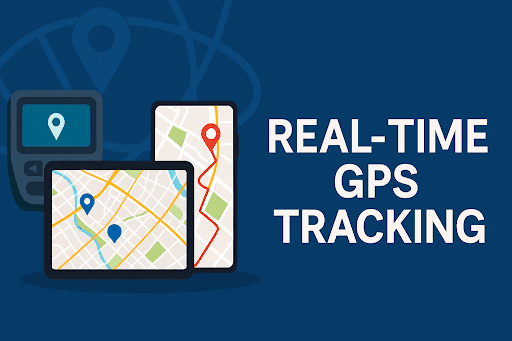
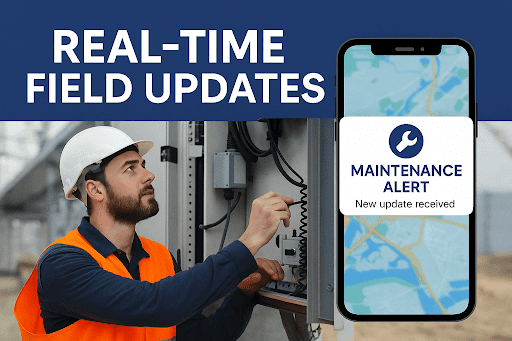
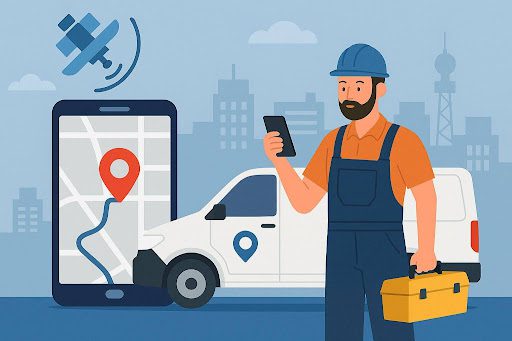
The same logic can be applied to live updates. Seeing real-time updates on a field service company’s website from the technician to the customer can really engage the customer and keep them up to date with the latest information on the job’s status and estimated time of arrival. This reduces the risk of a visit being lost in a sea of “we will get there soon” and the resulting customer frustration when the late arrival is explained.
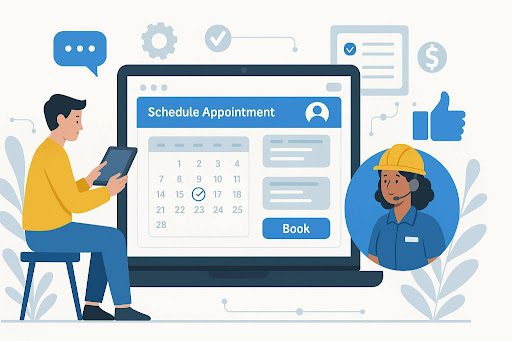
They want to book online as quickly and easily as possible, and go back online to change the appointment at a later time. When your customers can book online, choose the time of the appointment, and have a record of the appointment, they are more likely to return to your business for future services. Consider the current options your customers have when it comes to convenient scheduling and how they are helping or hurting your scheduling optimization processes and technician dispatching.
Reducing no-shows is hard. Confirming appointments on time to keep the appointment in the schedule. Messages to customers on time to remind them of upcoming scheduled appointments. An estimate of when customers can expect to be seen. An estimate of wait time for early arrivals. Ability to easily reschedule appointments as needed. Reducing no-shows and last-minute cancellations when a business thinks of communication as part of the workflow, as well as customer service.
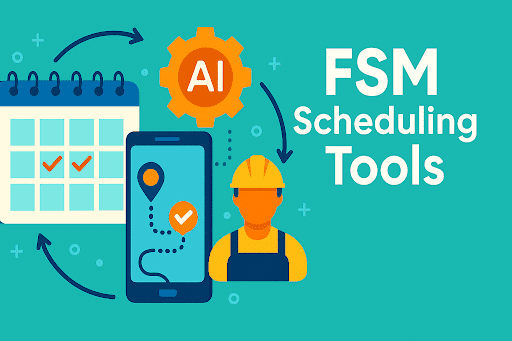
Of course, all of this would be very different in a connected process world, where modern FSM scheduling tools could be used to schedule more accurately, on a more realistic time basis, and make it easier to make changes in the run-up to shifts or working hours.
Why customer commitment matters more than many teams expect
Many assume that a booked appointment is the same as a confirmed appointment, but this is not necessarily the case. People and organisations can commit to an appointment at the booking stage, only to let it lapse if there is no follow-up, no visibility of the project, or the reasons for it continue to resonate with them.
Commitment strategies for customer commitment: applications for small and medium businesses - Commitment through the customer service experience: field service Industry - How do customers’ behaviour and actions along the customer service experience support creating a great appointment? From our side, we can ensure the booking is confirmed, customers can receive reminders, they can access all the necessary information on the portal, and even track their technician's arrival.
No-show penalty rates are commonly included in the terms and conditions of small businesses, particularly for home service teams. No-show penalties for early morning appointments, premium time slots, or high-value services such as dentistry or legal services can be particularly effective. However, most value comes from including a no-show penalty in terms and conditions when the customer experience is well structured.
asy confirmations, good reminders, realistic scheduling, and pre-visit communication all help to ensure that your customers are prepared for your arrival and set the right expectations. Helpful workflows typically beat out strict rules in attempts to prevent last-minute cancellations, which is a common problem in the home service industry.
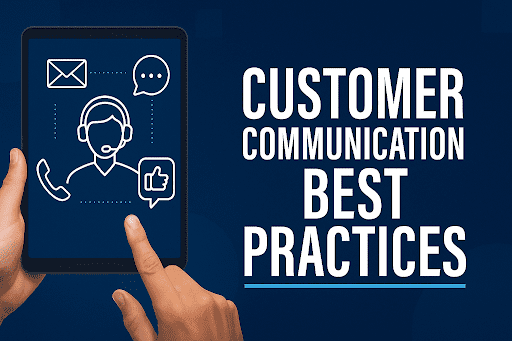
This one is useful for teams trying to improve overall customer messaging. Check out our post on Customer Communication Best Practices for some ideas on how to make sure your messages to customers are clear and hit the mark. Clearer customer messaging generally means less uncertainty, and less uncertainty generally means better attendance.
Why are more bookings not always better
When a salon or spa suffers from ongoing no-shows, there’s often a temptation to treat the problem by trying to schedule more jobs, in the hopes that the issue will resolve itself through sheer volume. However, more jobs booked do not necessarily translate to better performance.
Overbooking will put even more pressure on existing bookings. Many of these appointments will be uncertain or of an unspecified length, thus increasing the pressure on other appointments, making schedules even more tightly packed, increasing the number of delays and disappointments to existing customers. Missed appointments will once again rise above acceptable levels. Despite appearances to the contrary, efficiency will not improve.
We started working with businesses that serve homes. Before they learned how to tackle no-shows from this type of customer, they tried everything to manage the variability of no-shows – from taking more appointments at one time to adding more staff. That was until they learned how to tackle no-shows using a structured approach and saw the value of improving the reliability of the appointments they already made.
Common mistakes businesses make with no-show prevention
Most offices make the mistake that all no-shows are for the same reason. However, no-shows can occur for many different reasons, such as clients or their offices or staff forgetting that an appointment is scheduled; your office not effectively reminding your clients of their upcoming appointments; appointments being scheduled at the wrong time; or clients not trusting the window to run on time.
Don’t rely on just one method to reach your patients. Email may end up in a bulk email folder and never be opened. Calling patients to remind them of an upcoming appointment can be time-consuming, and you may not reach all of your patients on time. One-way reminders aren’t enough to make an impact. In order to reduce no-shows, you need an automated appointment reminder system that will confirm appointments, deliver reminder follow-ups, and send any other updates as necessary.
There are three mistakes made with reminders. A first mistake with reminders is that the content of the reminders doesn’t add value to the customer. A second mistake with reminders is that the timing of the reminders isn’t strategic enough. A third mistake with reminders is that the reminders don’t reflect the real schedule of the technician. For example, if the technician gets held up on another job or gets reassigned to another job, the customer needs to know that. Giving the customer incorrect information can cause them even more confusion and lost appointments.
While a smart business may be booking and preparing for customers to show up, there are often preventable reasons why they don’t, and often a business will be operating without an effective no-show prevention strategy in place. However, to reduce customer no-shows, there are several signals that a smart business must measure. These include confirmation rates, late arrivals, cancellations, reminder response rates, and appointment completion rates.
For many businesses, a large portion of efforts to prevent no-shows are currently manually coordinated. However, as the business grows, this becomes increasingly difficult to manage, and a more intelligent approach is required, which will scale with the number of customers that the business is handling and not add further pressure on office staff.
Build smarter no-show prevention with DreamzCMMS.
Are your teams losing hours of valuable time chasing down no-shows, ambiguous confirmations, daily delays, and reactive scheduling? DreamzCMMS brings booking, scheduling, contact, and service information all together in one intuitive system, helping your business reduce no-shows.
A stronger workflow for service businesses can help reduce customer no-shows, late arrivals, and cancellations. Home service organizations are working to improve their manual follow-up processes for scheduling appointments, and a connected system of information, automatically completed forms, and automated appointment reminders can enable stronger customer confirmation as well as better real-time tracking and updates for field service professionals.
Analysis of the reasons for missed appointments can lead to several benefits, including a better customer service experience, improved team communication, and consistency between scheduled and completed work. Instead of analysing the reasons for lost appointments post-mortem, the results can be used to ensure that future appointments are successful.
Ready to improve show rates, reduce wasted technician time, and build more dependable service operations? Request a Free Demo and see how a smarter workflow can turn no-show prevention into a repeatable operational advantage.
Conclusion
Everyone knows that the cost of one lost appointment is much greater than the opportunity cost of sitting around idle with unused capacity during the day. That lost appointment impacts routing, labor, service capability, customer service, and ultimately revenue. Reminding customers to show up should become a core strategy to minimize no-shows.
It might surprise you to know that the best business typically does not send out the most messages. Instead, they create the clearest & booking experience, the commitment process, and the right communication flow throughout their business. By using confirmations, smart reminders, live tech visibility, and a solid scheduling policy, the best businesses properly manage customer no-shows.
After setting the initial rules, several other fundamental aspects can be built on to help combat no-shows in appointment-based businesses. Implementing these tips will help establish customer trust and, more importantly, ensure a good conversion rate between booked appointments and actual revenue for field service companies. This is how teams reduce customer no-shows, protect their technicians’ productivity, and deliver an improved customer service experience.













Subscribe to Our Newsletter
 100% SECURE
 We Respect Your Privacy
 Ready for More?
Talk to one of our CMMS experts and see how DreamzCMMS can simplify your maintenance operations.
Book a free consultation