 BACK TO Blog
Asset Rental Management
Field Service
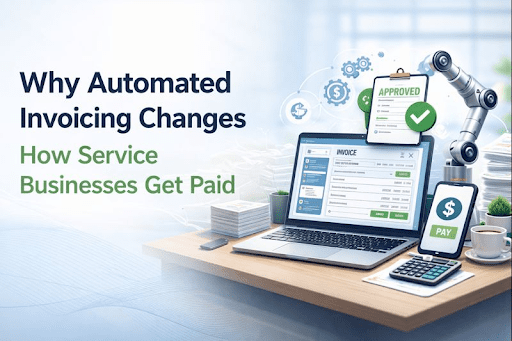
Why Automated Invoicing Changes How Service Businesses Get Paid
- February 10, 2026
- DreamzCMMS Team
- 9 minutes read
- February 10, 2026
- DreamzCMMS Team
- 9 minutes read
Invoicing Draws Attention When Cash Slows
Invoicing does not fail suddenly. It drifts. Payments arrive later than expected. Follow-ups increase. Finance teams spend more time checking than closing.
At that point, invoicing stops being routine work. It becomes visible.
This is where Automated invoicing benefits enter the conversation.
Invoice Timing Matters More Than Volume
Work can increase while payments lag. That usually points back to timing.
Invoices sent days after service completion lose context. Customers ask questions. Approval slows. Payment follows the slowest step.
Manual processes struggle to get paid faster with automated invoicing because they depend on handoffs. In service environments, this gap is more noticeable. Field service automated invoicing reduces delay by issuing invoices closer to completion.
Errors Create Delay Without Visibility
Small errors do not look serious. Missing details. Incorrect quantities. Formatting inconsistencies.
Each error introduces a review. Review adds time.
Organizations that examine the benefits of invoice automation often notice fewer corrections. That reflects invoice accuracy improvement automation, not additional effort.
Accuracy shortens the payment path.
Processing Time Is Scattered
Invoice creation rarely happens in one place. Data moves. Approvals wait. Clarifications repeat.
Attempts to reduce invoice processing time expose fragmentation. Automation removes steps. It removes waiting.
These are the automated invoice generation advantages most teams notice first.
Cost Appears Gradually
Billing effort increases with volume. Administrative work grows quietly.
Leaders evaluating automated invoicing ROI often see steady automated invoicing cost savings, not immediate change. Less rework. Fewer follow-ups. Lower manual load.
The impact compounds.
Field Work and Billing Rarely Align
Service happens away from desks. Billing systems often do not.
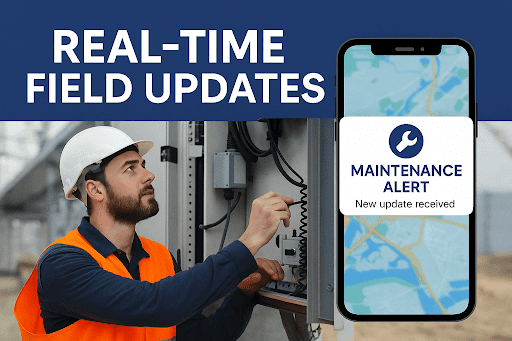
The digital invoicing benefits field service teams experience come from proximity. Work details captured at completion reduce memory gaps. This supports mobile invoicing automation benefits without adding steps for technicians.
Many organizations link Invoicing software with Job estimate software to reduce mismatch.
Payment Flow Stabilizes Over Time
When invoicing becomes consistent, payment behavior adjusts. Questions decrease. Cycles shorten.
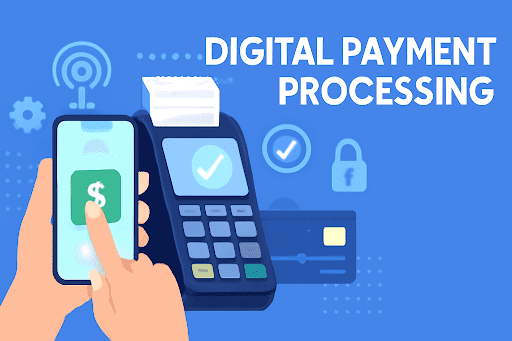
Connecting billing with Payment processing for field service reduces delay between approval and collection.
Some teams manage this flow inside Field Service Management Software to keep visibility centralized.
Payments Change After Friction Is Removed
Payment behavior does not respond to reminders. It responds to clarity. Automated invoicing affects that clarity in ways that are not always obvious at first.
This is where Automated invoicing benefits appear outside finance teams.
Late Payments Begin Earlier Than Reported
Invoices are marked late only after due dates pass. Delays usually start earlier.
Approval waits. Questions surface. Details need confirmation.
Teams trying to reduce late payments with automation often find that the problem sits before submission, not after.
Automation shortens that early delay. Invoices arrive complete. Context is present.
Collections Effort Drops Before Results Improve
Collections work increases when invoices require explanation. Calls replace processing. Email chains grow.
The benefits of invoice automation often show up first as fewer questions, not faster payment. Payment speed follows later.
This supports automated payment collection strategies without increasing follow-up pressure.
Recurring Billing Reveals Inconsistency
One-time invoices hide gaps. Recurring invoices expose them.
Service teams managing contracts notice recurring invoice automation benefits quickly. Variations disappear. Missed items surface less often.
Consistency becomes visible.
Customer Review Becomes Part of the Process
Invoices slow when review is external to execution.
Automation brings review closer. Customers see details earlier. Questions move forward instead of backward.
This is where a Customer self-service portal changes timing. Approval happens with less friction.
Processing and Payment Begin to Align
Payment delays often sit between approval and processing.
Connecting invoices with Payment processing for field service reduces that gap. Steps collapse. Waiting decreases.
Payment becomes predictable.
Cash Flow Stabilizes Without Spikes
Automation does not create sudden improvement. It reduces variation.
Leaders reviewing automated invoicing ROI often notice smoother inflow rather than acceleration. Predictability improves.
That stability supports planning.
Manual Dependence Declines
Manual invoicing depends on memory and follow-through. Automation depends on sequence. As manual steps drop, reliance on individuals decreases. Coverage improves. This contributes to long-term automated invoicing cost savings without visible disruption.
Disconnected Systems Create Delay
Billing slows when systems do not share information.
Organizations that align invoicing with execution through Field Service Management Software reduce reconciliation work.
Some extend this alignment into maintenance and asset data using DreamzCMMS to keep records consistent.
Pause and Review the Billing PathIf invoicing already requires manual checks or follow-ups, it is worth examining where friction enters the process.Look at how invoices move from job completion to customer approval, especially when volume increases or timelines tighten. Small delays often surface quickly when reviewed closely. A short review using a Free Demo can reveal whether automation supports consistency under real operating conditions. |
Automation Holds or Breaks During Scale
Automation shows its value when volume increases. It also shows its limits. Invoicing is no different.
Growth introduces pressure. More work. More variation. More exceptions. This is where Automated invoicing benefits either persist or fade.
Volume Exposes Process Discipline
Low volume hides weakness. High volume does not.
When invoice count rises, manual checks increase. Exceptions multiply. Delays stack. Automation that depends on clean input begins to strain.
Organizations that maintain discipline see stability. Others see noise return.
Visibility Becomes a Leadership Requirement
As volume grows, visibility matters more than speed. Leaders want to know what is pending. What is approved. What is disputed. What is paid. Automation supports this only when invoicing status is visible without inquiry. That visibility reduces escalation. This is often where invoicing connects more tightly with Field Service Management Software to keep operational and financial views aligned.
Audit Readiness Is a Side Effect
Audits rarely drive automation decisions. They reveal them. Automated invoicing creates records without effort. Time stamps exist. Line items align. History is traceable. Manual processes rely on reconstruction. This difference becomes visible during review.
Consistency Matters More Than Flexibility
Invoicing systems often fail when flexibility overrides structure. Too many exceptions. Too many overrides. Too many variations. Automation performs best when repetition is protected. When variation is intentional. This is where automated invoice generation advantages become sustainable rather than situational.
Cost Control Emerges Slowly
Automation does not eliminate cost. It changes where effort sits. Administrative work decreases. Review time shortens. Follow-ups decline. Leaders tracking automated invoicing ROI often notice reduced volatility before reduced expense. Over time, automated invoicing cost savings become visible.
Systems Drift Without Alignment
Automation weakens when systems drift apart. Invoices generated from one source. Work captured in another. Payments processed elsewhere. Alignment matters. Organizations that link billing, execution, and asset data using platforms like DreamzCMMS reduce reconciliation work. Drift slows.
Customer Experience Becomes Quieter
Automation does not make billing feel faster. It makes it feel smoother. Fewer questions. Fewer clarifications. Fewer reminders. Customers notice the absence of friction more than the presence of speed.
Where Automation Fails
Automation fails when discipline is removed. Incomplete data. Bypassed steps. Manual overrides. The system reflects the process that feeds it. Automated invoicing does not improve billing by itself. It enforces whatever process exists. Organizations that benefit most treat automation as structure, not convenience. That is where Automated invoicing benefits hold through growth.
Observed Results After Invoicing Automation
- Teams notice that the time between job completion and invoice issuance shrinks over several billing cycles. This tends to reduce internal queries and delays without active follow-up.
- Finance groups report fewer billing corrections on the first pass once automation handles invoice creation. This shows up before formal metrics are recorded.
- When invoices are generated automatically from execution data, collection follow-ups tend to require less explanation and fewer clarifications.
- Organizations that link billing to live job data experience steadier cash flow patterns over months, not because customers pay faster, but because invoices arrive with fewer discrepancies.
- Over extended periods, administrative workload related to billing reviews and corrections drops, even if total invoice volume grows.
What Leaders Actually Say
Finance Lead, Field Service Company
“We stopped waiting for pending claims to show up. Invoices began to reflect work completion quickly, and that quiet change reduced our backlog.”
Operations Executive
“The team no longer spends the first week of the month reconciling work orders with invoices. That alone freed time that was invisible before.”
Billing Manager
“Errors used to surface when data was retyped. With automation, the first pass is cleaner, and the conversations with customers are shorter.”
Service Director
“Cash flow did not suddenly improve overnight. What changed was fewer hold-ups between completion and payment.”
Why These Matter
These observations do not come from dashboards only. They come from conversations where people notice patterns before numbers confirm them. They reflect Automated invoicing benefits as a practical, operational shift rather than a marketing claim.
Conclusion
Invoicing rarely draws attention when it works. It becomes visible when timing slips, questions increase, and cash flow feels uneven. At that point, the issue is no longer administrative.
Automation does not change invoicing by adding speed alone. It changes where friction appears. Gaps surface earlier. Errors stop moving quietly through the process. Delays become easier to trace.
The practical Automated invoicing benefits show up as fewer corrections, steadier payment cycles, and less dependency on manual intervention. These changes accumulate gradually. They do not announce themselves.
Organizations that gain the most treat invoicing automation as structure, not convenience. The process becomes clearer. Variability drops. Billing stops requiring constant attention.
That is usually when invoicing fades back into the background, where it belongs.
Review Invoicing Where Friction AppearsIf invoicing already requires follow-ups, corrections, or manual tracking, the process may be carrying more friction than expected.Observe how invoices are created, approved, and paid when volume increases or conditions change. Small gaps often surface quickly when reviewed closely. Book a Free Demo to see how automated invoicing in DreamzCMMS behaves with real service data, not assumptions. |
Related Perspectives on Customer Billing and AccessFor organizations examining how billing, approvals, and customer communication intersect, the following perspective adds useful context:Customer self-service portal — A closer look at how giving customers direct access to invoices, job details, and payment status reduces back-and-forth and shortens approval cycles. |



















Subscribe to Our Newsletter
 100% SECURE
 We Respect Your Privacy
 Ready for More?
Talk to one of our CMMS experts and see how DreamzCMMS can simplify your maintenance operations.
Book a free consultation