 BACK TO Blog
Asset Rental Management
Rental Asset
What Is Equipment Rental Management? Complete Guide 2026
- May 04, 2026
- DreamzCMMS Team
- 13 minutes read
- May 04, 2026
- DreamzCMMS Team
- 13 minutes read
Equipment rental businesses are all about assets that are going out the door bringing in money as they are used by customers. But as those assets make money on the ‘goings out’ they inevitably start to make money on the ‘comings in’ – which quickly enough starts to cost money on the ‘comings in’ due to damage, late return, failure to account for or general lack of control. The equipment rental management system must therefore be designed to maximise the use of assets whilst at the same time allowing the best possible control over that use.
Fleet management for a small backhoe or 200 ton crane fleet is similar to managing a large specialised equipment fleet spread across hundreds of pieces of equipment, across dozens of locations. At its core, both versions of equipment fleet management require essentially the same key requirements to be met profitably: knowing at all times where the equipment is located, what the current condition of the unit is, who has rented it out, and when it needs to be returned.
This guide explores the ins and outs of equipment rental management including why equipment rental management is important, how companies put it into practice and what you should be looking for in rental management software.
What Is Equipment Rental Management?
Rental equipment management refers to the process of managing the availability of rental equipment, the booking of rental equipment, the dispatch of rental equipment, the maintenance of rental equipment, the tracking of rental equipment and the return of rental equipment to a rental equipment hire company. Rental equipment management begins with customer enquiries or requests for rental equipment hire and ends with the finalisation of the invoice for hire of the rental equipment and the inspection of the returned rental equipment on rental equipment hire company premises.
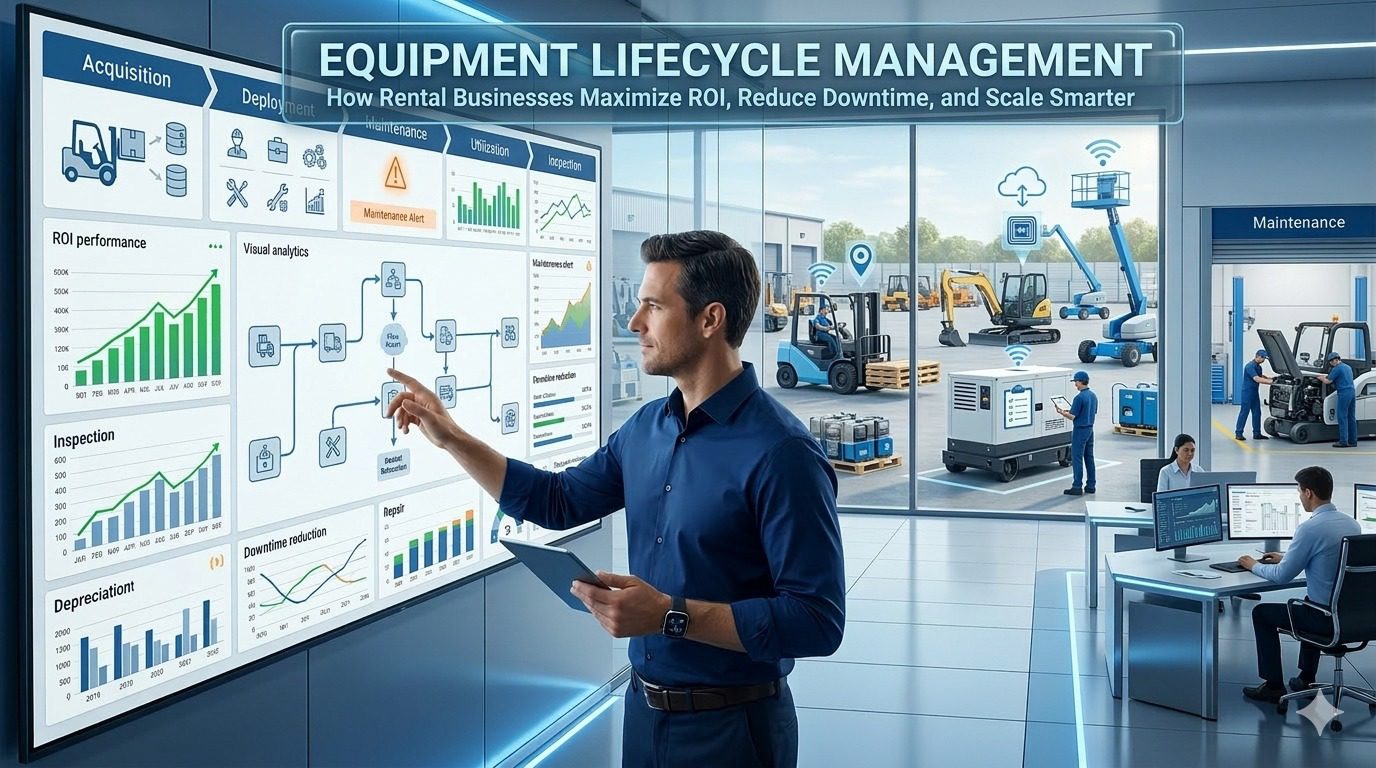
The broad business discipline involved in managing an equipment rental business is depicted in the following diagram showing inventory management, customer management, financial management, maintenance management, and compliance management. The aim of all these elements is to maximize return on investment, to minimize loss, and to ensure that the rental business does not make less by having idle equipment while at the same time providing customers with a consistent level of service.
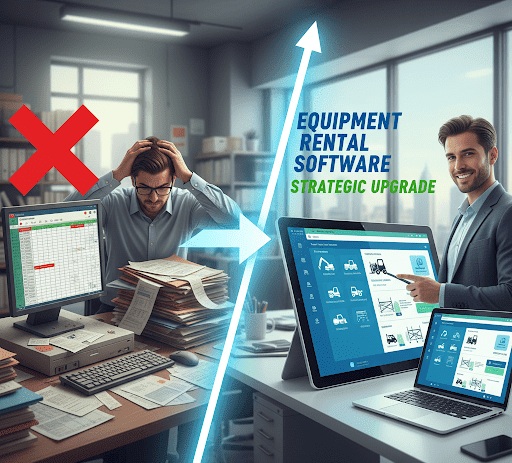
Equipment rental management explained simply. What would your rental business do without rental equipment management software. Every great rental business runs using an operating system for rental equipment management. Without it, your business would run using a combination of memory, worksheets and reactive day to day management. Miss out on potential, before you know it with this alternative.
Most people think of managing rental equipment as simply tracking “inventory”. However, what they fail to realize is that rental equipment is a revenue-generating asset that depreciates over time and requires scheduled maintenance and repairs. Equipment can also be deployed to different geographic locations and each rental transaction is tied to numerous financial and legal obligations. Rental equipment management requires a structured and analytical approach to achieve rental equipment success.
Why Equipment Rental Management Matters in 2026
The rental equipment industry has become increasingly complex over the past few years and is facing a number of challenges. The modern rental customer is a discerning one, requiring rental equipment to be available next day or even on the same day. They have a good understanding of fair rental rates and the rental soft fleet is growing. Meanwhile, there is an increasing number of regulations in many countries affecting the safe use of rental equipment. In addition, rental companies are under pressure to maintain rental margins in the face of rising fuel costs, increased maintenance costs and growing competition in the rental market place.
The rental business part of the company used to be an afterthought, something left to experienced operators to manage without too much interference from above. No longer. To grow profit profitably, the modern equipment rental business needs to move on from relying on guesswork and develop a clear strategy based on hard facts and numbers. A vital part of this is gaining insight into the levels of utilisation of different products, average turnaround times at different depots, cost per rental and residual values of individual items in the fleet.
However, when rental equipment is not managed correctly, there are some rather obvious negative consequences. Missed business opportunities, dissatisfied customers, damaged or worn equipment, unexplained downtime for unscheduled maintenance and unexpected expenses in the finance department that become apparent when trying to reconcile invoices that don’t match the hired out equipment.
Contrary to common experience, small to medium sized companies do not have to operate with feet tied and eyes closed when it comes to managing their rental equipment. There is Equipment Rental Management Software out there that can bring the same discipline and transparency to the smaller company that the larger players enjoy. And the payback is quick - in terms of reduced asset loss, improved utilisation and shorter payment cycles.
Key Components of Equipment Rental Management
This post will break down the rental management process by highlighting key aspects of equipment rental management. Together, these basic components can form a complete rental management system for any operation.
1. Equipment Rental Inventory Management
At the heart of any rental operation is the asset register, a complete list of all the rental company’s equipment assets. This basic inventory listing must also contain accurate and up-to-date rental inventory information that reflects the location of each unit, condition of the equipment, maintenance status, certifications and on-hand quantities available for rental.
Having a Rental Inventory & Asset Management system centrally based means all the usual manual checks and phone calls associated with rental management are saved. While a rental is being booked for hire, instant availability checks can take place. Once an asset has returned from hire, condition checks can be recorded and the asset released back into available stock.
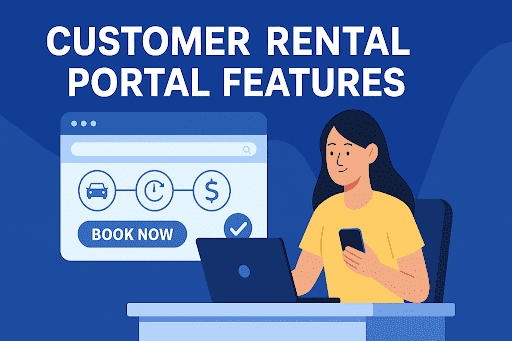
2. Equipment Rental Booking Management
The rental booking management covers the complete process from inquiry to availability check, through contract, deposit payment and the dispatch and return of the required equipment. This process is completed by the damage assessment and final payment to the rental company.
Letting your guests down is far more likely to occur through booking management mistakes such as over/under charging for a property, late returns of payments or even double bookings. Using a proper booking management system will help you avoid these mistakes and create repeat customers. Book confirmations, rental terms and invoices all need to be handled correctly.
3. Equipment Availability Scheduling
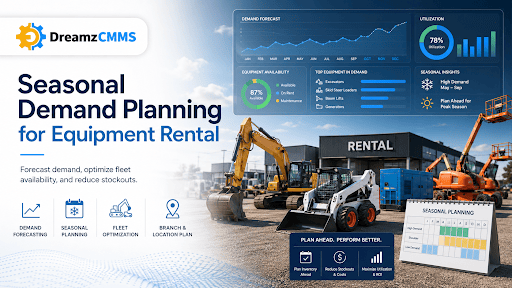
One of the biggest technical challenges for operations management in equipment rental is scheduling. There is a constant flow of items in and out of hire, plus scheduled maintenance to consider, all whilst trying to manage the natural seasonal fluctuations in demand causing periods of high utilisation. However, by implementing an Equipment Availability Scheduling (EAS) method, dispatchers have a live, visual and clear view of the availability of the correct equipment type by location, or by time period enabling them to make the correct hire decision.
4. Equipment Rental Tracking Management
Equipment rental tracking management is the process by which a rental equipment supplier ensures that, at all times during the hire period of their rental equipment, they know where the unit of equipment is located (within the business or externally). For high value rental equipment or equipment fitted with GPS, this is likely to be on a real-time basis. For the majority of rental equipment however, equipment rental tracking management is more about maintaining a chain of custody, tracking who picked up the equipment and when, knowing where the equipment is being delivered to on site, when the equipment is returned to a drop off location and who signed for the equipment at each transfer point.
Tracking is important for more than just knowing where your equipment is located. It is critical in the loss prevention process. Most loss in the rental industry is not the result of theft, but rather unexpected loss due to unknown or “off the books” rentals where the owner and rental company are unaware of the terms. A well-designed tracking system can make these types of unexpected losses impossible.
5. Maintenance and Compliance
Most equipment hired out for generation rental hire is used up to twice as much as the average owner would use the same item, plus a bit extra. This greater usage can result in earlier than expected failure, and failure is far more expensive whether that be in lost rental revenue in an emergency hire to tide you over until repairs are completed, or as compensation claims against you and your company by dissatisfied customers who feel they have suffered some loss as a result of hiring from you.
When you bring maintenance scheduling into rental management, service events can be set up to occur after a certain number of hours of use, or on specific dates. That means your up assets for hire will be automatically blocked at those times. This is one of the most valuable improvements a rental company can make. Here’s how Asset Lifecycle Tracking Benefits can save you money, and even extend the life of your assets by tracking their working life.
How Equipment Rental Management Works in Practice
Theory of the equipment rental management is not difficult to learn. However, putting it in practice is another thing and turns into an ongoing cycle of actions. Yet, specialized rental management software allows owners to increase their bottom line by performing these actions more efficiently than simply going about it on an ad hoc basis.
Step 1 — Asset Onboarding: Set up each new asset in the system with all necessary details (specifications, cost of buy, warranty, service interval, initial condition, etc.) to serve as the starting point for analyzing its lifetime value.
Step 2 — Availability Management: Our system always shows live availability based on current hires, pending returns, upcoming maintenance and boat inspections. Your booking teams will have real-time access to up to date information.
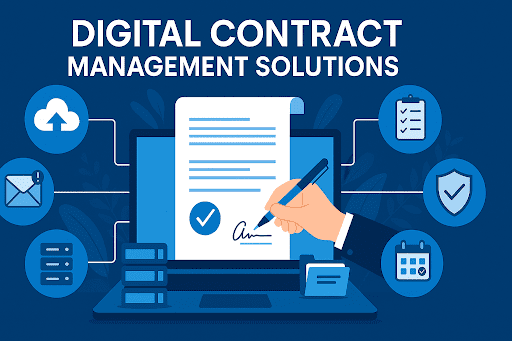
Step 3 — Booking and Contract: Once a booking is made the system generates a hire agreement with hire terms and conditions. This includes the customer details, hire period and hire rate, hire, collection and dispatch dates etc. The deposit or prepayment is also recorded against the booking.
Step 4 — Dispatch and Tracking: Dispatch and Tracking The hired asset is now available for hire. Details of the pre hire condition are recorded. The asset is dispatched from the company location. GPS enabled units can be tracked live while en route. Once delivered the driver will confirm delivery with a signature.
Step 5 — Return and Inspection: Return and Inspection Once the assets have been returned to our facility, they are inspected against the pre-hire condition record, documenting any damage or wear and tear encountered. The asset is then returned to the available pool for hire or placed in the maintenance section for any required repairs.
Step 6 — Invoicing and Reporting: Review and complete the final invoice for hire, including any damage charges, and update hire period in the system to record off-hire. Step 6 generates the final invoice for the hire period based on the charges for the period hired for, any damage charges and all rates applicable to hire. The system also updates the customer specific utilisation reports, revenue reports and fleet performance benchmarking and monitoring dashboards.
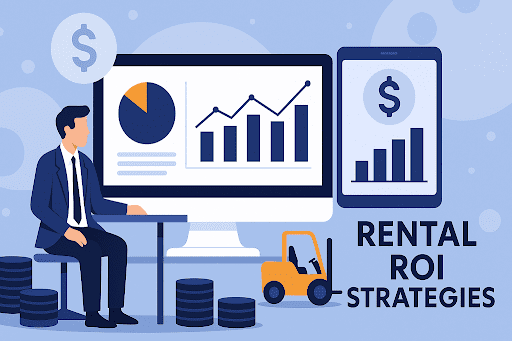
The report Maximizing ROI on Rental Equipment highlights the key levers to maximize profitability at each stage of the Rental Equipment Fleet ROI cycle whether large or small operation.
Equipment Rental Management Benefits
Rental equipment management benefits are very visible when comparing statistics such as these between a rental company that utilizes a rental equipment management system and one that does not. The benefits are visible in every operational statistic that is critical to a rental company.
- Higher asset utilisation: By bringing your availability tracking and hiring booking management into one system, you can maximise the use of your assets resulting in increased utilisation of up to 15–25%. As hire durations increase, you can go on to maximise the available hire time between hires and then focus on increasing the frequency of hires between assets.
- Fewer asset losses: A complete chain of custody for all of your assets, automated reminders to employees who are due to return hired assets, ensures that there are no unreturned hires or hired assets that have been used informally under an informal rental agreement.
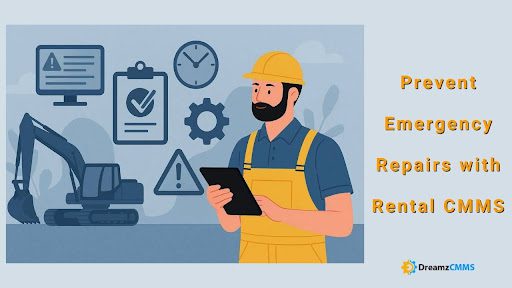
- Reduced maintenance costs: We provide a schedule of routine maintenance based on the actual usage of the vehicle; this approach can reduce maintenance costs and help prevent those expensive emergncy repairs or broken trailers in the middle of a hire contract.
- Faster billing cycles: Get your bills out on time by automatically scheduling and sending invoices based on confirmed hire data to clients. Reduces errors and disputes.
- Better compliance: Store and track inspection records, certifications and maintenance histories for easy access during regulatory audits to prevent potential liability.
- Stronger customer relationships: Strong customer relationships are developed over time through reliable availability information, clear contracts and pricing conditions and accurate invoices thereby turning the first hire into a long-term customer.
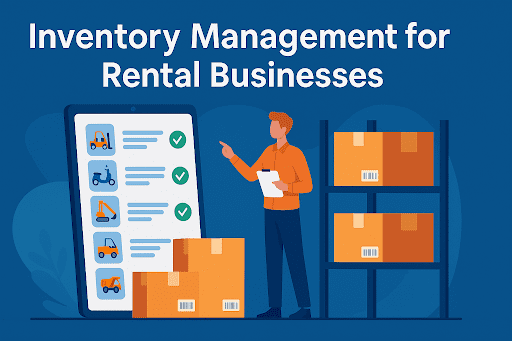
For rental businesses that also manage parts and consumables alongside their hire fleet, Inventory Management for Rental Businesses provides a practical framework for integrating stock control into the broader rental management operation.
DreamzCMMS's Equipment Rental Software is built specifically for rental operations that need to manage complex fleets, multi-location depots, and high booking volumes without sacrificing the visibility that keeps assets profitable and customers satisfied.
Conclusion: Building a Rental Business That Runs on Data
Equipment rental management is NOT a tool or process improvement tactic. Rental management is an ongoing, operational discipline that transforms equipment availability into customer value and customer value into profit.
Rental management software helps companies track and manage tools and equipment rentals out to customers. Ideally, a rental company has the proper tools in good working order and a system to hire them out, but software can help simplify and streamline processes. This is particularly important, however, as the size of a rental company’s inventory, customer base and number of process requirements and industry regulations grow.
Investing in structured rental equipment management software to manage inventory, bookings, maintenance and performance will deliver results for a business. By reducing inventory loss, preventing unexpected downtime, improving billing and customer retention, businesses can gain substantial returns.See how a purpose-built platform can make rental equipment operations easier to manage. Book your free demo with DreamzCMMS today.
Subscribe to Our Newsletter
 100% SECURE
 We Respect Your Privacy
 Ready for More?
Talk to one of our CMMS experts and see how DreamzCMMS can simplify your maintenance operations.
Book a free consultation