 BACK TO Blog
Asset Rental Management
Facility
Smart building AI Facility explained: how smarter teams connect HVAC, lighting, security, and energy into one intelligent operation
- March 30, 2026
- DreamzCMMS Team
- 19 minutes read
- March 30, 2026
- DreamzCMMS Team
- 19 minutes read
Introduction
An AI Facility is a technology system consisting of smart, connected, automated and optimized components that make building operations more intelligent. When combined with systems such as HVAC, lighting, security, maintenance and energy, smart building AI Facility integrates all building functions, turning building operations into a dynamic and self-regulating living entity. With real-time access to building performance, smart building AI Facility enables faster, more intelligent and more effective building operations, resulting in higher resource efficiency and productivity.
This is a very important shift. For decades we have measured the performance of a building based on whether the lights are on and whether the systems are running. Today, in today’s Smart Buildings, the metrics for performance have dramatically changed and have a much broader impact on the efficiency and value of a building. Energy efficiency, occupant comfort, the level of service provided by systems and the ability of a building to comply with regulations and detect issues before they become problems are all just a few of the metrics that can be measured and controlled. This is where Smart building AI integration is required. The ability to begin to connect systems that were not connected, and to begin to understand and interpret the vast amount of data being produced from all of these sources is a critical step in the Smart building journey.
From being a mere alert system, a strong FM system should ideally give you a better understanding of what is happening in your buildings, where priorities should be focused and where action should be taken quickly. Building automation and Artificial Intelligence (AI) is repositioning property owners from a purely reactive maintenance model to a more proactive and connected smart building system. And, many building owners are now starting to realise the value of integrating their AI with their facility management systems, integrated smart building systems and an AI building management platform to improve operations and building performance. Facility Management Software, HVAC Service Software and DreamzCMMS all benefit from a well-functioning AI system in place.
Why smart building AI Facility has become an operations issue
Building problems aren’t just maintenance events. They’re expensive energy bills, inconsistent zones, slow repairs, dissatisfied occupants and unexpected downtime. A smart building Facility management system using AI and automation is no longer a discussion around technology – it’s about how you operate your portfolio.
Our buildings are more sophisticated than ever. We have more controllers, sensors, doors, cameras, leak sensors, etc. and more systems to manage such as HVAC, lighting, access, sensors, utilities, and maintenance. If these systems were communicating with each other, even a small issue would not be so burdensome.
A poorly cooled zone may only be a minor issue on paper, but in reality can negatively impact the indoor air quality, productiveness of the building occupants, and their comfort level. A light sensor not communicating with the control may result in an enormous amount of energy being consumed. An access system not communicating with the security hub or alarm panel may increase the amount of time to resolve an after hour incident.
It is widely acknowledged that HVAC (Heating, Ventilation and Air Conditioning) is the starting point for any Smart building AI application. As the systems that provide us with our greatest comfort and the largest portion of our energy consumption, the application of HVAC intelligence to occupation, routine and maintenance workflows can significantly improve indoor climate management.
Ultimately, the integration of Smart building AI, HVAC, lighting and security environments is about more than just smart automation. It is about optimizing the interactions among the various building systems that have the greatest influence on daily building performance.
The hidden cost of disconnected building visibility
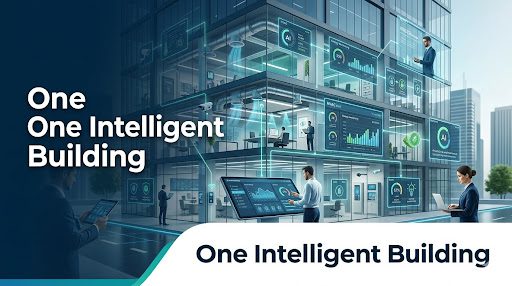
The process of making a building’s visibility weak is never instantaneous. Weak building visibility over time erodes to the point where it has little value. The building’s systems and aspects that are easily viewed in real-time are shown on four screens in the above pictures. The first screen displays HVAC and the second shows the amount of lighting being used. The fourth screen is sometimes hidden or is very hard to reach and is used to show the history of maintenance that has been done. If you can’t access the information on the fourth screen then the data you have access to is not helping to enable your decision making with certainty.
The price of separation The team has to spend more time switching between the different applications/systems and interpreting the different information that is provided in a non integrated way. They have to spend time addressing issues as they occur. Troubleshooting is more time-consuming because there are more variables to monitor and investigate. The waste is not easily identified. Maintenance is sometimes done too late in the process due to the variability being not detected in a timely manner.
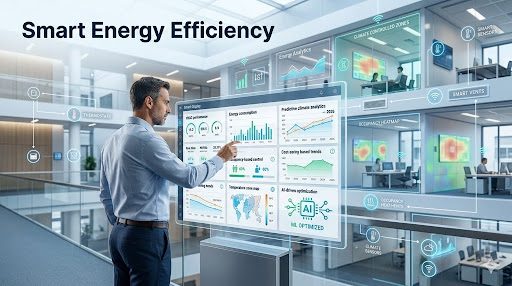
That’s why Smart facility real-time monitoring AI is becoming more important. With real-time monitoring you and your operations team get an instant view of any changing conditions as they happen, rather than finding out later after a report has been generated. Real time monitoring enables Centralized building AI control. This allows your facility team to get a complete view of building operations at a glance, without having to access and monitor each system individually.
Our lights may still be on and our buildings may still appear to function, but performance is beginning to degrade in a host of non-visible ways. The increases may be small at first, but the costs can add up quickly. Occupants may start to feel less comfortable, systems may begin to operate in a more stressed condition and the building’s ability to quickly respond to changing conditions and occupant needs may start to decrease. What may seem like a small problem today, could become a much larger building operations issue if left unaddressed.
Why basic smart building setups often fail
Everyday we hear about companies deploying IoT sensors or individual smart building panels to get started with their smart building initiative.
- You have sensors installed on your building but no automation or logic to make use of them
- You have energy consumption data but it does not necessarily inform your maintenance strategy
- You have alerts and notifications but there is no workflow in place to ensure that they are actioned within a relevant timeframe
A smart building control system can bridge this gap between having control and having meaningful control of your building. Having control of your building is not just about seeing your data, it is about using that data to empower your operations team to act in the most optimal way possible.
So here we are with Smart building IoT AI. IoT collects the signals, AI does something useful with them and Smart building integrates them to turn the vast amount of sensor data into something truly useful. Otherwise, even the best intentioned Smart building project would just lead to a collection of siloed products, increasing workload and discomfort for occupants, rather than decreasing it.
The biggest payoffs come when the Intelligent building automation AI is tied into work orders, asset history and service processes as an integrated tool rather than treated as an afterthought or a reporting system that’s an add on. Connected systems are more valuable than individual smart features.
What affects smart building performance in real conditions
None of the parameters mentioned so far is individually responsible for building performance. Variables such as patterns of use, peak load heating and/or cooling for the building and for individual spaces, at different times of the year, as well as the age, condition and degree of maintenance of specific pieces of equipment and individual systems, control philosophies, and interactions between systems on site are all important.
The performance of heating and cooling, lighting and security systems can be influenced by a wide variety of factors such as weather, peak load conditions, building layout and condition. To understand relative importance of the various factors, it is necessary to take a holistic view of the system.
Most issues, whether facility wide, building wide or system wide, are addressed on an ad-hoc basis. Individual issues are addressed without fully utilizing the opportunity to take advantage of the facility wide analysis potential that the analytics derived from AI based optimization and predictive strategies can offer.
On a system by system basis, the full benefit of the AI-based Building Energy Management approach and the enhanced control decisions derived from this approach are not fully realized. The current approach does not enable a fully integrated Unified Facility Management (UFM) AI engine that utilizes data and analytics from one department to another to derive higher level insights.
Where will your building fall on the spectrum of energy and asset efficiency? Ideally, all buildings would be in a state of perfect harmony between energy consumption, maintenance, services, and operations. Where all of these functions are Smart and working together in unison. This is what we call an “AI Facility” – not automation, but true operational intelligence for the entire building.
Why unified building intelligence matters more than many teams expect
You might have all the latest technologies, but you may not be operating at the peak of performance. Your systems are likely operating in silos and not taking advantage of the benefits of integrated Unified Intelligence of Buildings. The integration of Unified Intelligence of Buildings will significantly change the way your staff is able to monitor, analyze and troubleshoot the building, as well as manage resources and perform preventive maintenance and future retrofits.
When all systems are unified, building teams are then able to correlate maintenance activities with energy trends and relate HVAC loads to space occupation and security activity. When all systems are unified, teams are more informed and better able to react at the right time, with a higher degree of confidence in their actions.
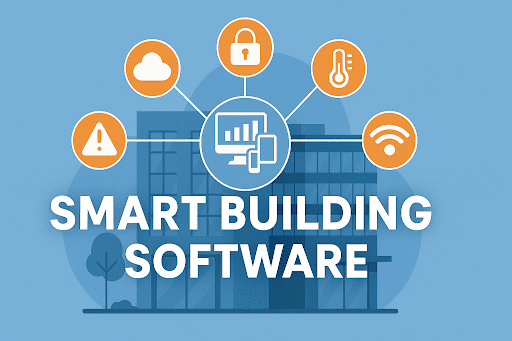
The Smart building automation platform can help. A smart building automation platform is the technology behind connected control, workflows and more meaningful and actionable building-wide insights. An integrated smart building system enabled by a smart building automation platform will have all systems – HVAC, lighting, energy and maintenance – that are fully interconnected and working in sync.
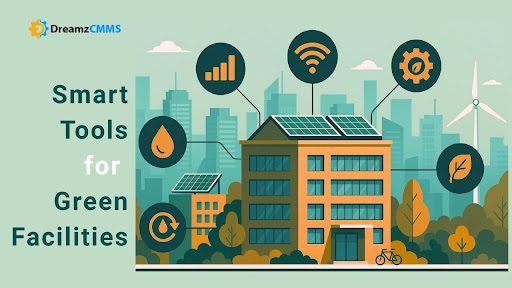
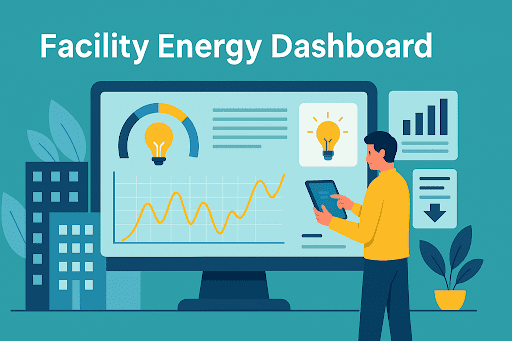
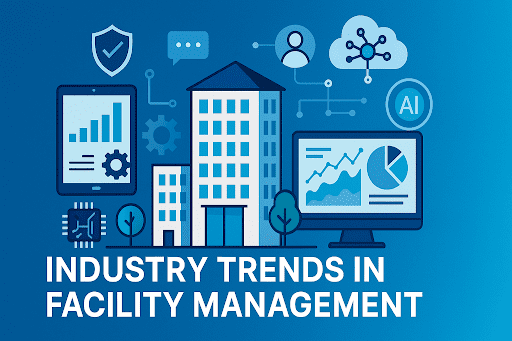
Real Property Management: A Modern Approach Real Property Management is the practice of providing facility management services on behalf of an organization. Related Resources: See our Industry Trends in Facility Management report, our facility energy tools, or get an idea of how smarter organizations are managing their facilities using our facility energy dashboard.
How smart building AI improves maintenance timing
I recently wrote that a smart building with an AI Facility can help us manage time more effectively and that was not a joke. We all know which things are sensitive, which floors are the grumpiest and which systems need to be watched at all times. With AI building predictive maintenance, we start to manage the IoT data from our systems and buildings to determine when an asset on a sensitive floor may be acting up and before the comfort complaints about the building start, the increase in energy consumption or a decline in system performance are noticed.
Critical especially in systems such as HVAC, lighting controls, pumps, air handling units and associated electrical equipment. While the system may appear to be on, it may not be operating efficiently. For example, the power draw to the system may be higher than expected, the system may be taking longer than normal to achieve set point or the heating and cooling modulation may be off in some manner that may be a harbinger of a future problem.
In an unconnected system this potential power price volatility or operating condition may only come to light when a price spike occurs or when an occupant complains about a system. Using artificial intelligence in a facilities management system allows potential power consumption issues and unusual heating and cooling patterns to be recognized within the system and maintenance can then be carried out at the most opportune time.
I often hear teams talk about implementing #AIFM (Artificial Intelligence for Facility Management). However, they often do not realize how much more practical this approach is, compared to what they think about “automation”. It is not really about the “automation” part displayed on the screen. Enabling the facility manager to move from a reactive approach to a proactive approach, is what makes the timing of maintenance tasks better. And when the maintenance timing improves, everything else also improves. - The building occupants experience less disruptions - The technicians experience less pressure - The buildings are more efficient and they produce less waste And finally, the #AI Facility will be more reliable and easier to expand.
Why centralized control changes response speed
One of the many benefits of modern building intelligence is that it can react more quickly. Without integration, facility-wide decision-making can be as slow as a snail’s pace. Without tie-in of disparate systems, important information has to travel at no better than the speed of a slow walk, and decisions that should be quick and easy become occasions for long periods of uncertainty and delay.
So our facility manager has to get up and switch to another application in order to compare conditions in one room with those in another. Do we have enough air conditioning and cooling? Has the lighting been turned off as it should be? Are doors and gates locked for security and to prevent vandalism? Are all necessary repairs and maintenance up to date? All of these require navigating among several apps to get the information required for a simple decision. The delays, uncertainties and interdepartmental handoffs that result are very time-consuming and inefficient.
That’s why Centralized building AI control is so important. When all your building systems are integrated, your operations team can respond to the changing needs of your building and occupants in a more efficient and effective way. Without integration, they must respond to individual system needs based on fragmented system views, such as a hot zone, changes in occupancy, security events, or increasing energy consumption, all in relation to the overall building status.
That’s why Smart facility real-time monitoring AI is more than a feature. It’s an operational tool. Instead of receiving alerts to problems hours after the problem has begun and after it has become difficult to make corrections, staff can respond to the first sign of a problem when it is still easy to correct.
It also impacts the operations of an Intelligent building control system as the control logic in the system works more efficiently with real time data as compared to static timings. A centralized system facilitates in faster decision making, execution of work and reduction in downtime. Hence it helps in reducing the time required for troubleshooting and thereby saving costs. Faster response time ensures that the occupants are in a state of optimal comfort, the services are highly reliable and the low level anomalies do not develop into major disruptions to building operations.
How energy, comfort, and building services work better together
Smart building systems consistently fall short of their promised performance due to a misunderstanding of the complex interplay of competing variables. We see energy efficiency gains at the expense of occupant comfort, increased comfort at the expense of increased maintenance, more sensors and controls at the expense of functionality and usability. An AI Facility empowers building operations to achieve an optimal balance of the many competing requirements and provides a better experience for all stakeholders – people, businesses and properties.
As we see buildings and facilities becoming more “smart,” building energy management using Artificial Intelligence (AI) and Unified facility management AI cannot be overlooked. Energy management cannot be performed in isolation from maintenance, service requests, or occupant behavior. For example, if the energy consumption for a building is higher than expected, an investigation into the energy settings may be carried out.
However, it is more than likely that the HVAC system is operating heavily and therefore, fault or maintenance is required. Similarly, non-adherence to working hours or building zones by occupants could be the cause and a smart system can greatly assist in making decisions and responding quickly to occurrences as it affords a total view of all aspects of the facility management process.
In Smart building AI (artificial intelligence) systems such as HVAC, lighting and security, there are always many disparate systems that require human intervention to monitor and control building resources such as energy consumption, indoor air quality and overall temperature. These systems impact the heating and cooling of a building and the lighting and security systems all have an impact on building comfort and energy costs, as well as the productivity and user experience of building occupants.
They also impact access, safety and the productivity of the space. When these disparate systems are integrated together using a Smart building automation platform, management of these systems is greatly simplified and reduced in labor. Isolation of control is removed. The building is then transformed into a highly integrated system that is much easier to manage and maintain. The Smart building IoT (Internet of Things) and AI is then transforming disparate, isolated “island of data points” into smart integrated systems that deliver valuable insights into building operations and performance.
This standard part is used for strengthening the content of AI predictive building maintenance, Centralized building AI control, Smart facility real-time monitoring AI, AI-driven building energy management, Unified facility management AI, Intelligent building control systems, Smart building IoT AI integration and Smart building automation platform.
Common mistakes businesses make with smart building AI Facility
Another mistake that I see made in schools is that there is too much focus on the data visualizations and not enough focus on the workflows that support the activities of the building. There might be a million different metrics that are recorded and displayed on a dashboard of a great building, but if the building does not have the workflows necessary to make use of the information it is gathering then it is not a very high performance building.
If the metrics on a dashboard don’t lead to some action, then the building is just a reactive building and the metrics are just pretentious smoke. Data can only be used for decision-making if there are corresponding actions that are taken when the data is used to make the decision.
Commissioning a building can be a difficult task and it can become very complicated due to the numerous potential errors that can be made. One of the most common is treating all spaces in the building in the same way. There are however many cases where different heating and cooling loads exist as well as different lighting, domestic hot and cold water, mechanical ventilation requirements, and so on.
In addition, one space may be given higher priority than others. When we try to apply new techniques such as Artificial Intelligence (AI) for commissioning assets and spaces, it is necessary to provide the right data in the right context. If we apply a generic approach to all assets and all spaces it will be ineffective.
Here’s the third mistake that building owners and facilities managers make when it comes to maintenance. Unfortunately it’s not the last. By the time a fault is evident to the building occupants it’s too late. Artificial intelligence-based predictive maintenance can catch potential faults before any complaints are received from occupants or power surges are detected.
Another area to consider is connected service processes. Although quite low technology, a process that is not connected can bring a very effective alert down to being barely better than a meaningless popup message. Asset history needs to be available to put the alert into context, the work and tasks assigned that need to be completed, and finally a means to close the work order and show that the assigned tasks have been actioned.
Build smarter building visibility with DreamzCMMS
If your team is still working in siloed applications for energy, maintenance, building services and field response, it is likely time for a change.
DreamzCMMS is an application designed to quickly and easily gather data about buildings, manage maintenance and increase asset visibility and more. Combine with our Facility Management Software and HVAC Service Software, it offers a simple and practical way to leverage AI in facilities management. An easy to use and operational AI facility management system, not for reporting purposes only.
More systems will work together and more smart buildings will benefit from the integration of IoT, AI and other smart technologies to enhance building operations. With more systems communicating, the work of operations, facilities, reliability and FM teams will become easier and more automated. Smart building operations will finally achieve their full potential, shifting from being highly administrative and people-intensive to fully automated and data-driven through the use of innovative AI-based facilities management techniques, while delivering real-time visibility into building performance and the least amount of possible disruption.
Conclusion
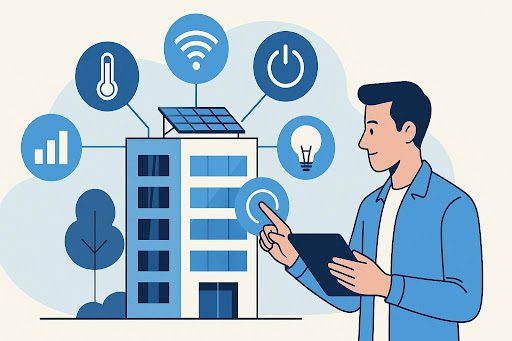
Facility: Smart Building AI An AI Facility is more than a smarter set of devices. It’s about a smarter way to work together. The ability to link up and access systems such as HVAC, lighting, security, maintenance and energy in a more integrated way, through a single interface, leads to a more intelligent operation of the entire built environment.
The key words are Smart building AI integration, AI building energy management and Unified facility management AI. The opportunities are huge and include reduction of waste, improved occupant comfort and experience and faster building response. While the potential for automation is well understood, the real value of Smart Buildings is in increasing the level of control and visibility into building performance. Some of the opportunities include:
- Understanding what is happening with the building and why,
- Understanding what needs to be done in response to building performance
And many other things.
Smart buildings are moving toward Centralized building AI control, more advanced AI for optimization of building level and zone level facility performance, and site wide monitoring and optimization through a modern smart building AI enabled Building Management System. This is how smart buildings translate into operational savings.If your goal is to have more connected, efficient and scalable operations for your buildings, then your next step is a Free Demo to learn how facilities management can be made easier with DreamzCMMS.









Subscribe to Our Newsletter
 100% SECURE
 We Respect Your Privacy
 Ready for More?
Talk to one of our CMMS experts and see how DreamzCMMS can simplify your maintenance operations.
Book a free consultation