 BACK TO Blog
Asset Rental Management
Rental Asset
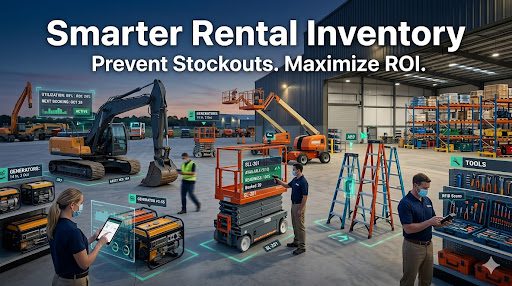
Rental inventory management system explained: how smarter teams prevent stockouts, maximize ROI, and get more from every asset
- March 24, 2026
- DreamzCMMS Team
- 17 minutes read
- March 24, 2026
- DreamzCMMS Team
- 17 minutes read
Introduction
A rental inventory management system is the process and technology used to manage, control and optimize the tracking, planning, allocation and maintenance of rental inventory assets throughout their lifecycle; from order reception to rental period and back to the depot for maintenance and storage. A good Rental Inventory Management System can ensure optimal levels of rental inventory availability, accuracy of rentals, optimal customer experience and profit.
While it is true that most companies consider inventory to be an inventory count; tracking quantities on hand, whether products are located on the sales floor, and whether they are currently rented to a customer. Inventory in the rental business is anything but static. Rentals are coming and going at all times - cancellations and reservations are happening by phone, computer and in person. Items are constantly being picked up and dropped off; inspected; and then repaired and put away. Items are returned by customers and moved to other locations in the rental operation. All of these things cause inventory to move from one state to another and it is the changes to this inventory caused by operational activities that really affect a rental company's bottom line.
It's often the small things that we don't notice that can make all the difference. A missed return day can result in a double booking, a maintenance request at the wrong time can conflict with a confirmed pick up and an inventory not being updated in a timely manner can see a crew turning up with an item that has already been rented out to another customer. These are inventory issues but the impact on the rental business can be far reaching with implications for revenue, labor, customer service and most importantly growth.
Why rental inventory management has become an operations issue
Leaders don't look at rental inventory the way a spreadsheet does. Leaders don't have spreadsheets for columns, rows and quantities of inventory. Instead, leaders have missed bookings, last minute transfers, idle rental inventory, late returns and lost time thinking about where they are supposed to put information.
Inventory was once a relatively administrative process however with increasing demands on operations, rental inventory has become an operations challenge. If the rental inventory in EAM does not match the inventory in the system, this can affect several aspects of operations. Some examples include:
- Dispatch operations will be slowed down as there will need to be a physical check if an item of equipment is at the location indicated by the system. This causes inefficiency and waste in time.
- A wrong piece of equipment may be sent to a rental customer site as the system has indicated that the right piece of equipment was available.
- Sales will also have to be more cautious of entering new rental orders as there is no certainty that the required piece of rental equipment will be available. There will be an over-explaining of current inventory availability to a customer to manage their expectations of rental availability. The company may start to question the accuracy of the data it has in the system and so the cycle continues.
While a modern rental business needs more than just quantity tracking, it still needs to be able to dynamically see available rental inventory in real time from one location to multiple locations including branches, yards, service bays, customer sites and future bookings, in order to drive sales, service, logistics and financial performance.
Our customers want to be assured of the times that we have agreed to rent and deliver the equipment and, more than anything, they want the equipment to be delivered on time. Whatever internal issues the equipment was undergoing inspection, it was still on the truck or rented out twice, to the customer it is just a service failure. What was once a warehouse operational challenge has now become a performance metric for our business.
The hidden cost of weak rental inventory visibility
Weak inventory control does not fail dramatically in the beginning. A company may appear to be running along just fine with adequate rentals, pieces of equipment being used and occasionally lost, and work-arounds being developed to fill gaps as they arise. However, as time passes, the unsanctioned cost of inventory loss will become apparent.
Are you renting stuff to anyone who walks in the door? Are you having trouble keeping up with who has what and when they are supposed to return it? Maybe you’re duplicating assets, renting them out late, or having to rent stuff out at a minute’s notice. Your Asset Turns are low and you’re getting a lot of calls from renters wanting to know when they’ll receive their items. Your inventory tracking is more of a formality, and the tools you’re using are not actively helping to manage the flow of your assets. Your business is growing, but it’s not growing in a flexible way. Every new rental counter adds a new hurdle to the process.
Another area where preventing an Equipment rental stockout is very important. A stockout does not always mean that the inventory is out of stock. It could mean that the inventory is not on the correct bin in the yard. It could mean that an item has been staged at a location but the software is still showing it available at that location for rent. It could mean that the inventory has passed the back office inspection but has not yet been loaded into the rental software to be rented to a customer. And it could mean that an item is at the repair shop and is ready to come back to the rental property but has not yet done so. In all of these cases the customer is still receiving the same “not available” message.
The cost does not end there. Poor visibility is also affecting the productivity of your assets. You are paying for more items than needed to resolve an issue that is really visibility. You are overstocking low rental value items and understocking high rental value items. This is increasing your carrying cost and making it even harder to achieve the highest return on investment for your rental inventory.
We get a lot of this kind of friction. A better system would help to reduce it. Give us more confidence in our actions and decisions, speed up our response to the needs of others and provide a clearer view of things so that we can move quickly and with less uncertainty.
Why basic rental inventory setups often fail
Most rental companies start with the wrong question. They begin by questioning what location to rent to, what type of asset to rent, and what dates are blocked out based on past experience rather than demand, asset velocity and availability constraints in their operations.
That difference matters. The fact that you can buy more equipment in your class does not mean you will have enough to prevent issues with availability. More inventory in storage only results in more expensive storage, more maintenance, and more excess inventory.
Basic systems fail for a number of reasons. One of the main reasons is that inventory (stock) is handled independently of bookings and transactions and of operations such as receipt, return, transport and inspection. Inventory only becomes relevant when it is linked to service such as advance reservations, returns, transports, inspections and maintenance. If it is not linked then even though the data may be stored it is not utilised in real time for operational purposes.
Why your rental inventory software should work the way you rent and operate your business, not the other way around. Inventory needs to relate to your specific rentals, projects, service requirements, inventory moves from one branch to another and the live availability of every item. A static inventory list does you no good.
Another common pain point we hear about is that information is not being delivered in real time. This is usually a manual process where information is entered at the end of a shift, or where people are having to call each other from department to department. Sometimes even informal spreadsheets are being used to track repairs, or to track dispatches. The reality is by the time the information is actually entered into the system, the business has already acted on the information that’s a few hours old.
Rental inventory management best practices begin with process alignment. Your system needs to be aligned to the true state of affairs on the ground as they occur, not as they may have occurred hours prior. This is where Inventory Management for Rental Businesses becomes critical, because inventory only becomes valuable when it is linked to reservations, returns, transport, inspections, and maintenance in real time.
What affects rental inventory performance in real conditions
The Rental inventory performance is determined by more than just inventory levels. There are many factors in the real world that could impact availability and profitability of the inventory.
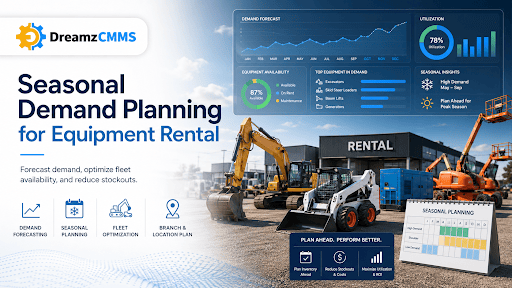
Seasonal rental inventory planning is a Demand pattern. Demand patterns are one of the major drivers in inventory planning. There are products that are always in high demand and products that are only in high demand for a portion of the year. Demand patterns can be influenced by many things, including weather patterns, seasonal construction projects, holidays, special events, and capital improvement projects. If seasonal rental inventory planning is not taken into consideration there will be shortages in demand seasons and overstock in non-demand seasons.
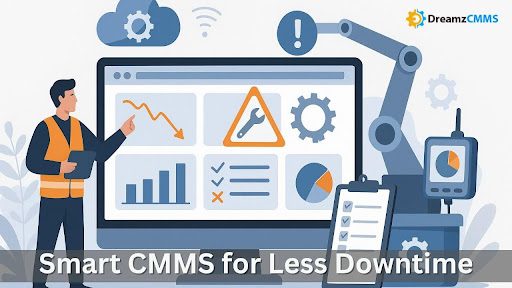
Maintenance impacts many dimensions of asset and equipment management and asset and equipment availability is often one of them. Although seemingly simple, the concept of availability is not really understood by many end-users. Just because an asset or equipment is on site, it does not necessarily mean that it is available. Maintenance can be a major factor on asset or equipment unavailability. There are many scenarios that can lead to a asset or piece of equipment being on site but unavailable for use. – Under maintenance – Under repair (waiting for spare parts for example) – Due for maintenance For this reason, having an inventory tracking system for rental equipment alone is not enough. Maintenance should be integrated strongly with the asset and equipment management module.
The main concern for manufacturers after productivity is often the location of the production equipment. For instance, a machine may be lying idle in a department and needed urgently in another. Without real-time visibility and smart transfer planning, manufacturers either end up losing orders or have to arrange for expensive same-day freight.
Turnaround speed also matters. The faster you can turn an asset from return to inspection to ready-to-rent the more it will earn. Long turnaround times can eat away at utilization and block new rentals.
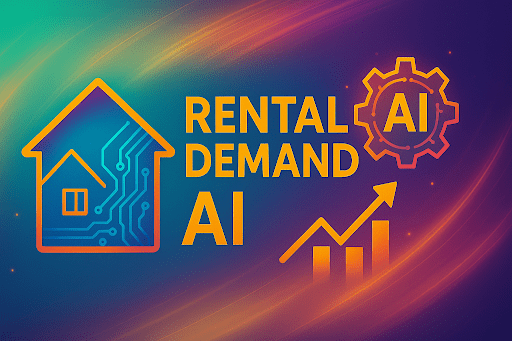
Inventory forecasting for rental companies Rental inventory demand forecasting is about forecasting events in the future and getting ready. Forecasting allows you to prepare ahead of time, preposition inventory, move assets early, and avoid reacting to demand as it arises. Businesses using rental demand AI alongside historical demand patterns can prepare ahead of time, preposition inventory, move assets early, and avoid reacting too late as demand rises.
Why asset mix matters more than many teams expect
There are so many companies who spend all of their time talking about the quantity of equipment and assets they possess. Quantity is not always quality, and quantity is rarely a measure of performance. There is never a one size fits all solution when it comes to fleet composition. The right mix of equipment for your operation will vary based on your customer needs, your desired speed of service, and the profit potential of different types of work.
Not all rental items are created equal. Some items are high velocity and high frequency; while others are specialty, seasonal or low frequency/high value. Equally treating them all the same way is a sure fire way to waste time and create unnecessary capital investments.
Rentals inventory utilization is where it all begins to unravel. Once you have visibility into the performance of your assets, you’ll quickly uncover which ones are the cash makers, which assets sit idle for the longest periods of time and therefore need to be moved to a different location, and which need to be get rid of. Without this visibility, we continue to buy inventory believing it is needed and without any clear understanding of whether it is contributing to the bottom line.
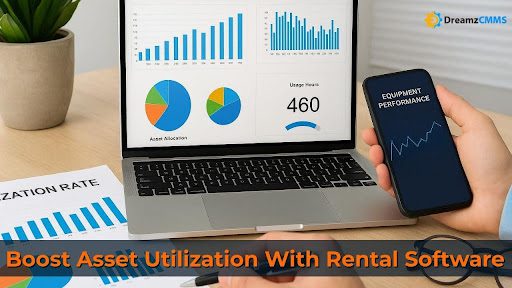
Rental asset utilization optimization Smart operations are about Rental asset utilization optimization. Increasing rental asset turn rates, reducing unwanted downtime and deploying the right product to the right market at the right time. It's not about holding the most inventory. It's about making inventory work harder.
In many cases the asset mix also affects the service level required by the customer. A high demand item being understocked and a low demand item sitting in the rental yard will not give a fully allocated inventory for any given total quantity of rental equipment on hand. This is a major source of stockouts even after inventory levels have been increased.
Why more inventory is not always better
The most common response to my comment about “fewer parts means more availability” is “we just need to buy more parts and it will be more available.” It is true in a few cases, but not the majority.
Excessive slow stock turns, inaccurate forecasting, poor visibility of inventory levels and ongoing branch imbalance issues all lead to overstocking inventory at individual locations, resulting in higher inventory costs and more idle assets, while still having inventory out of sync with customer needs at the right time and place.
That’s why smarter businesses are focused on fit vs. volume. They’re focused on having the right mix of assets, the right replenishment schedule, the right inventory controls, etc. in order to maximize Rental Inventory ROI.
We have more inventory on hand, which gives us less opportunity to react to a changing market. More storage space, more labor to maintain the inventory, higher insurance and more capital at risk are just a few of the downsides. Low utilization of assets eats away at our profit margins quickly.
Focus your supply chain optimisation efforts on improving visibility, forecasting and allocation in the first instance. If you get this right, you will then have a good understanding of whether you have a stock issue, a network problem or an operational issue. And you may not have to spend a penny! That’s why smarter businesses focus on visibility, forecasting, allocation, and proven rental ROI strategies to maximize rental inventory ROI without overinvesting in idle assets.
Common mistakes businesses make with rental inventory
Mistake of the Week: Static counts vs live counts Static counts vs live counts is one of the most common mistakes made in inventory audits. Just because an item is listed in stock, it does not mean that it is available. An organization may have inventory items reserved, late for inspection or return, pending inspection or under repair. Make sure to audit against a live count.
Here’s another mistake that’s frustrating because it’s preventable if your inventory was linked to bookings. If an inventory isn’t linked to Project and Rental Bookings in real time, you may end up double booking an item of equipment or seeing a booking in another system.
Demand Forecasting is often overlooked as a business tool by many companies. Instead they react too late to the beginning of peak rental demand and over react to the end of the season. They experience stockouts during the peak rental season and have far too much inventory during the slow periods.
Another common issue we run into is called weak branch coordination. This typically occurs when one location has inventory sitting idle, while at the same time, another location is being turned away with job requests. This has a direct impact on revenue and can significantly make it more difficult to optimize rental ROI for the assets in question.
There are a handful of companies that do not follow a disciplined approach to inventory replenishment and thus buy inventory as needed or based on a little bit of market guesswork. The entire process is driven by very basic variables – demand, lead time and condition of the existing product rather than any of the more advanced metrics like:
- Rate of usage
- Return periods
- Condition and performance history of the rental product
- Forecasted demand for the product category
The terms operational metrics, property management metrics and financial metrics are often used to refer to the Key Performance Indicators that measure the performance of a rental portfolio managed by a property management company. The essential point to keep in mind is that financial metrics do not suffice and that the other ones are not necessarily brought to adequate level of analysis.
Thus, the fact that a property management company records its income does not mean that it examines the rental activities. Thus, it is not likely to make an in-depth examination of non-successful rentals, non-occupancy of premises or insufficient speed in handling turnovers and vacant premises.
Build smarter visibility with DreamzCMMS
Are you still facing visibility challenges with supply and demand, same-day and next-day shipping commitments, underutilized and often idle resources, and frequent stock outages? Time for an inventory management upgrade.
Inventory, Maintenance, Scheduling and Asset Readiness management in one place, a complete overview of your fleet, improved communication between departments and simplified rental process from start to end.
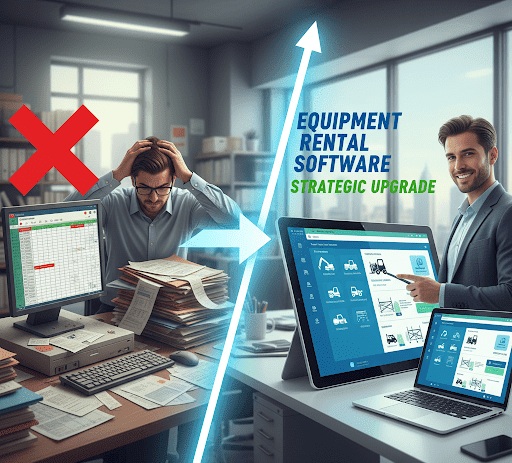
Do you want to improve your existing functionality of your Equipment Rental Software? Do you need a better Equipment Availability & Scheduling feature? Do you have a rental inventory which you want to manage efficiently? You are now one step closer to transitioning your MRO operations from being reactive to being proactive using DreamzCMMS.
Ready to increase asset utilization, reduce operational inefficiencies and grow your business with confidence? Take the first step and request a Free Demo of DreamzCMMS from one of our representatives to avoid stockouts, increase asset utilization and make your rental business more profitable and efficient.
Conclusion
Every rental owner and manager already knows that their inventory management system is more than just a list of rentals. We want to know where we have inventory, what we have, in what quantities, if it is available and when it is being rented and how much money it is generating. And with the added features of tracking inventory for all of the operations of our business, tying the inventory to bookings and maintenance and being able to make more accurate forecasting we are able to avoid stock out situations, deliver an amazing customer experience and generate the greatest possible revenue possible from the rental inventory that we have invested in.
High performance rental businesses do not operate based on assumptions and spreadsheets. They operate based on data, automation and business workflows to manage their rental fleet inventory, provide visibility to rental inventory levels and to support business decisions at all stages of the rental process. And the pay off is increased asset utilization, greater customer satisfaction and improved profitability. A rental inventory management system is a critical investment for rental businesses that plan to grow their business and still have control of their operations.

Subscribe to Our Newsletter
 100% SECURE
 We Respect Your Privacy
 Ready for More?
Talk to one of our CMMS experts and see how DreamzCMMS can simplify your maintenance operations.
Book a free consultation