 BACK TO Blog
Asset Rental Management
Field Sales
Field Sales vs Inside Sales: Which Model Fits Your Business?
- May 19, 2026
- DreamzCMMS Team
- 13 minutes read

- May 19, 2026
- DreamzCMMS Team
- 13 minutes read
There is an ongoing debate within the field sales industry regarding the value of Field Sales in comparison to Inside Sales. Many feel that the art of physical face-to-face sales is dying.
Selecting the optimal sales approach is amongst the most strategic business decisions. Often organisations default to one model over the other, without taking sufficient account of the product / service, customer & growth models. The debate between field sales & inside sales is escalating, driven by factors including the growth of home working, changes in customer buying behaviour & a surge in air travel costs.
Should your organization go full field sales (FSS) or inside sales (ISS)? Understanding the full cost structure, conversion ratios, org design, and real world use cases is key to making that determination. Here’s a quick guide to assist organizations in determining whether to go FSS, ISS or a blend of both strategies.
What Is Field Sales?
Field sales, also known as outside sales, is sales interactions with prospects and customers in person. This can be at a customer’s office, a conference or tradeshow, a customer’s location for a live product demo, etc. Field sales reps are often assigned a territory (geographic or account-based) and spend the majority of their time traveling from meeting to meeting.
While many industries have traditionally used an outside salesforce to bring in customers—such as manufacturing, construction, medical devices, enterprise software, and companies in the logistics and facilities services industries—buying decisions in these categories are often high-stakes, complex, and very relationship-driven.
Field Sales Software provides real time information on Field Sales reps’ activities, their visits, pipelines and sales data. This real time information is also integrated into Field Service Management Software to link up the sales activity with the delivery & service operations.
What Is Inside Sales?
Inside sales is a methodology used to drive sales through channels outside of a brick and mortar location. The majority of inside sales happens remotely via phone, email, and/or video to close deals remotely using technology and applications. Depending on the company and culture, inside sales teams can be based out of a headquarters or even operate remotely from home. First, leads are captured via the company’s website or the sales team proactively reaching out to customers via outbound efforts. Then, virtual demos are conducted remotely and deals are closed digitally using tools and applications remotely with customers.
Inside sales is quickly becoming a huge emerging field within organizations of all sizes. It’s especially relevant in SaaS, e-commerce, subscription-based models and has become the primary channel for mid-market transactions. Inside sales is ideal for B2B companies that know their ideal customer profile.
Field Sales vs Inside Sales: Key Differences
Inside and field sales are often thought to differ in the geographical aspect, but there are more meaningful distinctions between the two models in terms of cost structure, deal complexity, customer engagement, and overall scalability.
| Factor | Field Sales | Inside Sales |
| Customer interaction | In-person meetings | Phone, email, video |
| Deal size | Typically larger | Small to mid-market |
| Sales cycle | Longer | Shorter |
| Cost per rep | High (travel, expenses) | Lower |
| Scalability | Limited by territory | Highly scalable |
| Best for | Complex, high-value B2B | Volume-driven, repeatable deals |
| Technology dependency | CRM + field tools | CRM + sales automation |
This comparison chart is a good starting point for determining whether field sales or inside sales would be the best choice for your company. The chart is very simplistic and does not capture all details. There are many more factors that should be considered. Some of the other factors to consider would be the cost of each option, the conversion rates of each option, and the overall sales team structure.
Field Sales vs Inside Sales: Cost Comparison
One of the most contentious elements of comparing the cost of sales versus inside sales is the total cost to acquire a customer. As most of us recognize, field sales has a lot of overhead associated with it. When calculating the total cost, in addition to the salesperson’s salary, you must also factor in the costs of travel, hotel and dinner expenses, entertainment, etc. Then you have to consider the vehicle allowance if the rep owns a car for business use. On average, one enterprise field rep can cost a business twice or three times as much as an inside sales rep on an annual basis.
A focus on cost-per-deal paints a different picture though. A field rep’s travel investment to close a $500,000 enterprise deal that an inside sales rep might have eventually closed with digital interaction likely has huge ROI. The investment to close a $10,000 SaaS subscription? Pretty much not.
By leveraging Invoicing Software and Price Book Software native to their sales platform, organizations gain much better visibility into the cost-per-deal for both models, enabling more informed decisions regarding allocation of sales resources.
Traditional field sales can be more cost ineffective than inside sales in terms of scalability. There are two main reasons for this: average deal size and relationship depth. However, there are some instances in which face-to-face interaction is required. The answer to this is a combination of the average contract value of a deal and the specific needs of the buyer.
A common debate among sales professionals and managers alike is the relative success of Field Sales and Inside Sales in terms of effectiveness and conversion rates. In trying to address this question, the first step is to clearly define what each job function is designed to accomplish.
So called “classic” field sales vs. inside sales – is one superior to the other? The answer to this question is simply “no.” There is no inherent advantage of either model; the best model is dependent on the particular sales organization for which you are developing a sales strategy.
Research has shown that large, complex deals that involve multiple decision-makers have higher field sales conversion rates. As a result, the seller’s priority shifts from planning a series of in-person meetings to influencing a buying committee, handling objections in the moment, and establishing trust with buyers. While in-person meetings with large enterprise customers tend to have higher close rates than virtual meetings, there are only so many days that a small team of field reps can physically be in rooms across the country.
Field Sales vs Inside Sales: Effectiveness and Conversion Rates
Conversion rates for inside sales are particularly high in high velocity sales environments, traditional transactional sales models and product led growth models. Organizations with these sales models typically staff inside sales teams to manage all aspects of the customer journey, supporting 10-15 discovery calls per day. They leverage automation to perfectly time follow up activities to ensure leads are moved through the funnel as quickly as possible. As a result, many organizations are finding that inside sales is the best sales model for B2B organizations with deal sizes under $50k and simple buying processes, driving high velocity sales at a lower cost than traditional sales models.
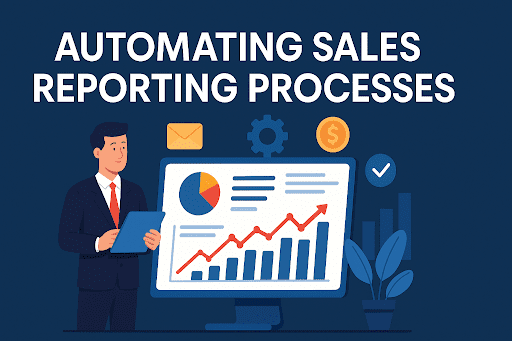
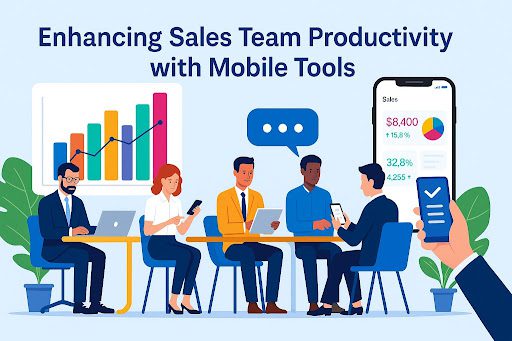
Want to learn how to unlock your team’s full potential? See our new guide Sales Team Productivity with Mobile Tools and Automating Sales Reporting Processes.
The 5 Main Scenarios: When to Use Field Sales vs Inside Sales
Knowing when to use field sales vs inside sales comes down to five key business factors:
1. Deal Complexity
Do you need to write up custom scope for your quote, send a representative on site for a assessment, and have multiple departments sign off? That is a field sales function. But most enterprise buyers are making purchases in the $100,000, $500,000, $1,000,000 per year category, and want to meet face to face with your sales representative. On the flip side, if you have a product or service that is "plug and play" standardized enough that someone can watch a product demo video, and try the product free for 30 days, that is typically handled by an inside sales function.
2. Average Contract Value (ACV)
A general rule of thumb in the industry is that when the ACV is above $50,000 to $100,000, the ROI of having a field sales team far exceeds that of an inside sales team. There are, however, exceptions to this rule and some inside sales teams have closed large enterprise deals.
3. Buyer Behaviour and Industry Norms
Buyers in certain industries are accustomed to developing relationships in person, such as in industries like healthcare, construction and manufacturing. Email sequences reading something like this to a Chief Medical Officer who is in the middle of a multi-year evaluation for capital equipment are not effective. Conversely, industries like technology, media, professional services are used to buying products and services online and are entirely comfortable with a completely remote buying experience.
4. Sales Cycle Length
When creating a remote sales strategy it is helpful to understand the dynamics of both remote (inside) sales and traditional field sales. One important distinction is the length of time it takes to complete a sales cycle for your organization. If your company needs to iterate quickly, reach customers at pace, complete 80-100 sales cycles per year (or more), then inside sales may be a better fit.
5. Geographic Reach
Given the nature of inside sales, one team can service customers and prospects from all over the country, even around the world from a single location. Scaling to new regions and geographies with a field sales model is expensive – expensive dollars to hire, expensive dollars to onboard, expensive dollars to manage, and expensive travel. Going to work with customers and prospects in a new location is a much more costly endeavor to scale out geographically.
Field Sales vs Inside Sales: Team Structure
We've been pondering the optimal team structures for pure field sales teams versus inside sales teams. It turns out the answers are dramatically different.
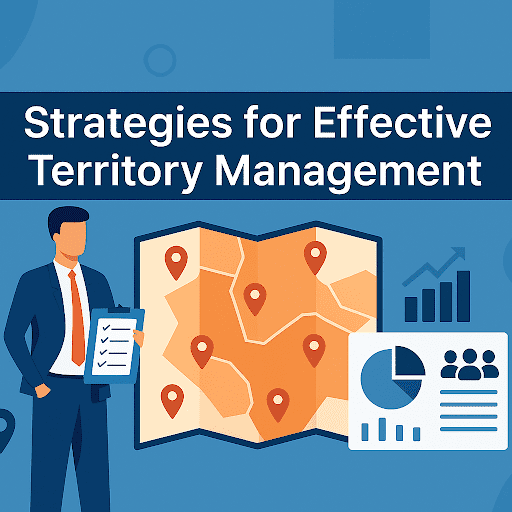
Sales teams are often organized around territory or vertical and each sales rep is responsible for managing a set of accounts. They are often supported by a sales development representative (SDR) who tries to schedule meetings for the field rep. The sales reps spend their time delivering value to customers, meeting with key decision makers, delivering demos, negotiating contracts, etc. Planning out territories effectively is a key competency for any sales organization. Read Strategies for Effective Territory Management for more.
The typical inside sales team is organized by specialty with SDRs focused on building pipeline, Account Executives focused on closing the deals the SDRs generate, and Customer Success Managers focused on helping customers get more value from your product or service after the sale. This organization enables an efficient assembly-line model with clear performance metrics, effective coaching, and rapid scaling. Inside sales leaders live and die by their dashboards, tracking metrics like dial rate, connect rate, pipeline velocity, and whether or not the team will hit their quarterly quota.
Field Sales vs Inside Sales Metrics
To maximize the return on either model, it is critical to pay attention to the right field and inside sales metrics outlined above.
For field sales teams, there are many metrics to track but here are some of the most important ones: meetings per week, pipeline per territory, win rate on enterprise opportunities, deal size in dollars, sales cycle length in weeks, and finally the cost per deal of the sales organization plus travel.
For traditional sales teams, we look at closing ratios and revenue. For inside sales teams, our approach is slightly different and includes: dials per day, connect rate, demo set rate, SQL-to-close rate, average deal size, average sales cycle and monthly/quarterly quota attainment.
Both models could benefit from unified sales reporting within a platform like DreamzCMMS where asset and service histories and data are maintained in a unified record and the sales team would have a better understanding of the opportunities from which they are developing and have more relevant conversations with prospects.
Common Mistakes That Hurt Sales Model Performance
Just as there are lifecycle mistakes that can be made for assets from an Operational Management perspective, sales models can also fail for similar reasons of a lack of visibility and poor planning.
Another mistake is over dispatching of field reps to accounts that inside sales can easily manage. It’s inefficient and costly for field reps who could be more valuable on other accounts.
Leaving inside sales technology out to dry – expecting them to perform optimally without adequate support from CRM, sales engagement technology and automation tools is just as bad as doing that for field sales. Inside sales is a technology-dependent industry.
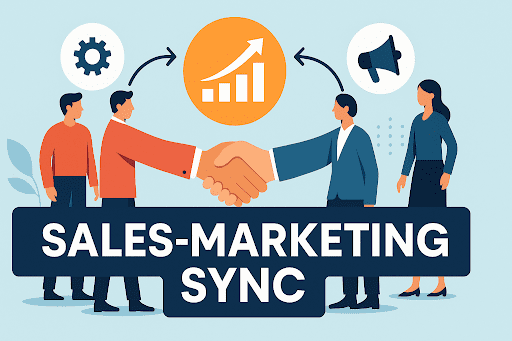
Your teams may not know it, but operating in silos can really hurt both the field and inside sales teams. When data sources, goals, and accountabilities are not aligned, there are cracks in the handoff process. Deals get lost in the handoff. Customers get a less than integrated experience. Revenue potential is not realized.
Many companies choose a sales model out of habit (i.e. how their founder sold, how the industry sells) before they ever understand the underlying buyer journey and economics to determine if that is the best model.
Which Sales Model Is Better?
For buyers who are executives and make high-value purchasing decisions in highly relationship-oriented industries, field sales is typically where greater returns are realized. Conversely, for sellers of a standardized offering going up against a broad-based market with a structured buying process, inside sales can scale to higher volumes and be more efficient than field sales.
While bigger companies may have the luxury of monolithic inside or outside sales models, most growing companies find that a well-designed hybrid model is the way to go: inside sales is the engine, and field sales wraps it all up for the customer. But in order to use this hybrid model effectively, you will need the right technology, a clear territory structure, and good reporting across all of it.
See with your own eyes how a single unified system can manage and support both pipeline and model based methods by scheduling a Free Demo with a DreamzCMMS representative today.
Conclusion
There are thousands of articles and blogs written and debating the sales field vs. remote vs. inside sales model. There are no easy answers to the challenge, but there is an organisation that has undertaken sufficient analysis to determine how to best utilise future sales capacity based on the key variables that will determine success: the buyer profile, the deal economics, the sales capability of team members, and the organisation’s sales growth ambitions.
Go deeper than learning the outside sales vs inside sales differences. Learn the full set of costs, conversion rates, and team structures involved and make strategic decisions about the scenarios in which each model makes sense best.
When evaluating a field sales model, inside sales model or the adoption of a hybrid sales model, remember that the underlying structure of success is the same. It starts with clean and accurate data, the proper sales technology, the right sales processes and the trained and informed sales representative who can effectively sell to customers as well as understand why those customers are buying.Curious to see how DreamzCMMS can enhance Sales and Field Operations? Learn more at DreamzCMMS and alsoBook a Free Demo.


















Subscribe to Our Newsletter
 100% SECURE
 We Respect Your Privacy
 Ready for More?
Talk to one of our CMMS experts and see how DreamzCMMS can simplify your maintenance operations.
Book a free consultation