 BACK TO Blog
Asset Rental Management
Field Sales
What Is Field Sales? Everything You Need to Know 2026
- April 30, 2026
- DreamzCMMS Team
- 13 minutes read

- April 30, 2026
- DreamzCMMS Team
- 13 minutes read
The term Field Sales is generally used to describe a sales methodology or approach in which a sales professional completes and closes sales outside of a corporate office. This type of sales is often referred to as "outside sales" because the sales person is not working from an office every day.
The world in which we sell products and services is becoming more and more diverse and complex yet there is one model that continues to deliver genuine returns for entrepreneurs, owners, managers in sales positions whether new to sales or established. In this FREE webinar for entrepreneurs, owners, managers and those new to sales we will examine the value of field sales and what we mean by field sales to help you create a sales engine that really works.
What Is Field Sales?
Field sales is also known as outside sales. Unlike inshore or office sales, the field salesperson doesn’t spend the day in the office. Instead, they will often visit a client’s premises or the site of a prospective customer such as a hospital, a sales office, a construction site, a manufacturing factory or a customer’s shop. It is at these meetings with customers and prospects that the field salesperson will build on relationships, establish a rapport with the customer and their organisation, discuss customer needs, issue samples, carry out demonstrations and finally close the sale.
Field sales is a common practice in many industries, including manufacturing, construction, healthcare, logistics, and technology. High-value goods and solutions, customized offerings, and detailed feature and benefit descriptions all require the sales professional to build and maintain customer trust in the field.
Field Sales vs Inside Sales: Understanding the Difference
It’s a common debate in the industry with a lot of misconceptions, but a simple starting point is to clarify that the main difference between Field Sales and Inside Sales is the physical location and methodology in which they occur. Inside Sales Professionals operate primarily out of a central location (such as an office, distributed office or home office), conducting all of their sales conversations over the telephone, email or video. Typically, the Inside Sales Rep will process large volumes of leads and complete a sales cycle at a much faster pace than a Field Sales Rep.
Unlike enterprise sales, however, field sales reps spend a majority of their time on the road in person with customers, delivering live demos, and traveling from territory to territory. That means field sales is often very goal-oriented, utilizing specialized tools and processes to grow business, and building a lot of the deal on trust and relationship versus functionality and pricing.
The Field Sales Representative Role
Their roles are not limited to simply taking an order and ensuring on-time delivery. Servers are the public face of a business, brand ambassadors, problem solvers, and trusted partners in the retail restaurant industry.
Meetings and presentations will be held with key decision makers on a regular basis. Long-term relationships will be built with customers and decision makers in order to sustain and grow the business. Negotiate contracts, terms, and pricing with customers. Partner with cross-functional teams (marketing, customer success, logistics, etc) in order to achieve sales goals. Accurately report on all sales activity. Provide quarterly revenue forecasts. Utilize mobile-enabled tools to plan for, document visits, calls, and expenses throughout the week.
A great field sales person is highly skilled at communication, product knowledge, and customer-centric, but most importantly, they can handle complex, multiple-stakeholder buying environments with multiple decision-makers involved in the process. Leveraging sales team productivity with mobile tools has become essential for modern reps to stay competitive and efficient.
The Field Sales Process Explained
The steps your prospects and your sales teams go through from the initial contact to a closed deal and on-going relationship is the field sales process. While there are no absolute rules on how a field sales process should be set up, there are a few core steps and many variations in between. Here are the typical steps to a field sales process.
1. Prospecting and Lead Generation
In addition to performing tasks required to efficiently close sales, Field Sales reps also typically spend a considerable amount of time and effort identifying potential customers for whom to acquire new leads. Many of these leads are generated by referral from internal sources as well as from cold e-mail/calling, leads generated from trade shows and marketing campaigns, and through research of a rep’s territory. These leads collectively make up what we refer to as the sales pipeline.
2. Initial Contact and Qualification
Before the initial meeting with the client rep, we first make contact. This is usually to arrange the meeting, although it can also be used to assess whether the potential client for your business is suitable. We determine whether the potential client has the necessary BANT criteria, which are: Budget, Authority, Need, and Timing.
3. Product Demonstration or Proposal
By understanding your specific needs, we can present a range of potential solutions to you. These can be presented through live product demonstrations, on-site planning, or as a written proposal prepared by your local Paperman representative.
4. Handling Objections
Our field reps are equipped to handle questions from customers about price, competitive differentiation, delivery dates, and whether the product will meet their needs. But the field reps also have a unique role as they have the opportunity to be in front of customers in person, and read their body language, tone, and emotions to deliver the message for maximum impact.
5. Closing the Deal
After overcoming a host of objections from the client, the salesperson finally closes the deal and signs on the dotted line. Remember, field sales involves typically multiple decision makers at one customer, and it can take many meetings with a single customer to close a deal.
6. Post-Sale Follow-Up and Account Management
While the salesperson is contracted to perform specific core functions, the majority of their time will be spent at customer locations seeking opportunities to grow sales, address customer concerns, and maintain customer loyalty. This team member is also responsible for performing other duties as assigned by management.
Field Sales Management Strategies
Your field sales management strategy is likely the single most influential factor in the success of your sales team. In this program, we will explore the critical role the sales manager plays in establishing direction, removing sales impediments, and ensuring that sales reps are held accountable for their performance.
Key strategies for field sales managers include:
- Territory Planning: This will help you to cover the most ground and help to ensure that the sales reps are not duplicating each other's work. Strong ensures every rep has a fair and productive workload.
- Territory Planning: Use Territory Planning to maximize coverage of accounts and territory, and avoid unnecessary overlap and duplication of efforts by your sales reps. SFW also provides strong field sales territory management capabilities.
- Goal Setting and KPIs - Help your field sales team meet their goals by setting measurable performance targets. Some of the most common KPIs for field sales teams are: daily calls, weekly meetings, pipeline value, conversion rates, and revenue by territory.
- Regular Check-Ins and Coaching: This video utilizes footage from regular coaching sessions (one-on-ones, ride-alongs, post-visit recaps) to show a sales coach before and after coaching the sales rep. The manager's Rep footage is intended to be constructive and point out areas for improvement, and encourage the sales rep and the coach to watch.
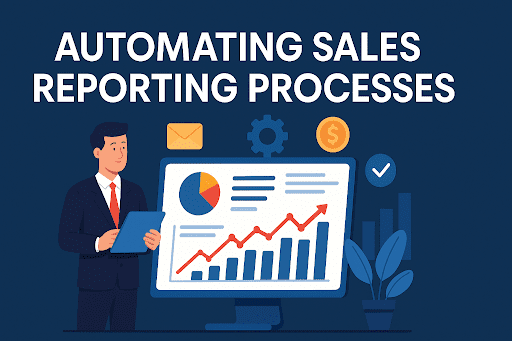
- The latest sales technology trend for sales teams and organizations to become a Data-Driven Decision Making model. Move away from automated sales reports generated for management by your sales team, away from the manual and time-consuming process of building and maintaining sales spreadsheets and sales documents. Move towards easy-to-read sales dashboards that automatically update as your sales activity changes.
- Incentive Programs: Establish an effective commission structure in addition to fair bonuses and reward employees for excellent performance to keep your best employees and to attract new employees to your organization.
Field Sales Best Practices
Hit Your Number as a Field Sales Team – Here’s How. To hit your number as a field sales team, it helps to understand and follow some field sales best practices. These are time-tested and have proven successful for great field sales teams, regardless of industry or organization size.
- Plan Your Day: Map out your day with a map and plan the accounts you will be visiting. Prior to arriving at the first account, set some goals for the meetings you intend to have. This will ensure that your wasted drive time is not also wasted selling time.
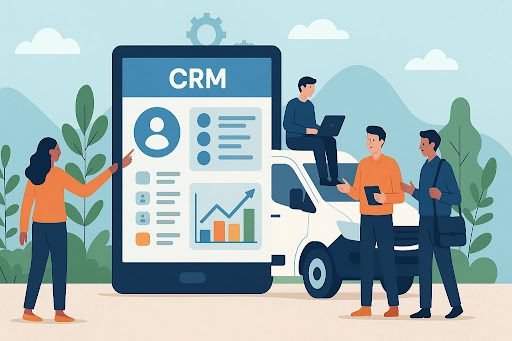
- Use CRM Religiously: Try to use your CRM as much as possible to log all calls, emails, meetings, and/or demos to ensure that you have a strong tracking system to monitor the pipeline and make sure nothing goes missing.
- Listen More Than You Speak: Rarely do we see business development executives talk optimally about their company’s differentiated offerings and corresponding value. The best field reps are always consultative and require a deep understanding of a customer before even beginning to thoughtfully provide solutions to the customer’s problems and concerns.
- Know Your Competition: Maintaining the latest information on competitor products, pricing, and positioning allows an organisation to generate an authentic and competitive market position.
Field Sales Tracking Methods and Technology
While GPS check-ins and digital attendance tracking are hot topics right now, they represent just the surface of what’s possible in tracking field sales activity. Today’s field sales organizations also use mobile-enabled software to track written notes, business cards collected, photos taken, and even video captured by their reps. They can view real-time activity, analyze pipeline health, and access details on recent customer interactions.
Key tracking capabilities include:
- GPS and Route Optimization: Track rep locations, verify delivery of services to correct clients, and plan routes for maximum reduction of miles while increasing daily meetings.
- Activity Logging: All calls, emails, and meetings are recorded, logged, and updated for you in your CRM, so no more tedious manual data entry!
- Pipeline Tracking: See where deals are currently in the sales process, the accuracy of forecasts made by individual salespeople as well as by territory/region, and the conversion rates for individual salespeople as well as by territory/region.
- Digital Forms and eDocs: Automate any paperwork process with digital forms and eDocs that can be completed on any device. Check and comply to regulations while out in the field.
In emerging technologies like RFID for field sales, the initial application is straightforward – automating sales transactions. But for companies that sell and manage physical assets (like an equipment rental company or a field service company), implementing RFID in asset tracking. By using RFID to track assets, companies gain real-time visibility into their available assets – providing field reps with the ability to immediately quote a customer on the availability of a particular asset.
Field Sales Software Solutions
Field sales representatives get bogged down. They have to juggle schedules and seek out clients when they don’t know where they are. There is no guarantee of a sale, but plenty of opportunity for things to go awry. This is where good field sales software comes in and alleviates much of the hardship, giving your sales reps the edge they need to succeed. In the meantime, your team can access your CRM, plot the most efficient routing between stops, bill customers as you leave, and reference your ever-up-to-date price book directly from your mobile device.
Here are some of the core solutions that support field sales teams:
- Field Sales Software: Using field sales software to track the activity, data and reporting from your field sales team can be a major advantage. Read on to see how.
- Field Service Management Software: For companies that are service providers in addition to product-based companies, our field service management software connects the dots between the customer’s order entered into your enterprise application and the actual work performed by your service technicians out in the field.
- Invoicing Software: With contact management software, sales reps can create a bill on their mobile device or PC after a sale and send it to their customer over email instantly.
- Price Book Software: Provide your sales team with real-time access to the latest pricing, promotions and configurations with price book software.
Field Sales Productivity Tips
A lot of the common Boosting field sales productivity tips revolve around removing small amounts of pain/friction that can significantly suck the productivity away from your field sales professionals. This lost productivity can be significant, taking hours each week from your field sales team, taking them away from closing deals.
Here are proven ways to increase productivity in the field:
- Most people who use Microsoft Office have some idea about the more advanced features within each application.
- Admin tasks such as reporting and data entry into your CRM should be done at the end of the day instead of in the middle of a meeting.
- Write notes to client files immediately after a meeting by dictating into computer software that translates your voice into text.
- Save time and effort by using Email templates and Proposal documents already written and prepared for you.
- PROTIP: Treat prospecting as a regular scheduled meeting with yourself each week. Commit to it in the same way you commit to work time, and actually make it part of your regular routine – devote at least some portion of time each week to prospecting.
- By integrating your CRM, invoicing software, and calendar (or other relevant tools) you’ll save a ton of time not having to re-enter the same information. Error is also greatly reduced.
- Boost Your Reps' Work: By automating sales reporting processes, your reps could be spending hours, even days, more each week engaged with your customers on work that really matters.
Conclusion
Field sales remains one of the most powerful ways to build lasting customer Field sales is one of the most effective ways to build long-term and strategic relationships with customers and close big deals. Knowing the field sales definition, the process of field sales and management strategies for field sales helps organizations to create successful field sales teams that reach and exceed their sales targets.
Sales in the field start and end with the salesperson. The process of selecting a software to track and manage your field sales efforts, the execution of the most effective field sales practices, and the implementation of the smartest field sales tracking and reporting systems all revolve around the salesperson.
Whether you are just starting out in field sales or already have a high-performing team, this guide will help you understand how to take it to the next level.Want to see how DreamzCMMS can help elevate your field sales process? Get a Free Demo and see how you can manage your mobile salesforce effectively, generate reports automatically, and boost sales performance by territory.

























Subscribe to Our Newsletter
 100% SECURE
 We Respect Your Privacy
Ready for More?
Talk to one of our CMMS experts and see how DreamzCMMS can simplify your maintenance operations.
Book a free consultation