 BACK TO Blog
Asset Rental Management
Facility
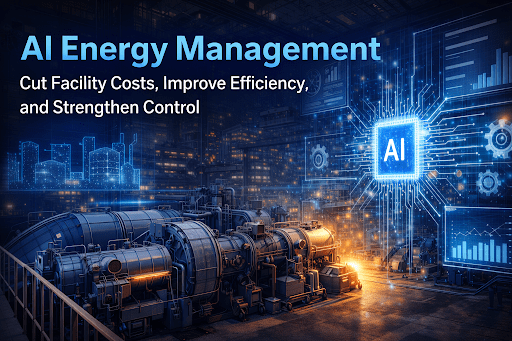
AI Energy Management: Cut Facility Costs, Improve Efficiency, and Strengthen Control
- February 21, 2026
- DreamzCMMS Team
- 14 minutes read
- February 21, 2026
- DreamzCMMS Team
- 14 minutes read
The leadership outcome in one line
AI energy management turns energy from a volatile overhead into a controlled performance line, using automation and intelligence to reduce cost, protect uptime, and improve governance.
Why this matters to C-suites right now
Energy is no longer a simple utility expense. It is a variable that directly influences EBITDA, operational continuity, ESG reporting, and risk exposure. Many facilities still manage consumption with periodic reviews and manual interventions. That approach misses real-time waste and creates delayed decision making.
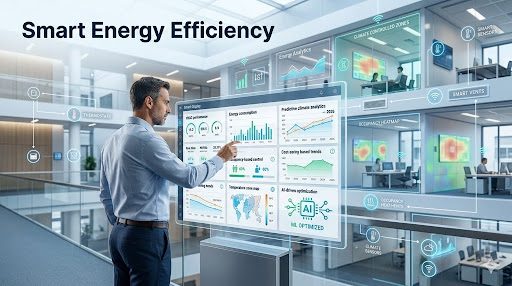
With AI energy management systems, leaders gain the ability to see consumption patterns as they happen, predict demand, and enforce optimization policies across sites.
The five executive-grade results you can measure
1) Lower facility costs without sacrificing comfort or output
Smart controls can cut facility energy costs with AI by reducing waste in HVAC, lighting, and equipment scheduling. The goal is not austerity. The goal is precision.
2) Continuous optimization instead of periodic tuning
Traditional energy programs rely on quarterly audits and one-off projects. Smart energy optimization with AI works continuously, making small improvements every hour that compound over time.
3) Real-time visibility that prevents “silent” energy loss
Facilities lose money through drift: sensors out of calibration, schedules overridden, equipment running after hours. smart energy monitoring systems and real-time energy consumption monitoring surface these losses early and reduce the time waste remains hidden.
4) Predictive control that reduces peaks and risk
Energy spikes and peak charges can erase savings from other initiatives. predictive energy management AI anticipates abnormal demand and recommends actions before cost escalates.
5) Scalable governance across multiple locations
C-suites need standard policies and consistent reporting. Artificial intelligence energy management supports governance by documenting what changed, why it changed, and what outcome followed. That traceability supports compliance, sustainability goals, and board-level reporting.
Where most savings actually come from
Executives often assume energy savings require new equipment. In many portfolios, the first savings come from operational control:
- HVAC scheduling and setpoint discipline using smart HVAC energy optimization AI
- Equipment runtime alignment and control logic via AI building automation energy savings
- Automated detection of abnormal consumption through machine learning energy optimization
- Portfolio-level efficiency programs supported by AI-powered energy efficiency
How this connects to facility execution, not only analytics
Energy performance improves when insights lead to action: corrective work orders, calibration tasks, and verified closure. That requires integration with operational systems.
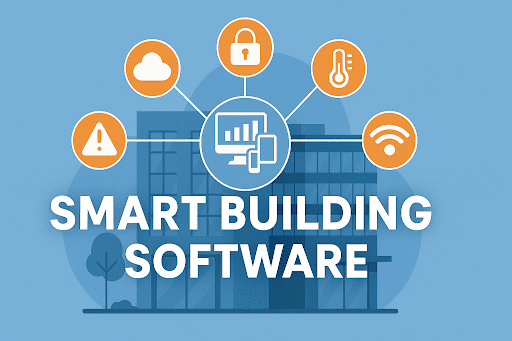
A practical path is to connect energy insights with Facility Management Software and Asset Maintenance Management Software so optimization is supported by accountable workflows, not informal follow-ups. Many leadership teams use DreamzCMMS as the execution layer that turns abnormal energy patterns into inspection tasks, maintenance jobs, and closure evidence.
If you want to see how this looks in real operations, a Free Demo can walk stakeholders through “alert to work order to verified resolution” in a single session.
What AI energy management Changes
A single sentence for decision makers
AI energy management converts energy spend from a monthly surprise into a managed operating lever through continuous optimization, monitoring, and accountable action.
Why this belongs on the C-suite agenda
Energy cost is now tied to competitiveness, resilience, and governance. When consumption is managed through periodic reviews, waste stays invisible for weeks. When AI energy management systems are applied, leaders gain earlier insight, faster control, and clearer proof of results.
The outcomes executives can measure
1) Lower costs without harming operations
The most reliable savings come from precision, not austerity. Cut facility energy costs with AI by eliminating after-hours runtime, reducing simultaneous heating and cooling, and tightening schedules across sites.
2) Continuous improvement instead of one-time projects
Most portfolios treat optimization as an annual initiative. Smart energy optimization with AI runs continuously, using learned patterns to refine schedules, setpoints, and equipment behavior.
3) Real-time visibility for rapid intervention
Energy waste often looks normal until it is measured correctly. Smart energy monitoring systems and Real-time energy consumption monitoring identify drift, overrides, abnormal load, and equipment running outside policy.
4) Predictive control for peak and risk reduction
Peaks, demand charges, and load instability can erode gains quickly. Predictive energy management AI forecasts demand and helps teams intervene earlier, particularly for HVAC and high-load equipment.
5) Governance and traceable decisions
C-suites need evidence. Artificial intelligence energy management supports governance by documenting what changed, why it changed, and what impact followed. This is increasingly relevant for ESG reporting and audit readiness.
Where the first 25 percent often comes from
In many facilities, the earliest savings are operational:
- HVAC setpoint and schedule discipline using Smart HVAC energy optimization AI
- Building automation improvements through AI building automation energy savings
- Detection of abnormal patterns via Machine learning energy optimization
- Broader portfolio gains driven by AI-powered energy efficiency
- Practical planning using AI energy cost reduction strategies
Why execution systems matter
Savings only become real when insights trigger actions: calibration, inspection, repair, and verification. That is why energy programs should connect to operational workflows, not only dashboards.
Link energy initiatives with Facility Management Software and Asset Maintenance Management Software so corrective actions are tracked and closed with evidence. Teams often use DreamzCMMS to translate energy anomalies into work orders, maintenance tasks, and documented outcomes. If leadership wants to validate fit quickly, a Free Demo can show the end-to-end flow.
The Energy Control Tower Model for Executives
Leadership teams adopt AI energy management fastest when the operating model is clear. The simplest structure is an “Energy Control Tower” with four layers: Measure, Predict, Act, Prove. Each layer has a board-level purpose and an operational owner.
Layer 1: Measure (create one version of the truth)
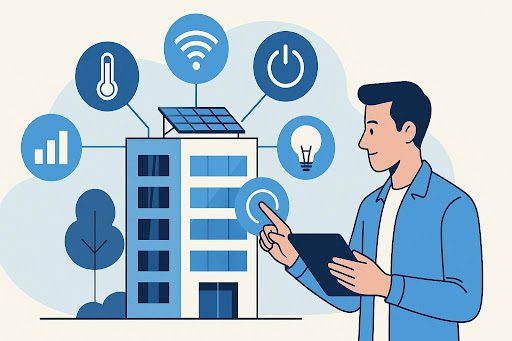
The Control Tower starts with visibility that is granular, reliable, and comparable across sites. This is where smart energy monitoring systems and real-time energy consumption monitoring become foundational.
What to measure first
- HVAC runtime, setpoints, and overrides
- Lighting schedules and after-hours usage
- High-load equipment cycles and standby consumption
- Demand peaks, load factor, and abnormal spikes
- Weather, occupancy proxies, and production drivers
When measurement is consistent, AI energy management systems can detect drift quickly and reduce the “silent loss” that accumulates between audits.
Layer 2: Predict (move from reporting to foresight)
Once you have clean signals, prediction becomes useful. predictive energy management AI helps you anticipate peaks and inefficiencies before they become cost.
What prediction typically improves
- Peak demand forecasting and pre-emptive load shaping
- Equipment behavior anomalies (short cycling, unstable load)
- Optimization of start-stop schedules and warm-up periods
- Identification of sites that deviate from portfolio norms
This is where machine learning energy optimization creates advantage: it learns the patterns behind waste, not only the presence of waste.
Layer 3: Act (turn insights into controlled execution)
The Control Tower only produces savings when it drives action. This is where smart energy optimization with AI connects to building automation and to operational work.
Two action paths usually run in parallel:
A) Automated optimization (policy-driven control)
- HVAC schedule tuning using smart HVAC energy optimization AI
- Automation logic improvements through AI building automation energy savings
- Continuous efficiency improvements with AI-powered energy efficiency
B) Operational remediation (work that must be done)
When consumption signals suggest a fault, corrective work is required: sensor calibration, valve issues, leaking dampers, failing VFDs, or equipment left in manual mode. Many teams connect these actions to Facility Management Software and Asset Maintenance Management Software so every intervention is assigned, tracked, and verified.
A practical option is using DreamzCMMS to create standardized work orders from anomalies and to capture closure evidence. For leadership teams validating the workflow, a Free Demo can show how energy alerts become maintenance tasks and how outcomes are reported back to executives.
Layer 4: Prove (turn savings into financial confidence)
Executives want defensible savings, not claims. The Control Tower must prove:
- Baseline versus optimized consumption
- Peak reduction impact
- Persistency of savings over time
- Root cause closure for recurring waste patterns
This is where AI energy cost reduction strategies become credible, because they are paired with evidence: what changed, when it changed, and what it delivered.
The three levers that consistently drive energy savings
Most portfolios see measurable impact when they focus on these levers:
- Scheduling discipline
Eliminate “always on” operation. This is the fastest way to cut facility energy costs with AI. - Optimization of control logic
Reduce simultaneous heating and cooling, improve sequencing, and reduce cycling. This is where artificial intelligence energy management outperforms manual tuning. - Fault detection with accountability
Identify issues early and close them through documented work. This is where IoT energy management solutions are most valuable, especially when paired with execution workflows.
How to embed audit and best practice without slowing teams down
If your organization runs periodic audits, you can strengthen them without increasing workload by using AI energy audit automation to flag anomalies before auditors arrive, and to prioritize the highest-impact issues first.
To standardize performance across multiple sites, formalize facility energy management best practices:
- Site policy for overrides and after-hours runtime
- Standard HVAC schedules by occupancy type
- Monthly exception reporting for high-consuming assets
- Governance routine that reviews peak events and recurring faults
The Finance-First Case and the Rollout That Does Not Disrupt Operations
Energy initiatives often fail for a simple reason: operations see the waste, but finance does not trust the savings. The gap is not ideology. The gap is proof.
The fastest route to confidence is to treat AI energy management as a control system with auditable outcomes. When savings are tied to specific changes, and when those changes are documented, the conversation shifts from “claims” to “results.”
What finance needs to approve expansion
Finance leaders usually ask three questions.
Can we measure a credible baseline?
A baseline must reflect the way the facility actually runs. It should account for obvious drivers such as weather and operating hours. It should also separate what is stable from what is variable. Once that baseline exists, AI energy management systems can be evaluated on a simple basis: what changed, when it changed, and what the cost impact was.
Can we connect savings to controllable actions?
This is where most programs get stuck. Savings must be linked to changes that the organization can explain and repeat. Common examples include schedule discipline, tighter setpoints, and reduced after-hours operation. When those changes are driven by smart energy optimization with AI, you get a traceable trail: the policy, the adjustment, and the resulting consumption pattern.
Can we prove that issues were actually fixed?
Energy waste frequently points to maintenance and control problems: sensor drift, overrides, stuck dampers, unstable control loops, and equipment that never returns to automatic mode. Those are not solved by reports. They are solved by work, and by verified closure. That is why execution matters.
When an anomaly is detected through smart energy monitoring systems or real-time energy consumption monitoring, the best practice is simple: create a corrective task, assign an owner, and close it with evidence. Integrating the workflow into Facility Management Software and Asset Maintenance Management Software gives finance a proof trail rather than a slide deck. Many teams use DreamzCMMS as the execution layer that turns energy anomalies into accountable work orders, with closure notes and verification artifacts. When stakeholders want to see the evidence loop, a Free Demo focused on validation is usually more persuasive than a presentation.
How to roll out without creating disruption
A low-risk rollout is not about speed. It is about narrowing scope so that the organization learns without noise.
Start with a small set of assets where savings are both likely and visible. In most portfolios, HVAC and scheduling are the most reliable first step, especially when smart HVAC energy optimization AI is used to enforce consistent operating hours and reduce drift. Add peak controls only after the operating basics are stable, because predictive energy management AI works best when the site is already disciplined.
As the program expands, add instrumentation selectively. IoT energy management solutions can improve accuracy, but only where it changes decisions, not where it only increases data volume. When audits are part of the operating rhythm, use AI energy audit automation to focus human attention on the highest-cost exceptions rather than on manual review of every site.
To keep the process consistent, anchor execution in facility maintenance software so anomalies become tracked tasks rather than informal follow-ups. If your organization already runs a formal review cycle, connect the work to Maintenance Audit routines so issues are discussed with evidence, not opinions. If compliance reporting is a concern, use Digital Compliance Tracker to maintain traceability for what was found, what was fixed, and when it was validated.
How executives know it is working
When artificial intelligence energy management is operating as a control system, leadership will see fewer after-hours runtime events, fewer peak surprises, and faster closure of anomalies. The most important signal is consistency: the gains persist because governance and workflow prevent drift.
This is the point where AI energy cost reduction strategies become a repeatable capability rather than a temporary project.
Validate Savings with a Real WorkflowIf you want operational proof, not dashboards, book a Free Demo of DreamzCMMS.We will show how AI energy management insights become work orders, approvals, and verified closures inside Facility Management Software and Asset Maintenance Management Software. |
Leadership Views, Platform Fit, and the Close
CEO view: resilience that customers can feel
When energy performance improves, customers do not see “energy.” They see reliability. Fewer interruptions, steadier output, and fewer operational surprises protect service commitments. That is why AI energy management matters at the top table. It is a performance control system that reduces volatility and strengthens confidence across sites.
CFO view: savings that can be defended
A CFO does not need more assumptions. A CFO needs evidence. The strongest case for AI energy management systems is a trail that connects actions to impact: what changed, when it changed, and how spend responded. When artificial intelligence energy management is tied to verified work closure and persistence checks, the savings become budgetable. That is the difference between a pilot and a finance-approved capability.
COO view: fewer exceptions and tighter execution
Operations leaders value anything that reduces exception handling. smart energy monitoring systems and real-time energy consumption monitoring reduce the time waste stays hidden. predictive energy management AI reduces peak surprises. When these insights trigger work with owners and deadlines, the operating rhythm becomes calmer and more predictable. That is where smart energy optimization with AI moves from theory to daily execution.
Platform fit: what to look for
The primary buying mistake is selecting tools that only visualize consumption. A leadership team needs a system that can translate insights into controlled actions and then retain proof.
A practical platform fit includes:
- The ability to detect and prioritize waste using machine learning energy optimization
- Control support for HVAC and automation through smart HVAC energy optimization AI and AI building automation energy savings
- The ability to scale condition inputs where justified using IoT energy management solutions
- Audit support through AI energy audit automation and site-level operating standards aligned to facility energy management best practices
- Workflow execution for corrective work, linked to Facility Management Software and Asset Maintenance Management Software
For execution and traceability, many teams use DreamzCMMS as the operational layer that converts anomalies into assigned work orders and captures closure evidence. If stakeholders want to validate how the loop works, schedule a Free Demo focused on “alert to work order to verified resolution.”
The Decision That Turns Energy Into A Managed Lever
Energy efficiency programs often lose momentum because accountability fades. AI-powered energy efficiency solves that when it becomes a control loop: measure, predict, act, and prove. Organizations that succeed treat energy performance as an operating discipline supported by AI energy cost reduction strategies, not as a one-time initiative.
If you want a practical starting point, begin with the assets that drive peaks and after-hours waste, align actions to facility maintenance software, and use a recurring Maintenance Audit rhythm to keep decisions grounded in evidence. When compliance visibility is required, strengthen traceability through Digital Compliance Tracker.
Make Energy Savings Predictable and RepeatableSchedule a Free Demo to see how AI energy management can reduce waste, control peaks, and improve governance across sites.We will map critical energy drivers, demonstrate smart energy optimization with AI, and show how actions are executed and verified in DreamzCMMS so results can be trusted by operations and finance. |
Additional ReadsFor teams strengthening reliability, audit readiness, and operational control, these perspectives add useful context:Facility Maintenance Software — How modern maintenance platforms standardize workflows, improve response times, and reduce hidden operational waste. Maintenance Audit — A structured approach to assess maintenance performance, identify gaps, and build an evidence-based improvement plan. Digital Compliance Tracker — A practical way to centralize compliance documentation, automate reminders, and maintain verifiable audit trails across sites. |








Subscribe to Our Newsletter
 100% SECURE
 We Respect Your Privacy
 Ready for More?
Talk to one of our CMMS experts and see how DreamzCMMS can simplify your maintenance operations.
Book a free consultation