 BACK TO Blog
Asset Rental Management
Construction
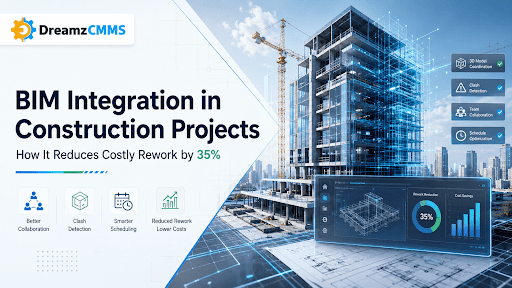
BIM Integration in Construction Projects: How It Reduces Costly Rework by 35%
- June 18, 2026
- DreamzCMMS Team
- 12 minutes read
- June 18, 2026
- DreamzCMMS Team
- 12 minutes read
Many construction industry are losing a large percentage of their profit due to rework. Much of this can be attributed to poor communication among the architect, engineers and the contractors and the fact that most construction plans are produced as 2D drawings, which fail to highlight potential clashes between the various components of a building. Building Information Modeling (BIM) provides a single intelligent 3D model that can be used by all of the project stakeholders, offering many benefits to the construction industry, not least of which is rework reduction of up to 35%. This guide explains how BIM can be integrated on a construction project and highlights why it has become an essential tool for the modern construction project manager. Furthermore, the guide outlines the measures that are required to implement BIM on site and explains how software, such as DreamzCMMS, can be used to get the most out of the model not only during the life of the construction project but also after completion of the building and during its subsequent use.
What Is Building Information Modeling in Construction?
BIM (Building Information Modeling) in construction is a shared 3D model created by architects, engineers and other contractors to describe important construction details of a building. The BIM model contains information about the building’s design and construction details such as materials, systems and costs. Unlike traditional CAD drawings, BIM models are updated in real time and are used for analysis of the construction before it is built. As a result, all designers including architects, structural engineers and MEP contractors, and the general contractor can work off the same model and be on the same page. The BIM model serves as the single point of reference for the construction project and allows for the most efficient use of construction project management software.
How BIM Reduces Rework in Construction Projects
Rework can be prevented in construction by bringing out errors and clashes before they are constructed. The majority of rework is caused by human error and neglect. Also, there are cases when rework is necessary due to incorrect design decisions. In order for design decisions to be correct, all design aspects must be coordinated and complete before the start of the design phase. It is common practice in construction that different disciplines work on different aspects of the building and often do not even know what the other disciplines are designing. A single point of truth, a single evolving 3D model, is sufficient to bring all different trades together. Instead of different trades working from dozens of files, all information are integrated in one model, which brings out errors and clashes early during the design phase.
BIM Clash Detection: Catching Conflicts Before They Cost You
The purpose of BIM clash detection is to find any clashes between components of different trades before they are built. These clashes can be between different components of the same trade or between different trades. Clashes are often highlighted and solved before they are built which can save a lot of time and money on rework that would have otherwise been caused.
BIM Rework Prevention Strategies That Actually Work
Prevent Rework with These Strategies. There are more than just a few ways that BIM can be used to prevent rework and ensure that a construction project is completed in the most efficient manner possible. By locking the model for a specific phase of construction and requiring all individuals affected by changes to sign off on those changes, BIM can help to greatly reduce the amount of rework that occurs on a site. Weekly BIM meetings are also a common practice. These meetings allow the project team to review the model and identify any issues before they become major problems. Using the most current version of the model to facilitate these meetings is one of the most effective methods for ensuring that all issues are addressed in a timely manner and that construction is progressing as planned.
Key BIM Integration Benefits for Construction Teams
Many benefits can be gained by BIM construction teams. Most of these benefits can affect different parts of the project delivery and affect the cost, collaboration and visualization of the construction project:
- BIM cost savings construction: The key is to reduce the change orders. Reduce the waste on the job site. Lower the cost of construction to reduce the rework and less labor required to fix the rework. Savings at the bottom line of the construction project.
- BIM collaboration construction teams: With a single model all members of the construction project team can view the up to date drawing and collaborate effectively without having to refer back to earlier versions of hand drawn plans or amended computer drawings.
- BIM visualization construction: BIM allows construction teams to view the completed building in a full 3D environment pre-construction and to view the construction process in 4D as it happens. This highlights design issues and provides the opportunity to address them prior to becoming major problems. The end user client also has the opportunity to gain a clear and comprehensive understanding of the building being constructed for them prior to the breaking of any ground.
- Much faster for reviewers to interrogate a data-rich model rather than having to flip through the 2D plan sheet by sheet.
- 3D modeling and virtual construction allows for safe planning of site logistics prior to construction. This includes planning locations for cranes, layout of site equipment, and management of movements around the site.
- The construction model serves as a precise basis for a reliable and cost-effective takeoff of required quantities and for the precise determination of the required amount of necessary building materials.
Strengthening BIM Project Coordination in Construction
BIM project coordination construction or BIM construction coordination is the core function of BIM models or building information models for construction. It is the core of all the drawings and information pertaining to the building within the model and the clashes and conflicts are all identified and resolved by the architects, engineers and the main and sub contractors in real time during the design and the construction phase.
BIM Scheduling for Construction Projects: Keeping Every Trade on Track
BIM construction scheduling projects or BIM Scheduling projects are more complex than the BIM coordination projects as they involve the 4th dimension i.e. time. As we mentioned earlier that BIM 4D is used for simulation of the construction process. The 4D building information model or BIM helps the superintendent of construction to identify the trade that needs to be working on a particular area on a given day.
BIM Scheduling also helps in creating a sequential plan for the installation of prefabricated components and in coordinating the timing of deliveries and the arrival of site-based crews. A good BIM Scheduling tool is integrated with the smart digital construction management tools which help in updating the 4D model automatically as the construction team progress through the build process. Moreover, any changes in the schedule are updated in the model instantly to avoid any potential construction scheduling collisions that could result in a significant amount of lost time on site.
BIM Implementation in Construction Projects: A Step-by-Step Approach
However, that does not have to be the case of the implementation of BIM on construction projects. It is not necessary to try to implement all the features and capabilities of BIM all at once. Follow the Step by Step Guide to the Implementation of BIM on your construction projects.
- Start with a pilot project. Choose a medium-sized project that can be finished from start to finish using a BIM model for both the Design and Construction Phases. This allows you to put your new BIM model through its paces on a real construction project before you move on to a full company-wide implementation.
- Standardize modeling protocols. Set procedures in place to control how models are set up and managed (e.g. naming convention, detail, etc.). These are to be managed similar after uploaded to shared repository for distribution to required project team members.
- Train the people who will actually use it. The people who will use BIM on a day to day basis at a construction site are the superintendents and the project managers. They do not need to know how to use a model viewer in an office. On the other hand, if they use BIM on a construction site, then the design team in an office would also benefit from learning how to use a model viewer.
- Integrate with project management and maintenance tools. The BIM model can then be linked to other construction project management software and maintenance tools (Scheduling, RFIs, Submittals, etc.) relating information from the model to the tools that are currently being used on the project to increase work flow efficiency.
- Expand trade by trade. After you have worked through the individual teams on your pilot project, expand the number of trades included in the shared model. Start with the individual trade groups one at a time, beginning with the MEP group, then move on to the structural group, and then the civil engineers and so on. Work through the individual problems as they arise, but don’t bring the whole company along for the ride.
BIM Construction Workflow Integration in Daily Operations
Integration with existing workflow on construction site management means linking the BIM model to tools such as RFI (Request for Information) management, submittal management, daily reporting and punch list management on a site management platform (e.g. ProCore, PlanGrid, SiteSync). This means that when an issue is recorded on the site management platform the issue is automatically linked to the relevant component in the BIM model. As a result, the relevant details of components such as wall sections and ductwork can be viewed by field staff on their tablets on site. They can then review details such as specifications, product information and any open issues for the item. This replaces the need to search through large binders and multiple separate spreadsheets.
Prefabrication and BIM Integration: Building Off-Site, Assembling On-Site
The integration of Prefabrication BIM is one of the most cost effective methods of using BIM technology. A 3D building information model contains all physical and structural information about a building and can be used by manufacturing companies to fabricate building components such as wall panels, complete MEP assemblies, structural sections and more outside of a job site. These prefabricated building components can then be transported to a job site where they can be assembled together to complete a building. This method of construction is very effective in minimizing potential errors and excessive amounts of rework on a job site caused by poor cutting and lack of information.
BIM Data Management and Visualization in Construction
BIM data management is as important as the geometry in the model. The geometry is just a representation of the data included in the model. This data can include information about the materials used, the warranty on equipment, equipment serial numbers, etc. as well as the maintenance schedules for the equipment and the rest of the assets in the building. When this data is combined with a good BIM visualization construction tool the schedule, cost and safety information can be overlayed on the 3D model to create a powerful dashboard that can be used on a daily basis by the construction team and later by the facilities team.
Common Challenges in BIM Integration and How to Overcome Them
However, many companies experience problems when trying to implement BIM, because some team members or suppliers do not implement BIM in their daily work. In most cases smaller sub-contractors and suppliers do not have suitable software, necessary training or experience with BIM. It is not realistic to require all disciplines to work in the same way. Therefore a BIM coordinator should be assigned who interprets drawings and data supplied by the smaller sub-contractors and implements the information in the shared model of other trades. In this way all information can be included in the model and can be used in the same way as information supplied by other trades.
BIM Construction Project Management: Bringing It All Together
BIM Construction Project Management is the process that allows all of the stakeholders in a building’s design and construction to have access to the most accurate up to the minute information about a building as it is being designed and built. The same model that guided construction can feed directly into asset maintenance management software, giving facilities teams a head start on preventive maintenance schedules, equipment locations, and warranty tracking from day one of operations. This is exactly the handoff explored in our piece on CMMS for construction and operational efficiency, where the construction model becomes the foundation of long-term operational efficiency rather than a file that gets archived the moment the building opens its doors.
Build Smarter With DreamzCMMS
A construction BIM project is not just for detecting design clashes within a 3D model. The ultimate aim of a BIM project is to connect design with the actual construction process and to operate the built asset for long periods of time afterwards. If a construction team creates an intelligent model of a project during the design phase using BIM then this model must be treated as a ‘living asset’ during the construction phase and subsequently by the facilities team after handover. It is commonly occurs that a construction team uses BIM for a project and as a result of this they achieve a 35% reduction in rework. These same benefits can also be gained by the facilities team in the operating and maintenance phase of an asset’s lifecycle. DreamzCMMS is software that is capable of supporting construction teams and facilities teams in the creation and management of digital data of assets throughout their entire lifecycle. Get a free demo of DreamzCMMS and see how it can support your projects.







Subscribe to Our Newsletter
 100% SECURE
 We Respect Your Privacy
Ready for More?
Talk to one of our CMMS experts and see how DreamzCMMS can simplify your maintenance operations.
Book a free consultation