 BACK TO Blog
Asset Rental Management
Asset Maintenance
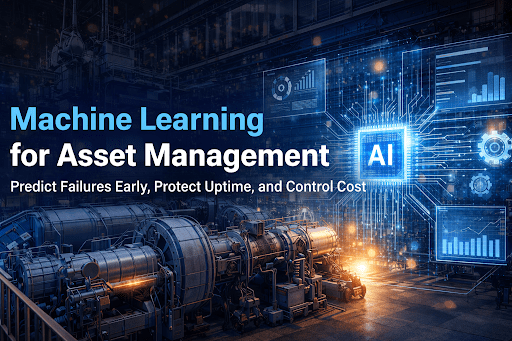
Machine Learning for Asset Management: Predict Failures Early, Protect Uptime, and Control Cost
- February 20, 2026
- DreamzCMMS Team
- 15 minutes read
- February 20, 2026
- DreamzCMMS Team
- 15 minutes read
Executive Brief: Why This Is a Boardroom Topic
The decision in one sentence
Machine learning for asset management turns maintenance from a reactive cost center into a measurable reliability program, with clearer risk control and better capital planning.
What keeps executives awake at night
A single asset failure rarely stays “single.” It triggers overtime, missed orders, service penalties, safety exposure, and rushed procurement. The uncomfortable reality is that most organizations are still operating on delayed signals: inspections, periodic checks, and technician intuition. That approach can work, but it does not scale when fleets grow, sites multiply, and workforce availability tightens.
AI for asset management is now being adopted because it supports executive priorities that never go out of fashion: uptime, cost discipline, and risk reduction.
Four outcomes C-suites care about
1) Uptime protection with fewer surprises
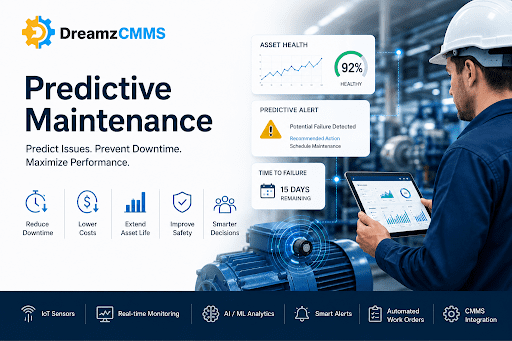
When failure risk is identified earlier, teams stop “chasing alarms” and start preventing events. That is the practical promise of predictive maintenance machine learning: detect early risk patterns and intervene before a breakdown becomes a business incident.
2) Maintenance cost control without gambling on reliability
Many cost-reduction efforts quietly push risk into the future. Machine learning predictive maintenance supports targeted work: maintenance happens when the data indicates rising risk, not only because the calendar says so. That is how AI-powered asset management can reduce waste while protecting critical uptime.
3) Better productivity from scarce technical talent
Technicians lose time on low-value checks, repeat diagnostics, and unclear priorities. With machine learning maintenance scheduling, high-risk work rises to the top and routine work becomes more precise. This is where machine learning for equipment maintenance produces value that shows up in the weekly operations report.
4) Governance, auditability, and defensible decisions
Executives are increasingly asked: “Why did the asset fail, and what did we do to prevent it?” Artificial intelligence in asset management creates traceability: what signals were observed, what risk was predicted, what work was triggered, and what outcome followed.
What machine learning actually does inside asset operations
This is not “magic automation.” It is structured pattern recognition applied to asset history and condition signals. The most usable outputs are operational, not academic:
- Early-warning indicators using predictive analytics for asset failures
- Risk scoring supported by AI failure prediction technology
- Abnormal condition detection through real-time asset condition monitoring AI
- Higher-signal monitoring using deep learning asset monitoring and neural networks for asset health monitoring when data quality is strong
- Targeted work triggers driven by AI-driven preventive maintenance
- Failure pattern logic derived from equipment failure prediction algorithms
The executive point: these outputs only matter when they create action, not when they create dashboards.
CFO lens: how to explain value without hype
A CFO will not fund “innovation.” A CFO will fund avoided loss and measurable efficiency. Frame predictive maintenance ROI with AI in three levers:
- Avoided downtime cost (lost production, penalties, expedited shipping, overtime)
- Reduced maintenance waste (fewer unnecessary inspections and replacements)
- Improved asset life and capital timing (fewer stress events, better replacement planning)
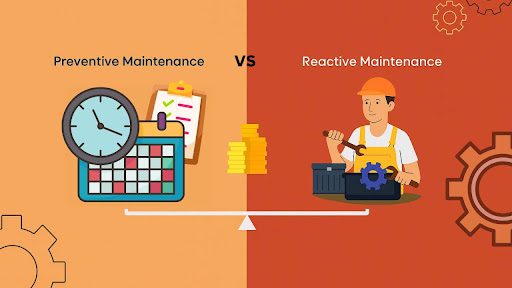
If you want a simple internal baseline, align the current state against Preventive maintenance vs reactive maintenance and define a target reduction in emergency work.
Where the CMMS becomes the system of execution
Prediction without execution is reporting. Execution requires a system that can convert insights into work, approvals, and accountability. That is why job plans, work orders, parts, and closure data must be connected.
A modern platform such as Asset Maintenance Management Software enables the closed loop: predicted risk → work created → technician execution → outcome captured → model feedback. That loop is where the operational gains compound over time.
How Leaders Make This Work in the Real World
There is a simple reason many programs fail: the organization buys analytics, then keeps running maintenance the same way. Machine learning for asset management only delivers when it changes how work is decided, scheduled, executed, and reviewed.
Think of this as a management system with three visible outcomes: fewer breakdowns, more predictable cost, and clearer operational control. The mechanics are straightforward.
First: get to operational truth
Most enterprises already store work orders and asset records, but the closure quality is often uneven. A senior leader does not need perfection. A senior leader needs consistency.
The fastest way to create that consistency is to insist that every completed job captures four points: symptom, cause, action taken, and proof of resolution. When that discipline becomes routine, AI for asset management stops being “data science” and becomes a practical reliability engine. That is when AI predicts equipment failures and starts to produce signals that supervisors trust.
This is also the stage where a CMMS matters. A system like DreamzCMMS is not only a tracker. It becomes the place where the organization records the truth of what happened, in a format that can be learned from and audited.
Second: choose signals that match business risk
A common mistake is chasing every sensor and every data stream. Leadership should start with a tighter question: which assets can shut down the business, harm safety, or trigger service penalties?
Once that is clear, the signal strategy becomes easier. For some assets, work history is enough. For others, additional condition signals are worth the investment. This is the practical entry point for machine learning IoT asset tracking and real-time asset condition monitoring AI.
The goal is not to create more dashboards. The goal is to reduce uncertainty so the right work happens earlier.
Third: keep the first models simple and accountable
Early wins rarely require complex modeling. The value often arrives from better prioritization, not from “perfect prediction.” In practice, the organization uses predictive analytics for asset failures to highlight unusual behavior, then adds more precision as it learns.
Over time, pattern logic and equipment failure prediction algorithms can mature the program. Where data volume and complexity justify it, deep learning asset monitoring and neural networks for asset health monitoring can help, but only after the basics are working.
This is the executive standard: every model output must point to an action. Without an action, there is no operational value.
Fourth: make predictions create work automatically
This is the moment where ROI is either realized or lost. If insights stay in reports, nothing changes. The organization needs a repeatable “signal-to-work” path: risk rises, the system creates the job, and execution is tracked.
That is why AI-powered asset management should be tied to work creation rules, approvals, and parts planning. The CMMS becomes the system of action, not a passive record. When leadership wants to show stakeholders the process end to end, a Free Demo is often the quickest way to make the workflow concrete.
Fifth: measure like a business, not like a pilot
Executives should judge the program using outcomes that already matter in the operating rhythm: emergency work volume, repeat failures, downtime, and maintenance cost predictability. The story for finance is not “model accuracy.” The story for finance is predictive maintenance ROI with AI backed by avoided loss and improved planning.
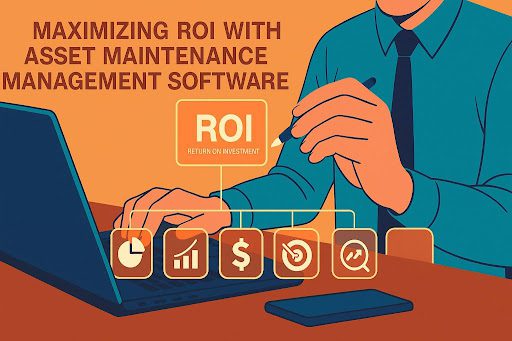
If you want a clean internal narrative, anchor the shift against Preventive maintenance vs reactive maintenance and then connect the business case to Maximizing ROI with Asset Maintenance Management Software. For operational standardization, align the rollout to Preventive Maintenance Best Practices so the organization does not depend on individual heroics.
See the Workflow Before You CommitIf your priority is operational impact, not dashboards, schedule a Free Demo of DreamzCMMS.We will show how machine learning for asset management signals can become actionable job cards, with scheduling, approvals, and closure data captured in Asset Maintenance Management Software. Use the session to confirm what predictive maintenance ROI with AI looks like for your critical assets and service-level commitments. |
The Leadership View, the Financial Case, and the Rollout Plan
CEO view: resilience and customer trust
Every enterprise has a few assets that quietly carry the brand. When they fail, the customer experience, delivery promise, and reputation take the hit. Machine learning for asset management strengthens resilience by reducing sudden failures and by creating a more predictable operating rhythm. The strategic win is not technology adoption. The strategic win is fewer incidents that reach customers, fewer operational surprises, and clearer control of service reliability through AI for asset management.
CFO view: predictable spend, fewer shock costs
A finance leader sees maintenance as a mix of visible cost and hidden volatility. Emergency repairs, expedited shipping, overtime, and idle production are the volatility. Machine learning predictive maintenance reduces volatility by shifting work into planned execution and by preventing the high-cost failure events that distort budgets. This is the practical narrative for predictive maintenance ROI with AI: not a lab experiment, but avoided loss plus better spend timing.
COO view: execution discipline, not dashboards
Operations leaders do not need more reports. They need decisions that translate into work. Predictive maintenance machine learning is valuable when it improves prioritization, reduces repeat failures, and shortens downtime. That requires an execution system that turns risk signals into job cards, schedules, parts planning, and close-out learning. When AI-powered asset management is integrated into daily maintenance execution, reliability gains compound.
The rollout plan that reduces risk and accelerates value
Step 1: choose the assets that matter (2 weeks)
Select a small critical set: assets tied to production bottlenecks, safety exposure, or customer SLAs. Define the minimum asset data standard and confirm that work order closure captures symptom, cause, action, and proof. This step alone improves governance and supports artificial intelligence in asset management by raising data quality.
Step 2: establish the “closed loop” workflow (2 to 4 weeks)
A prediction must become a work order with clear ownership. This is where AI-driven preventive maintenance either becomes real or stays theoretical. Use your CMMS to ensure that risk signals can create maintenance actions, route approvals, and capture outcomes.
To support execution, implement the workflow inside DreamzCMMS and validate that the team can create, assign, complete, and review job cards with consistent close-out notes. If stakeholders want a quick walkthrough of the end-to-end process, offer a Free Demo focused on “signal to job card to closure.”
Step 3: start with prioritization, then deepen prediction (4 to 8 weeks)
Early wins come from better prioritization, not from sophisticated modeling. Use predictive analytics for asset failures to flag anomalies and rising risk, then refine as more outcomes are captured. Over time, introduce stronger prediction logic using equipment failure prediction algorithms and expand into condition-based insights using machine learning for equipment maintenance.
If the organization has strong sensor coverage and high data volume, advanced monitoring can follow later. In those cases, deep learning asset monitoring and neural networks for asset health monitoring can help with complex, non-linear asset behaviors.
Step 4: expand monitoring where it pays back (8 to 12 weeks)
For assets where additional instrumentation is justified, scale condition tracking and connectivity. This is where machine learning IoT asset tracking can raise precision, especially when signals are near real time. Pair this with real-time asset condition monitoring AI so abnormal conditions trigger timely interventions, not delayed reporting.
Step 5: govern the program like a business capability (ongoing)
Run monthly reliability reviews with a fixed agenda: top failure modes, repeat events, emergency work trend, downtime drivers, and the percentage of work triggered by risk signals versus the calendar. Track executive KPIs that align to outcomes, not to model complexity.
To keep the operational approach consistent across sites, align procedures to Preventive Maintenance Best Practices and use Preventive maintenance vs reactive maintenance as a simple internal maturity yardstick. For the financial and strategic narrative, connect results to Maximizing ROI with Asset Maintenance Management Software so leadership sees a clear line from execution discipline to ROI.
Practical risks and how executives reduce them
Risk: poor work order closure quality
Mitigation: enforce a minimum closure standard and audit a small sample weekly.
Risk: insights do not translate into action
Mitigation: tie alerts to job creation and ownership inside the CMMS, and review completion outcomes.
Risk: too many alerts create fatigue
Mitigation: start with high-criticality assets only, tune thresholds, and require a clear action per alert.
Risk: “black box” concerns
Mitigation: require explainability: what signal changed, what risk level rose, what action is recommended, what business impact is expected.
Executive Questions, Buying Guidance, and the Close
Leadership teams usually agree on ambition. The debate is about risk: how to adopt machine learning for asset management without creating disruption, noise, or another dashboard initiative that never reaches the shop floor.
The clearest way to keep it grounded is to treat this as operational decision support that must translate into action. If the output does not become a scheduled job, a parts check, or a technician assignment, it is not yet a reliability capability. It is only reporting.
The questions executives ask, and the answers that hold up
What is the real difference between analytics and operational impact?
Analytics explains. Execution changes outcomes. AI for asset management becomes valuable when signals move into the maintenance workflow and produce fewer breakdowns, fewer repeat faults, and more planned work.
Do we need sensors everywhere?
No. Many teams begin by using work history and failure patterns, then add condition signals only where the business case is clear. Instrumentation is not a religion. It is an investment choice. Where coverage is justified, machine learning IoT asset tracking can raise signal quality, but it should follow asset criticality, not curiosity.
How do we avoid alert fatigue?
Alert fatigue is usually a governance problem, not a technology problem. Start with critical assets, define what “actionable” means, tune thresholds based on outcomes, and insist that every alert has an owner and a next step. This is where AI-driven preventive maintenance should reduce chaos rather than increase it.
How does the finance team evaluate value?
Finance will not fund novelty. Finance funds avoided loss and predictable spend. The story for predictive maintenance ROI with AI is simple: fewer emergency events, fewer expensive surprises, and more stable planning. This is easy to validate when the operating data is consistent and when results are reviewed as part of the monthly rhythm.
What about auditability and compliance?
Executives need traceability: why work was created, what evidence triggered it, what action was taken, and what result followed. Implemented correctly, artificial intelligence in asset management improves defensibility because decisions are documented and repeatable.
How to choose a platform without getting distracted
The buying mistake is selecting tools that only visualize risk. You need a system that can convert risk into work and then capture outcomes, so the organization learns and improves. That is the operational backbone required for AI-powered asset management.
A practical evaluation should focus on whether the platform can support this loop at scale:
- consistent asset structure and criticality
- disciplined work execution and closure evidence
- scheduling and accountability that managers can run weekly
- integration readiness for financial alignment
- reporting that reflects outcomes, not activity volume
This is where a CMMS matters. A platform such as DreamzCMMS can serve as the execution layer that connects insights to job cards, work history, and operational control. When stakeholders want to see the process rather than hear a pitch, a Free Demo usually settles the debate quickly, because the workflow becomes tangible.
To keep the rollout standardized across sites, align your operating routines to Preventive Maintenance Best Practices. To keep the narrative credible for leadership and finance, connect improvements to Maximizing ROI with Asset Maintenance Management Software. If you need a simple internal benchmark for maturity, use Preventive maintenance vs reactive maintenance as a plain-language reference point.
Closing: the decision behind reliability
Maintenance performance is not only a plant issue. It is a leadership issue. When unplanned events drop, the organization protects service levels, reduces operational volatility, and makes capital planning more rational. That is why predictive maintenance machine learning and machine learning predictive maintenance are increasingly treated as reliability strategies, not as experimentation.
The safest path is also the most effective one: start with a small group of critical assets, raise closure discipline, and operationalize actions inside the CMMS. Once the organization sees repeatable improvement, scale what works.
Turn Machine Learning into Measurable Reliability GainsSchedule a Free Demo of DreamzCMMS to see how machine learning for asset management can move from insight to execution.We will map your critical assets, configure risk-based triggers, and show how predictions convert into job cards, approvals, and outcomes tracking inside Asset Maintenance Management Software. Use the session to validate predictive maintenance ROI with AI, align stakeholders, and define a practical rollout plan. |
Related Perspectives on Maintenance Strategy and ROIFor leadership teams evaluating how reliability, cost control, and governance connect, the following perspectives add useful context:Preventive maintenance vs reactive maintenance — A practical comparison of planned maintenance versus breakdown-driven work, and how each approach impacts cost, downtime, and risk. Maximizing ROI with Asset Maintenance Management Software — A leadership-focused view of how CMMS adoption improves financial performance through better planning, accountability, and measurable outcomes. Preventive Maintenance Best Practices — A set of execution standards that help teams reduce repeat failures, improve compliance, and build consistent performance across sites. |



Subscribe to Our Newsletter
 100% SECURE
 We Respect Your Privacy
 Ready for More?
Talk to one of our CMMS experts and see how DreamzCMMS can simplify your maintenance operations.
Book a free consultation